


Mixed-species biofilm compromises wound healing by disrupting epidermal barrier function
- PMID: 24771509
- PMCID: PMC4380277
- DOI: 10.1002/path.4360
Mixed-species biofilm compromises wound healing by disrupting epidermal barrier function
Abstract
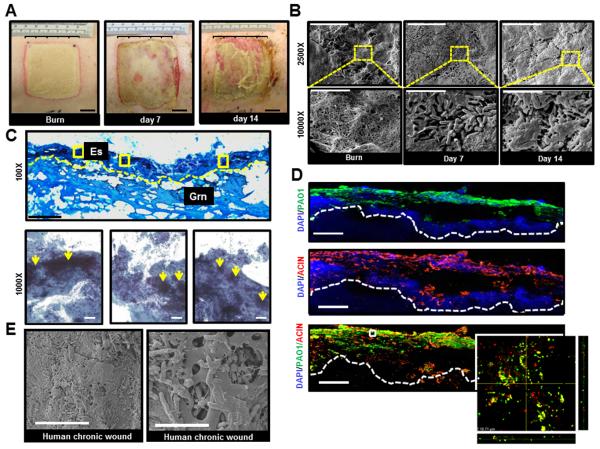
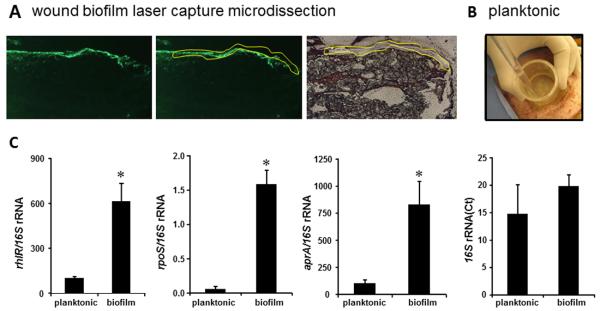
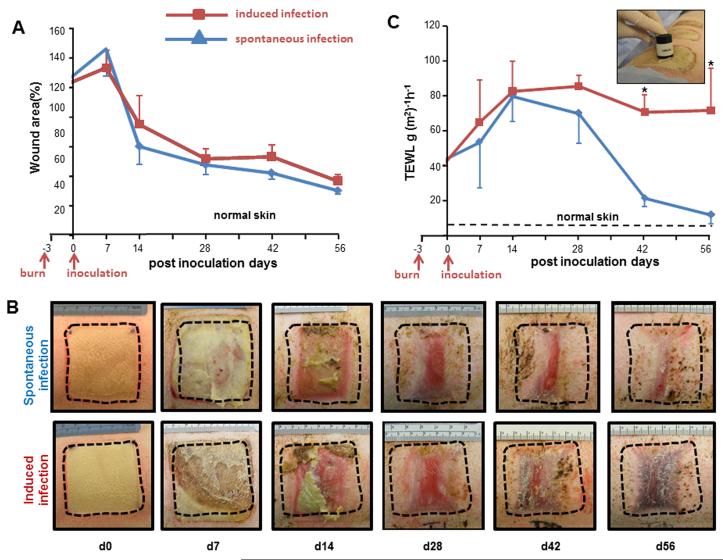
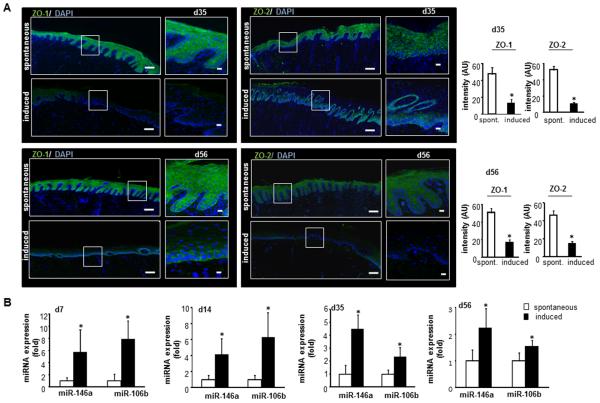
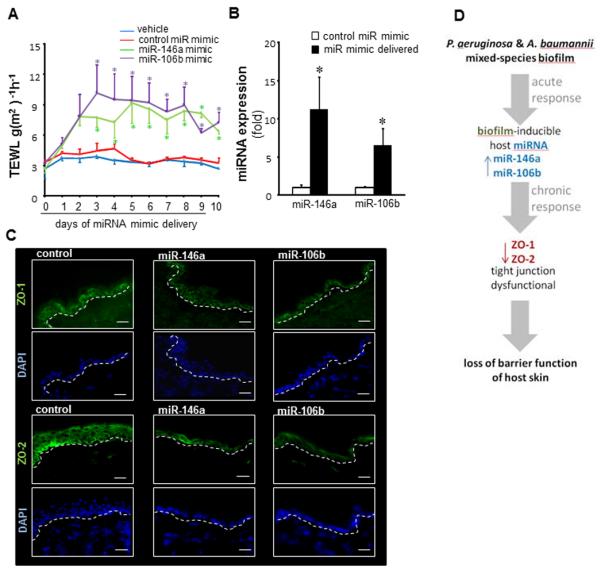
In chronic wounds, biofilm infects host tissue for extended periods of time. This work establishes the first chronic preclinical model of wound biofilm infection aimed at addressing the long-term host response. Although biofilm-infected wounds did not show marked differences in wound closure, the repaired skin demonstrated compromised barrier function. This observation is clinically significant, because it leads to the notion that even if a biofilm infected wound is closed, as observed visually, it may be complicated by the presence of failed skin, which is likely to be infected and/or further complicated postclosure. Study of the underlying mechanisms recognized for the first time biofilm-inducible miR-146a and miR-106b in the host skin wound-edge tissue. These miRs silenced ZO-1 and ZO-2 to compromise tight junction function, resulting in leaky skin as measured by transepidermal water loss (TEWL). Intervention strategies aimed at inhibiting biofilm-inducible miRNAs may be productive in restoring the barrier function of host skin.
Keywords: microRNA; mixed-species biofilm; porcine burn wounds; transepidermal water loss (TEWL); wound biofilm.
Copyright © 2014 Pathological Society of Great Britain and Ireland. Published by John Wiley & Sons, Ltd.
Figures


References
-
- Lopez D, Vlamakis H, Kolter R. Generation of multiple cell types in Bacillus subtilis. FEMS Microbiol Rev. 2009;33:152–163. - PubMed
-
- James GA, Swogger E, Wolcott R, et al. Biofilms in chronic wounds. Wound Repair Regen. 2008;16:37–44. - PubMed
-
- Hall-Stoodley L, Costerton JW, Stoodley P. Bacterial biofilms: from the natural environment to infectious diseases. Nat Rev Microbiol. 2004;2:95–108. - PubMed
-
- Seth AK, Geringer MR, Hong SJ, et al. In vivo modeling of biofilm-infected wounds: a review. J Surg Res. 2012;178:330–338. - PubMed
Publication types
MeSH terms
Substances
Grants and funding
- R01 AI097511/AI/NIAID NIH HHS/United States
- R01 NR013898/NR/NINR NIH HHS/United States
- NR013898/NR/NINR NIH HHS/United States
- P30 CA016058/CA/NCI NIH HHS/United States
- T32 OD010429/OD/NIH HHS/United States
- DK076566/DK/NIDDK NIH HHS/United States
- R56 DK076566/DK/NIDDK NIH HHS/United States
- GM077185/GM/NIGMS NIH HHS/United States
- R01AI097511/AI/NIAID NIH HHS/United States
- R01 GM069589/GM/NIGMS NIH HHS/United States
- R01 DK076566/DK/NIDDK NIH HHS/United States
- R01 GM077185/GM/NIGMS NIH HHS/United States
- GM069589/GM/NIGMS NIH HHS/United States
LinkOut - more resources
Full Text Sources
Other Literature Sources
Medical
Molecular Biology Databases
