FGFR1 mRNA and protein expression, not gene copy number, predict FGFR TKI sensitivity across all lung cancer histologies
- PMID: 24771645
- PMCID: PMC4062100
- DOI: 10.1158/1078-0432.CCR-13-3060
FGFR1 mRNA and protein expression, not gene copy number, predict FGFR TKI sensitivity across all lung cancer histologies
Abstract
Purpose: FGFR1 gene copy number (GCN) is being evaluated as a biomarker for FGFR tyrosine kinase inhibitor (TKI) response in squamous cell lung cancers (SCC). The exclusive use of FGFR1 GCN for predicting FGFR TKI sensitivity assumes increased GCN is the only mechanism for biologically relevant increases in FGFR1 signaling. Herein, we tested whether FGFR1 mRNA and protein expression may serve as better biomarkers of FGFR TKI sensitivity in lung cancer.
Experimental design: Histologically diverse lung cancer cell lines were submitted to assays for ponatinib sensitivity, a potent FGFR TKI. A tissue microarray composed of resected lung tumors was submitted to FGFR1 GCN, and mRNA analyses and the results were validated with The Cancer Genome Atlas (TCGA) lung cancer data.
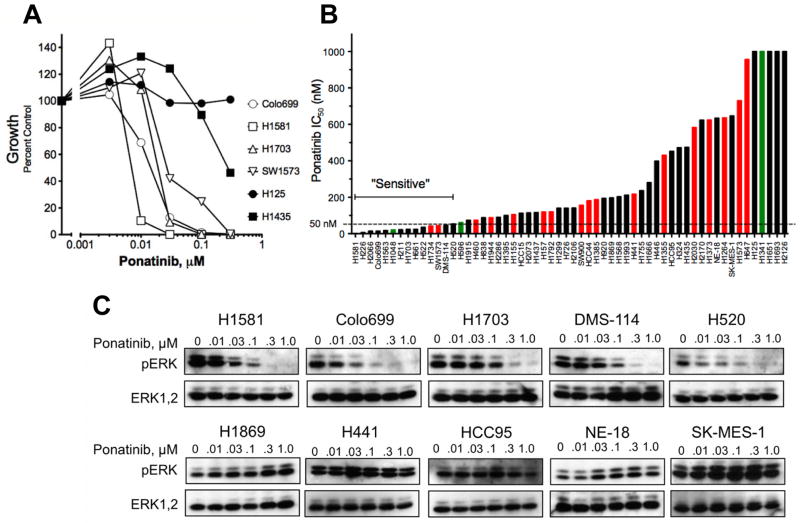
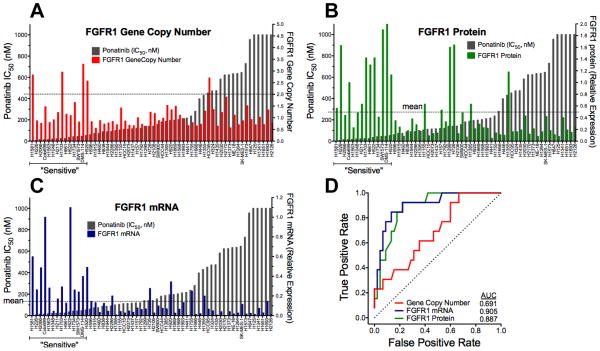
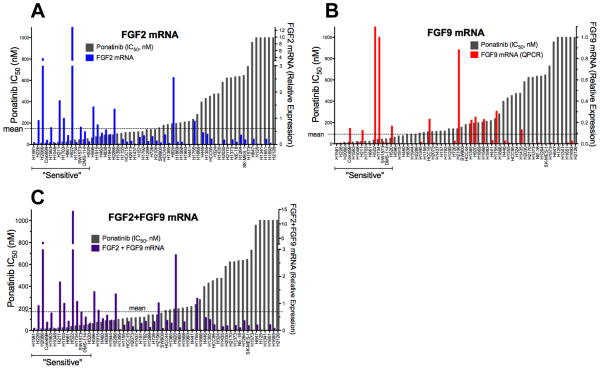
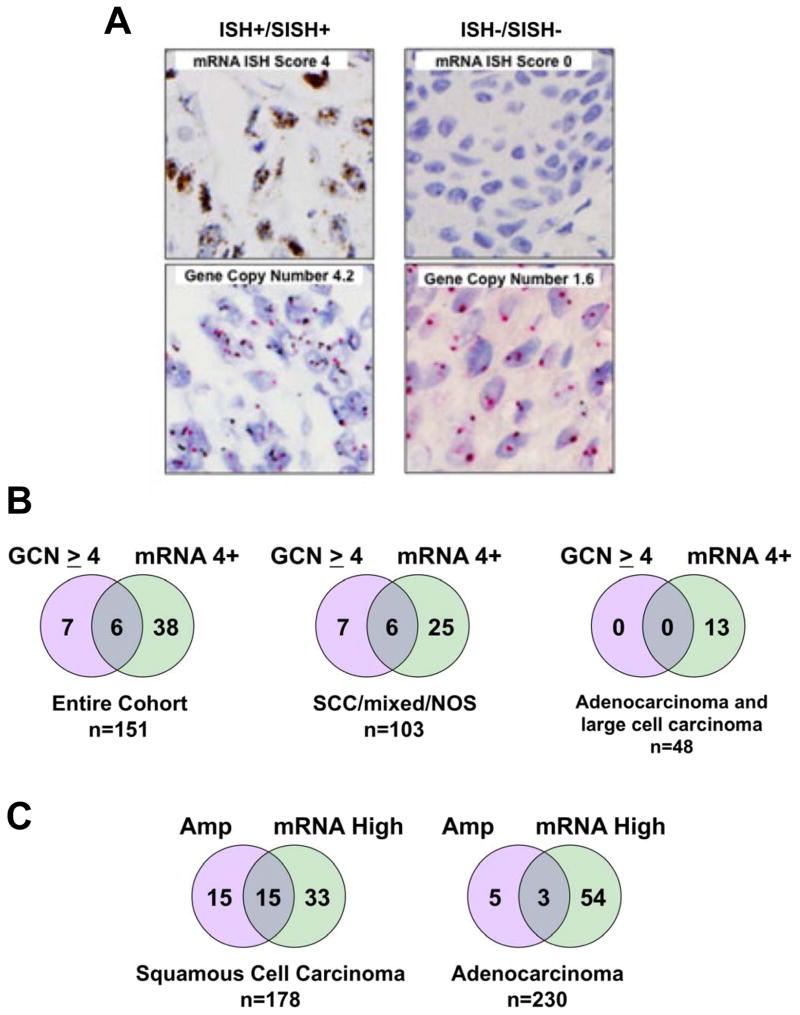
Results: Among 58 cell lines, 14 exhibited ponatinib sensitivity (IC50 values ≤ 50 nmol/L) that correlated with FGFR1 mRNA and protein expression, but not with FGFR1 GCN or histology. Moreover, ponatinib sensitivity associated with mRNA expression of the ligands, FGF2 and FGF9. In resected tumors, 22% of adenocarcinomas and 28% of SCCs expressed high FGFR1 mRNA. Importantly, only 46% of SCCs with increased FGFR1 GCN expressed high mRNA. Lung cancer TCGA data validated these findings and unveiled overlap of FGFR1 mRNA positivity with KRAS and PIK3CA mutations.
Conclusions: FGFR1 dependency is frequent across various lung cancer histologies, and FGFR1 mRNA may serve as a better biomarker of FGFR TKI response in lung cancer than FGFR1 GCN. The study provides important and timely insight into clinical testing of FGFR TKIs in lung cancer and other solid tumor types.
©2014 American Association for Cancer Research.
Conflict of interest statement
Figures
References
-
- Goke F, Franzen A, Menon R, Goltz D, Kirsten R, Boehm D, et al. Rationale for treatment of metastatic squamous cell carcinoma of the lung using fibroblast growth factor receptor inhibitors. Chest. 2012;142:1020–6. - PubMed
-
- Gozgit JM, Wong MJ, Moran L, Wardwell S, Mohemmad QK, Narasimhan NI, et al. Ponatinib (AP24534), a multitargeted pan-FGFR inhibitor with activity in multiple FGFR-amplified or mutated cancer models. Mol Cancer Ther. 2012;11:690–9. - PubMed
-
- Zhang J, Zhang L, Su X, Li M, Xie L, Malchers F, et al. Translating the therapeutic potential of AZD4547 in FGFR1-amplified non-small cell lung cancer through the use of patient-derived tumor xenograft models. Clin Cancer Res. 2012;18:6658–67. - PubMed
Publication types
MeSH terms
Substances
Grants and funding
LinkOut - more resources
Full Text Sources
Other Literature Sources
Research Materials
Miscellaneous