


RegPhos 2.0: an updated resource to explore protein kinase-substrate phosphorylation networks in mammals
- PMID: 24771658
- PMCID: PMC3999940
- DOI: 10.1093/database/bau034
RegPhos 2.0: an updated resource to explore protein kinase-substrate phosphorylation networks in mammals
Abstract
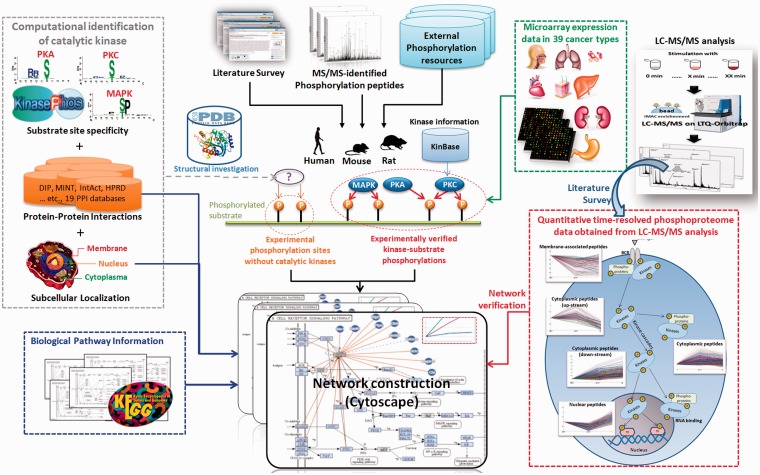
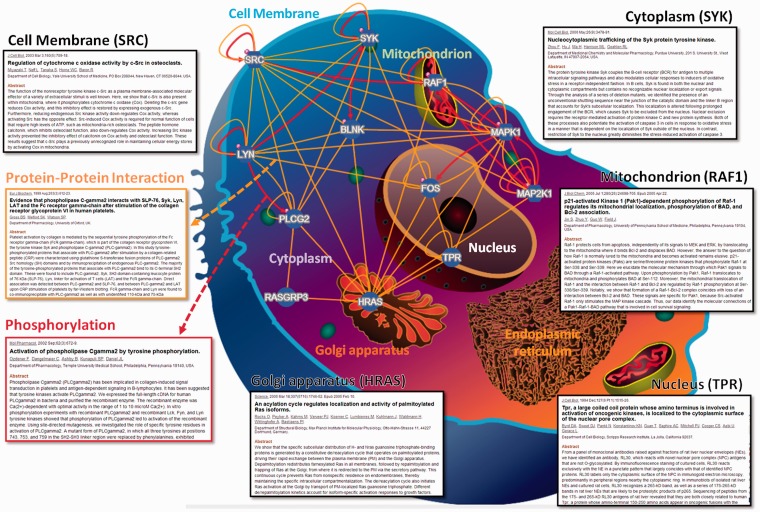
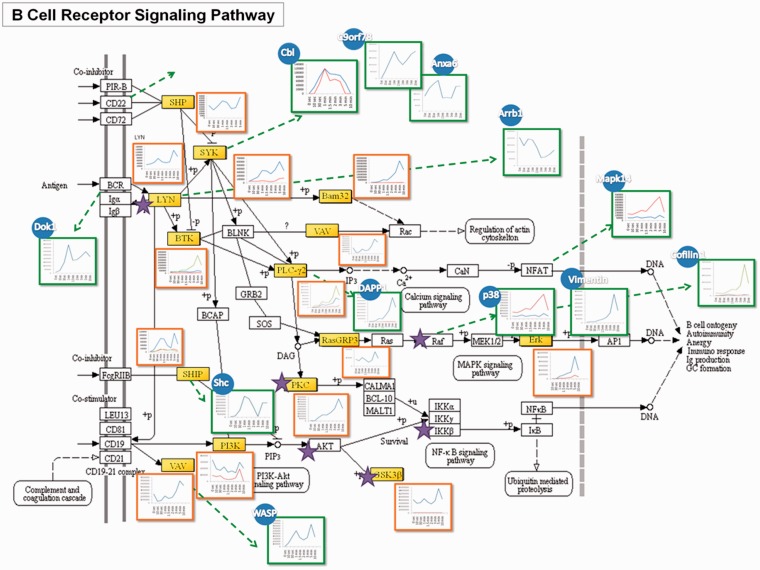
Protein phosphorylation catalyzed by kinases plays crucial roles in regulating a variety of intracellular processes. Owing to an increasing number of in vivo phosphorylation sites that have been identified by mass spectrometry (MS)-based proteomics, the RegPhos, available online at http://csb.cse.yzu.edu.tw/RegPhos2/, was developed to explore protein phosphorylation networks in human. In this update, we not only enhance the data content in human but also investigate kinase-substrate phosphorylation networks in mouse and rat. The experimentally validated phosphorylation sites as well as their catalytic kinases were extracted from public resources, and MS/MS phosphopeptides were manually curated from research articles. RegPhos 2.0 aims to provide a more comprehensive view of intracellular signaling networks by integrating the information of metabolic pathways and protein-protein interactions. A case study shows that analyzing the phosphoproteome profile of time-dependent cell activation obtained from Liquid chromatography-mass spectrometry (LC-MS/MS) analysis, the RegPhos deciphered not only the consistent scheme in B cell receptor (BCR) signaling pathway but also novel regulatory molecules that may involve in it. With an attempt to help users efficiently identify the candidate biomarkers in cancers, 30 microarray experiments, including 39 cancerous versus normal cells, were analyzed for detecting cancer-specific expressed genes coding for kinases and their substrates. Furthermore, this update features an improved web interface to facilitate convenient access to the exploration of phosphorylation networks for a group of genes/proteins. Database URL: http://csb.cse.yzu.edu.tw/RegPhos2/
Figures
References
-
- Fischer E.H. (1997) Cellular regulation by protein phosphorylation: a historical overview. Biofactors, 6, 367–374 - PubMed
-
- Marshall C.J. (1994) Signal transduction. Hot lips and phosphorylation of protein kinases. Nature, 367, 686. - PubMed
-
- Hubbard M.J., Cohen P. (1993) On target with a new mechanism for the regulation of protein phosphorylation. Trends Biochem. Sci., 18, 172–177 - PubMed
Publication types
MeSH terms
Substances
LinkOut - more resources
Full Text Sources
Other Literature Sources
