


Eye tracking as a measure of receptive vocabulary in children with autism spectrum disorders
- PMID: 24773020
- PMCID: PMC4047176
- DOI: 10.3109/07434618.2014.904923
Eye tracking as a measure of receptive vocabulary in children with autism spectrum disorders
Abstract
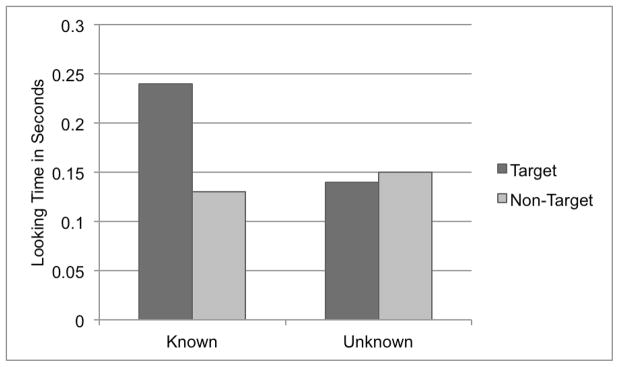
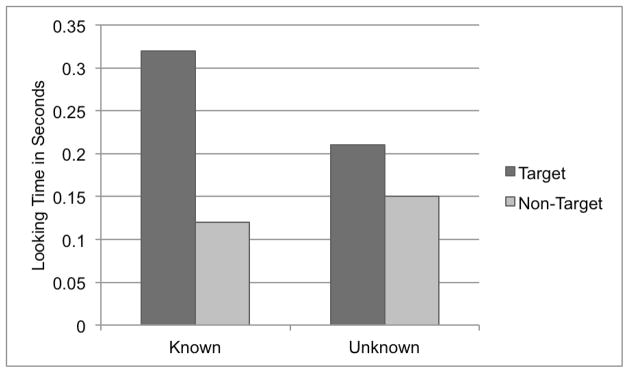
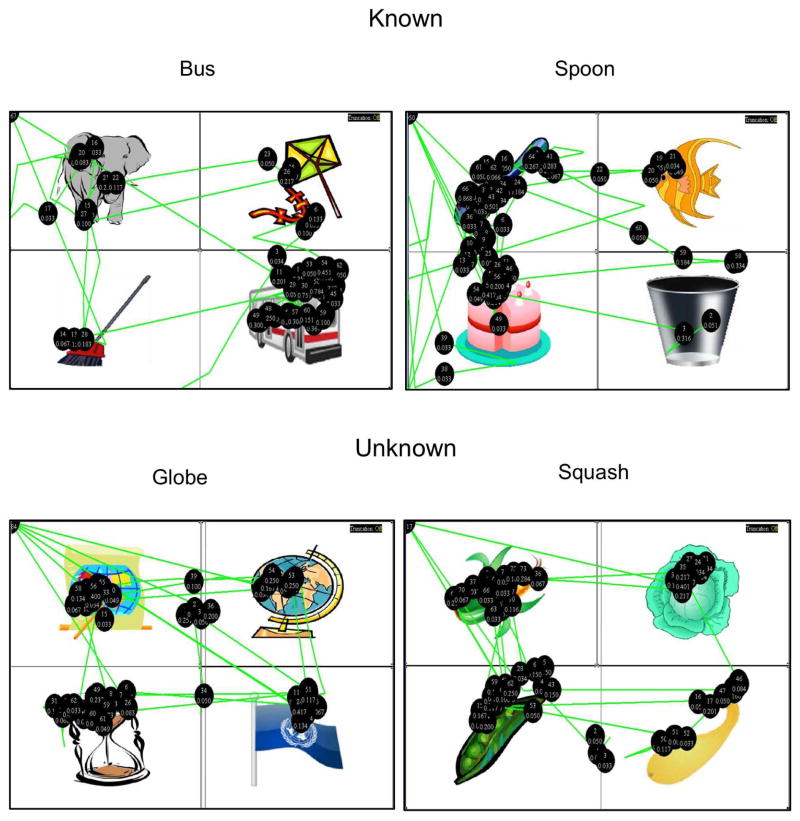
This study examined the utility of eye tracking research technology to measure speech comprehension in 14 young boys with autism spectrum disorders (ASD) and 15 developmentally matched boys with typical development. Using eye tracking research technology, children were tested on individualized sets of known and unknown words, identified based on their performance on the Peabody Picture Vocabulary Test. Children in both groups spent a significantly longer amount of time looking at the target picture when previous testing indicated the word was known (known condition). Children with ASD spent similar amounts of time looking at the target and non-target pictures when previous testing indicated the word was unknown (unknown condition). However, children with typical development looked longer at the target pictures in the unknown condition as well, potentially suggesting emergent vocabulary knowledge.
Keywords: Autism spectrum disorders; Eye tracking; Receptive language; Speech comprehension.
Figures
References
-
- ASL. ASL EYE-TRACK 6 eye-tracking system with optics. Bedford, MA: ASL; 2008.
-
- Bebko J, Weiss J, Demark J, Gomez P. Discrimination of temporal synchrony in intermodal events by children with autism and children with developmental disabilities without autism. Journal of Child Psychology and Psychiatry. 2006;47:88–98. - PubMed
-
- Behrend DA. The development of verb concepts: Children’s use of verbs to label familiar and novel events. Child Development. 1990;61:681–696. - PubMed
Publication types
MeSH terms
Grants and funding
LinkOut - more resources
Full Text Sources
Other Literature Sources
