


Good guy or bad guy: the opposing roles of microRNA 125b in cancer
- PMID: 24774301
- PMCID: PMC4011766
- DOI: 10.1186/1478-811X-12-30
Good guy or bad guy: the opposing roles of microRNA 125b in cancer
Abstract
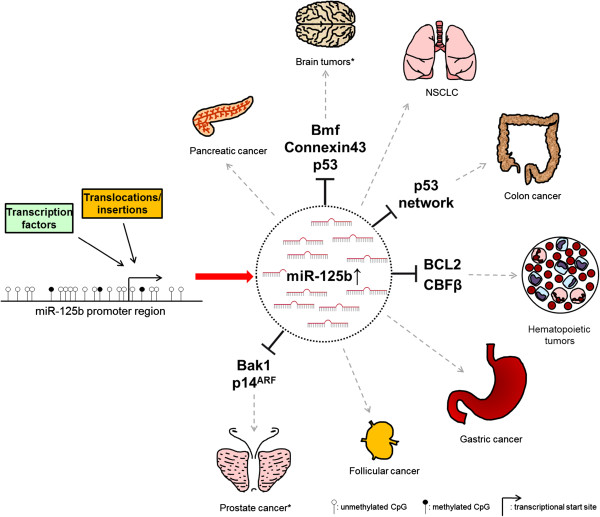
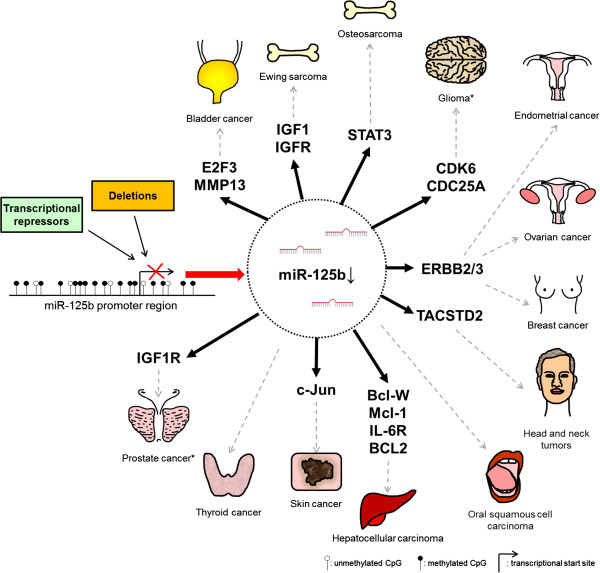
MicroRNAs (miRNAs) are a class of non-coding RNAs that post-transcriptionally silence target mRNAs. Dysregulation of miRNAs is a frequent event in several diseases, including cancer. One miRNA that has gained special interest in the field of cancer research is miRNA-125b (miR-125b). MiR-125b is a ubiquitously expressed miRNA that is aberrantly expressed in a great variety of tumors. In some tumor types, e.g. colon cancer and hematopoietic tumors, miR-125b is upregulated and displays oncogenic potential, as it induces cell growth and proliferation, while blocking the apoptotic machinery. In contrast, in other tumor entities, e.g. mammary tumors and hepatocellular carcinoma, miR-125b is heavily downregulated. This downregulation is accompanied by de-repression of cellular proliferation and anti-apoptotic programs, contributing to malignant transformation. The reasons for these opposing roles are poorly understood. We summarize the current knowledge of miR-125b and its relevant targets in different tumor types and offer several hypotheses for the opposing roles of miR-125b: miR-125b targets multiple mRNAs, which have diverse functions in individual tissues. These target mRNAs are tissue and tumor specifically expressed, suggesting that misregulation by miR-125b depends on the levels of target gene expression. Moreover, we provide several examples that miR-125b upregulation dictates oncogenic characteristics, while downregulation of miR-125b corresponds to the loss of tumor suppressive functions. Thus, in different tumor entities increased or decreased miR-125b expression may contribute to carcinogenesis.
Figures
References
Publication types
MeSH terms
Substances
LinkOut - more resources
Full Text Sources
Other Literature Sources
Research Materials
