


High trait impulsivity predicts food addiction-like behavior in the rat
- PMID: 24776685
- PMCID: PMC4138758
- DOI: 10.1038/npp.2014.98
High trait impulsivity predicts food addiction-like behavior in the rat
Abstract
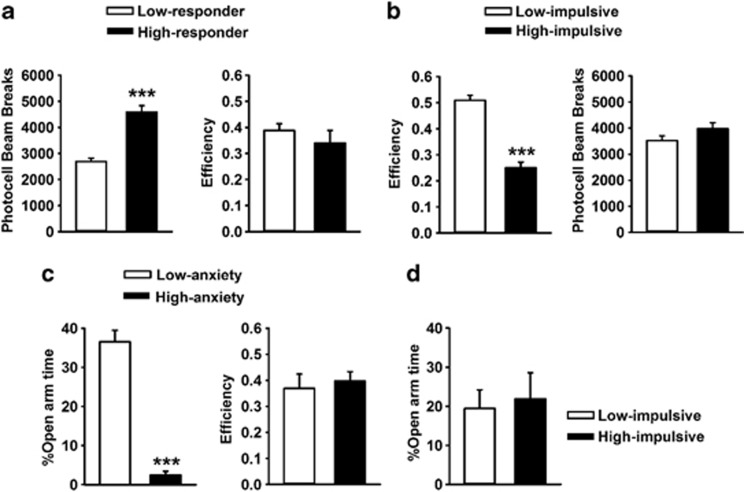
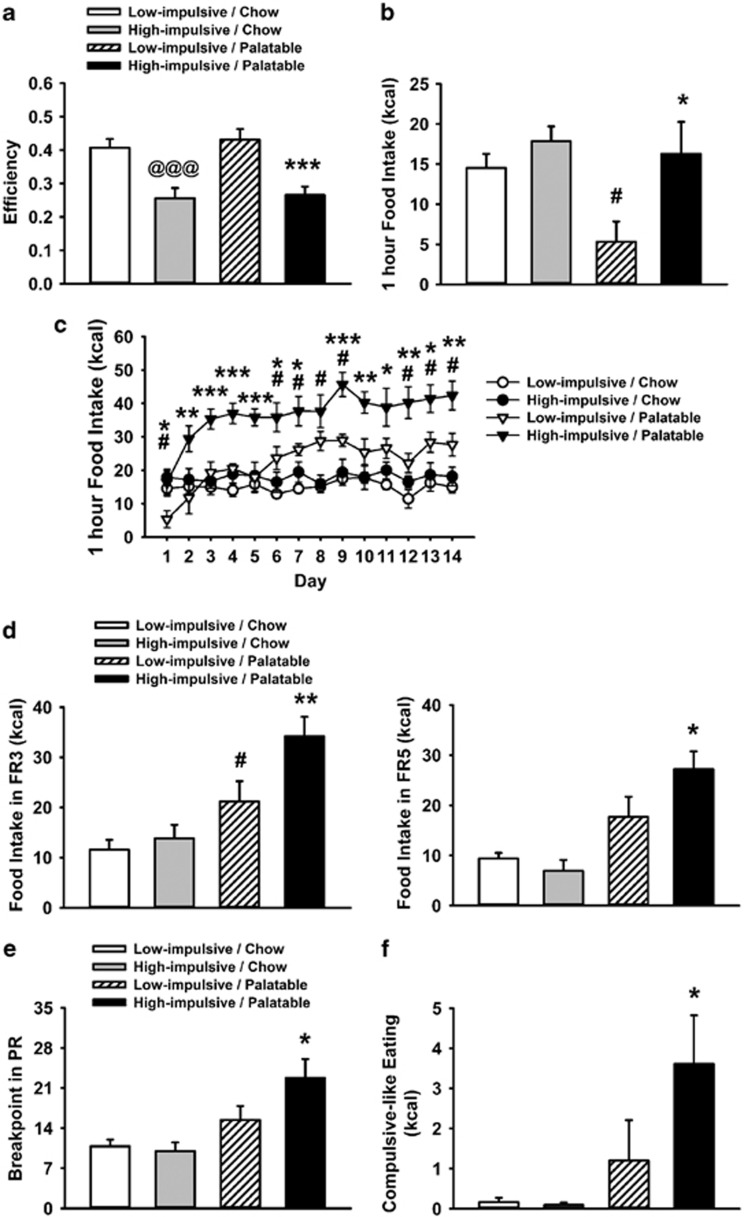
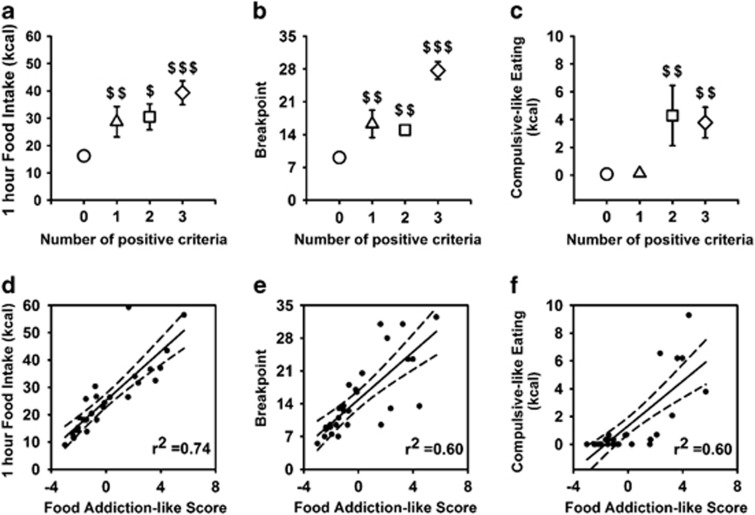
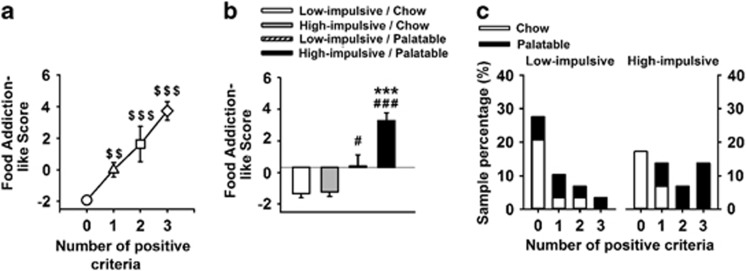
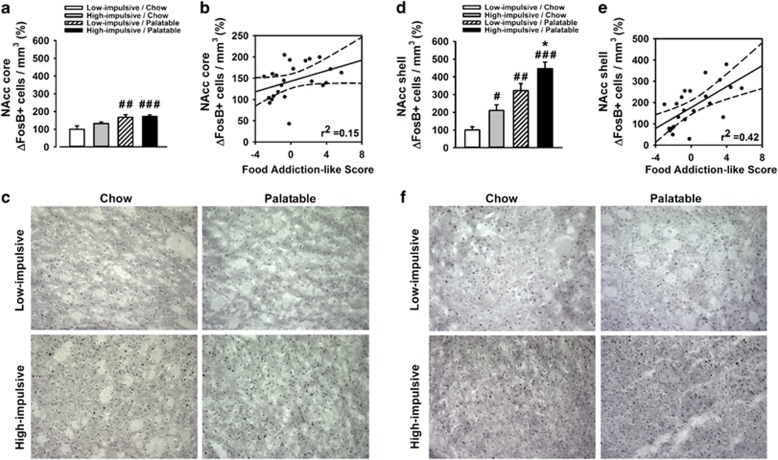
Impulsivity is a behavioral trait frequently seen not only in drug-addicted individuals but also in individuals who pathologically overeat. However, whether impulsivity predates the development of uncontrollable feeding is unknown. In this study, we hypothesized that a high impulsivity trait precedes and confers vulnerability for food addiction-like behavior. For this purpose, we trained ad libitum-fed male Wistar rats in a differential reinforcement of low rates of responding (DRL) task to select Low- and High-impulsive rats. Then, we allowed Low- and High-impulsive rats to self-administer a highly palatable diet (Palatable group) or a regular chow diet (Chow group) in 1-h daily sessions, under fixed ratio (FR) 1, FR3, FR5, and under a progressive ratio (PR) schedules of reinforcement. In addition, we tested the compulsiveness for food in Low- and High-impulsive rats by measuring the food eaten in the aversive, open compartment of a light/dark conflict test. Finally, we measured the expression of the transcription factor ΔFosB in the shell and the core of the nucleus accumbens, which is a marker for neuroadaptive changes following addictive drug exposure. The data we obtained demonstrate that impulsivity is a trait that predicts the development of food addiction-like behaviors, including: (i) excessive intake, (ii) heightened motivation for food, and (iii) compulsive-like eating, when rats are given access to highly palatable food. In addition, we show that the food addiction phenotype in high impulsive subjects is characterized by an increased expression of the transcription factor ΔFosB in the nucleus accumbens shell. These results reveal that impulsivity confers an increased propensity to develop uncontrollable overeating of palatable food.
Figures
References
-
- APA2013Diagnostic and Statistical Manual of Mental Disorders5th edn. American Psychiatric Association.
-
- Ahima RS. The end of overeating: taking control of the insatiable American appetite. J Clin Invest. 2009;119:2867.
-
- Ahima RS, Lazar MA. Physiology. The health risk of obesity—better metrics imperative. Science. 2013;341:856–858. - PubMed
-
- APA 2013Diagnostic and Statistical Manual of Mental Disorders,5th edn.American Psychiatric Association
-
- Avena NM, Gearhardt AN, Gold MS, Wang GJ, Potenza MN.2012Tossing the baby out with the bathwater after a brief rinse? The potential downside of dismissing food addiction based on limited data Nat Rev Neurosci 13514author reply 514. - PubMed
Publication types
MeSH terms
Substances
Grants and funding
LinkOut - more resources
Full Text Sources
Other Literature Sources
Research Materials
