


Disparities among 2009 pandemic influenza A (H1N1) hospital admissions: a mixed methods analysis--Illinois, April-December 2009
- PMID: 24776852
- PMCID: PMC4002432
- DOI: 10.1371/journal.pone.0084380
Disparities among 2009 pandemic influenza A (H1N1) hospital admissions: a mixed methods analysis--Illinois, April-December 2009
Abstract
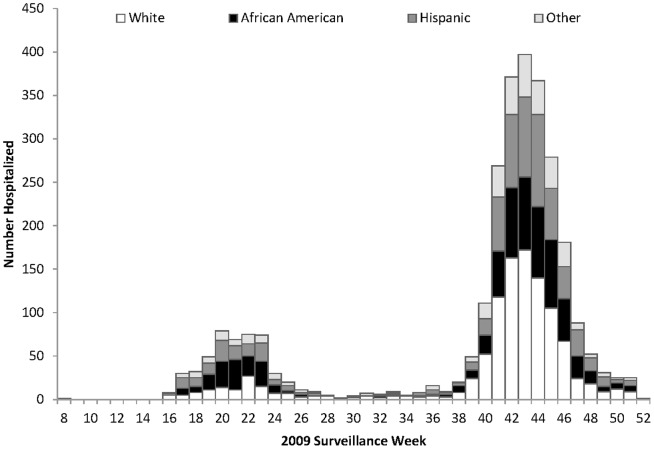
During late April 2009, the first cases of 2009 pandemic influenza A (H1N1) (pH1N1) in Illinois were reported. On-going, sustained local transmission resulted in an estimated 500,000 infected persons. We conducted a mixed method analysis using both quantitative (surveillance) and qualitative (interview) data; surveillance data was used to analyze demographic distribution of hospitalized cases and follow-up interview data was used to assess health seeking behavior. Invitations to participate in a telephone interview were sent to 120 randomly selected Illinois residents that were hospitalized during April-December 2009. During April-December 2009, 2,824 pH1N1 hospitalizations occurred in Illinois hospitals; median age (interquartile range) at admission was 24 (range: 6-49) years. Hospitalization rates/100,000 persons for blacks and Hispanics, regardless of age or sex were 2-3 times greater than for whites (blacks, 36/100,000 (95% Confidence Interval ([95% CI], 33-39)); Hispanics, 35/100,000 [95%CI,32-37] (; whites, 13/100,000[95%CI, 12-14); p<0.001). Mortality rates were higher for blacks (0.9/100,000; p<0.09) and Hispanics (1/100,000; p<0.04) when compared with the mortality rates for whites (0.6/100,000). Of 33 interview respondents, 31 (94%) stated that they had heard of pH1N1 before being hospitalized, and 24 (73%) did not believed they were at risk for pH1N1. On average, respondents reported experiencing symptoms for 2 days (range: 1-7) before seeking medical care. When asked how to prevent pH1N1 infection in the future, the most common responses were getting vaccinated and practicing hand hygiene. Blacks and Hispanics in Illinois experienced disproportionate pH1N1 hospitalization and mortality rates. Public health education and outreach efforts in preparation for future influenza pandemics should include prevention messaging focused on perception of risk, and ensure community wide access to prevention messages and practices.
Conflict of interest statement
Figures
References
-
- Osztovits J, Balazs C, Feher J (2009) [H1N1 influenza - pandemic, 2009]. Orv Hetil 150: 2265–2273. - PubMed
-
- Chang M (2009) World now at the start of 2009 influenza pandemic.
-
- IDPH (2010) Pandemic 2009 H1N1 Influenza A Surveillance and Response Summary Illinois Department of Public Health
-
- Swedish KA (2011) 2009 Pandemic Influenza A (H1N1): Diagnosis, Management, and Prevention- Lessons Learned. Curr Infect Dis Rep 13: 169–174. - PubMed
MeSH terms
LinkOut - more resources
Full Text Sources
Other Literature Sources
Medical
Miscellaneous
