Neamine inhibits oral cancer progression by suppressing angiogenin-mediated angiogenesis and cancer cell proliferation
- PMID: 24778013
- PMCID: PMC4757496
Neamine inhibits oral cancer progression by suppressing angiogenin-mediated angiogenesis and cancer cell proliferation
Abstract
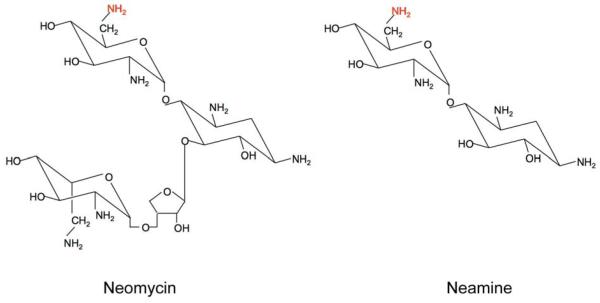
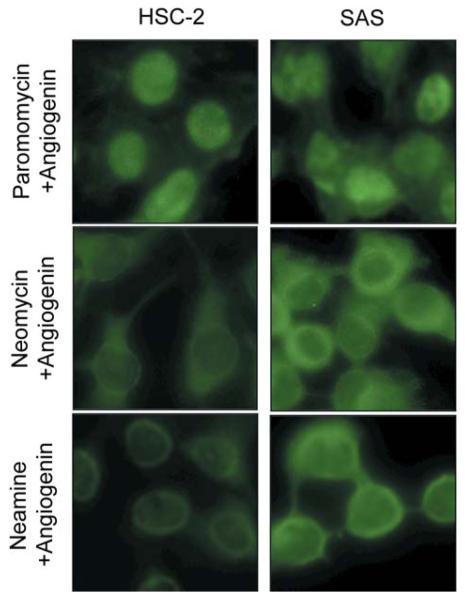
Background: Angiogenin undergoes nuclear translocation and stimulates ribosomal RNA transcription in both endothelial and cancer cells. Consequently, angiogenin has a dual effect on cancer progression by inducing both angiogenesis and cancer cell proliferation. The aim of this study was to assess whether neamine, a blocker of nuclear translocation of angiogenin, possesses antitumor activity toward oral cancer.
Materials and methods: The antitumor effect of neamine on oral cancer cells was examined both in vitro and in vivo.
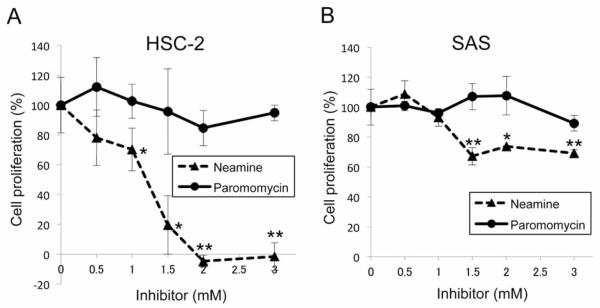
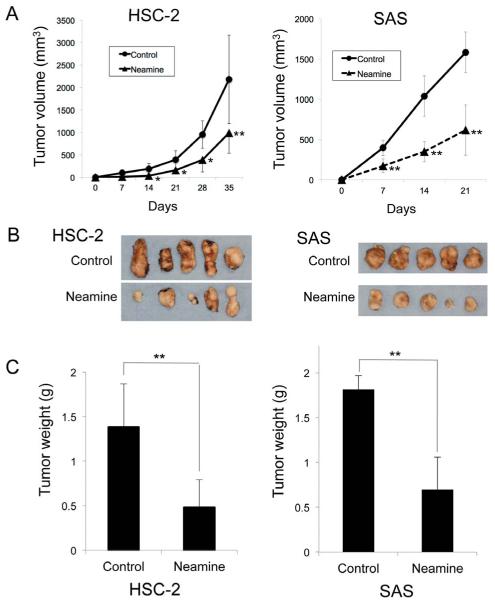
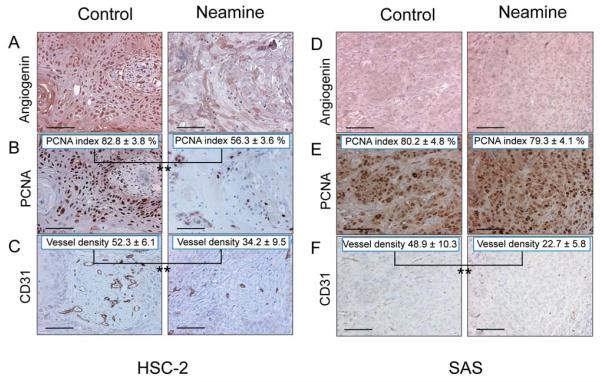
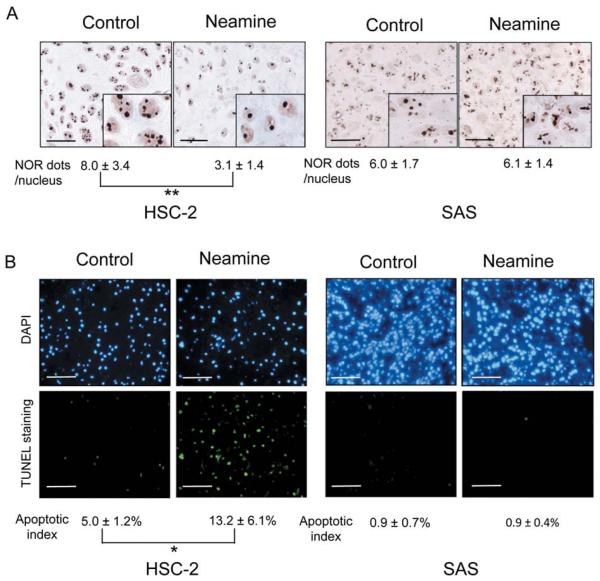
Results: Neamine inhibited the proliferation of HSC-2, but not that of SAS oral cancer cells in vitro. Treatment with neamine effectively inhibited growth of HSC-2 and SAS cell xenografts in athymic mice. Neamine treatment resulted in a significant decrease in tumor angiogenesis, accompanied by a decrease in angiogenin- and proliferating cell nuclear antigen-positive cancer cells, especially of HSC-2 tumors.
Conclusion: Neamine effectively inhibits oral cancer progression through inhibition of tumor angiogenesis. Neamine also directly inhibits proliferation of certain types of oral cancer cells. Therefore, neamine has potential as a lead compound for oral cancer therapy.
Keywords: Neamine; angiogenesis; angiogenin; cell proliferation; oral cancer.
Figures
References
-
- Siegel R, Ma J, Zou Z, Jemal A. Cancer statistics, 2014. CA Cancer J Clin. 2014;64:9–29. - PubMed
-
- Hasina R, Lingen MW. Angiogenesis in oral cancer. J Dent Educ. 2001;65:1282–1290. - PubMed
-
- Xu ZP, Tsuji T, Riordan JF, Hu GF. The nuclear function of angiogenin in endothelial cells is related to rRNA production. Biochem Biophys Res Commun. 2002;294:287–292. - PubMed
-
- Tsuji T, Sun Y, Kishimoto K, Olson KA, Liu S, Hirukawa S, Hu GF. Angiogenin is translocated to the nucleus of HeLa cells and is involved in ribosomal RNA transcription and cell proliferation. Cancer Res. 2005;65:1352–1360. - PubMed
Publication types
MeSH terms
Substances
Grants and funding
LinkOut - more resources
Full Text Sources
Medical