Chemotherapeutic targeting of cancer-induced immunosuppressive cells
- PMID: 24778417
- PMCID: PMC4041515
- DOI: 10.1158/0008-5472.CAN-14-0301
Chemotherapeutic targeting of cancer-induced immunosuppressive cells
Abstract
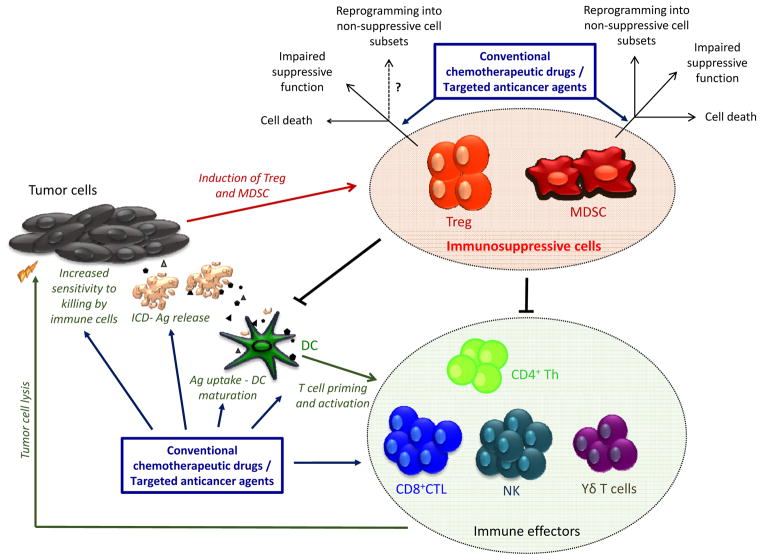
The expansion of immunosuppressive cells represents a cardinal strategy deployed by tumors to escape from detection and elimination by the immune system. Regulatory T lymphocytes (Treg) and myeloid-derived suppressor cells (MDSC), major components of these inhibitory cellular networks, have drawn intense scrutiny in recent years. In patients with cancer and in animal tumor models, these suppressor cells accumulate in the tumor microenvironment, secondary lymphoid tissues, and in the blood. Equipped with the ability to suppress innate and adaptive anticancer immunity, these cells also foster disease development by promoting tumor neoangiogenesis and by enhancing cancer metastasis. They therefore represent major impediments for anticancer therapies, particularly for immune-based interventions. Recent work has provided evidence that beyond their direct cytotoxic or cytostatic effects on cancer cells, several conventional chemotherapeutic drugs and agents used in targeted therapies can promote the elimination or inactivation of suppressive Tregs or MDSCs, resulting in enhanced antitumor immunity. We analyze findings pertinent to this concept, discuss the possible molecular bases underlying the selective targeting of these immunosuppressive cells by antineoplastic agents, and consider current challenges and future prospects related to the integration of these molecules into more efficient anticancer chemoimmunotherapeutic strategies.
©2014 American Association for Cancer Research.
Conflict of interest statement
Figures
References
-
- Dunn GP, Old LJ, Schreiber RD. The three Es of cancer immunoediting. Annu Rev Immunol. 2004;22:329–60. - PubMed
-
- Hanahan D, Weinberg RA. Hallmarks of cancer: the next generation. Cell. 2011;144:646–74. - PubMed
-
- Zitvogel L, Tesniere A, Kroemer G. Cancer despite immunosurveillance: immunoselection and immunosubversion. Nat Rev Immunol. 2006;6:715–27. - PubMed
-
- Colombo MP, Piconese S. Regulatory-T-cell inhibition versus depletion: the right choice in cancer immunotherapy. Nat Rev Cancer. 2007;7:880–7. - PubMed
Publication types
MeSH terms
Grants and funding
LinkOut - more resources
Full Text Sources
Other Literature Sources