


Maternal KIR in combination with paternal HLA-C2 regulate human birth weight
- PMID: 24778445
- PMCID: PMC4028203
- DOI: 10.4049/jimmunol.1400577
Maternal KIR in combination with paternal HLA-C2 regulate human birth weight
Abstract
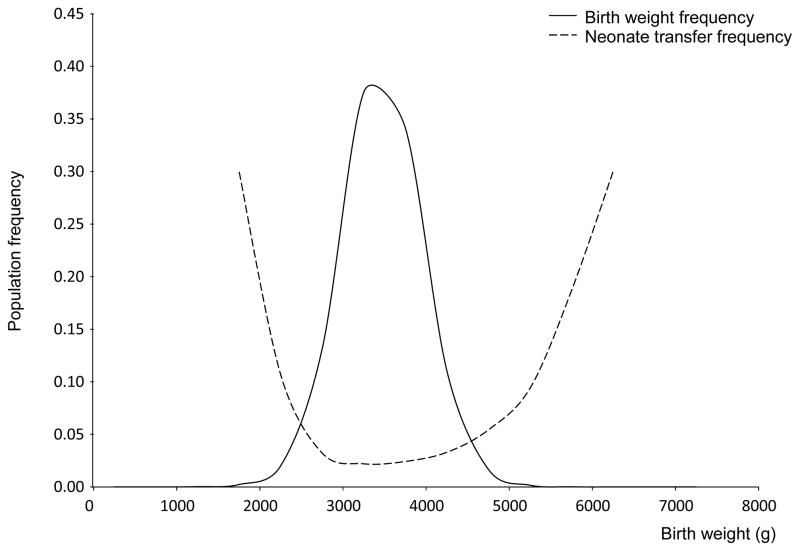
Human birth weight is subject to stabilizing selection; babies born too small or too large are less likely to survive. Particular combinations of maternal/fetal immune system genes are associated with pregnancies where the babies are ≤ 5th birth weight centile, specifically an inhibitory maternal KIR AA genotype with a paternally derived fetal HLA-C2 ligand. We have now analyzed maternal KIR and fetal HLA-C combinations at the opposite end of the birth weight spectrum. Mother/baby pairs (n = 1316) were genotyped for maternal KIR as well as fetal and maternal HLA-C. Presence of a maternal-activating KIR2DS1 gene was associated with increased birth weight in linear or logistic regression analyses of all pregnancies >5th centile (p = 0.005, n = 1316). Effect of KIR2DS1 was most significant in pregnancies where its ligand, HLA-C2, was paternally but not maternally inherited by a fetus (p = 0.005, odds ratio = 2.65). Thus, maternal KIR are more frequently inhibitory with small babies but activating with big babies. At both extremes of birth weight, the KIR associations occur when their HLA-C2 ligand is paternally inherited by a fetus. We conclude that the two polymorphic immune gene systems, KIR and HLA-C, contribute to successful reproduction by maintaining birth weight between two extremes with a clear role for paternal HLA.
Figures
References
-
- Cavalli-Sforza L, Bodmer WF. The Genetics of Human Populations. WH Freeman and Co; San Francisco, CA: 1971.
-
- Rosenberg M. Birth weights in three Norwegian cities, 1860–1984. Secular trends and influencing factors. Ann Hum Biol. 1988;15:275–288. - PubMed
-
- Trevathan WR. Human birth: An evolutionary perspective. Transaction Books; Piscataway, NJ: 2011.
-
- Karn MN, Penrose LS. Birth weight and gestation time in relation to maternal age, parity and infant survival. Ann Eugen. 1952;16:147–164. - PubMed
Publication types
MeSH terms
Substances
Grants and funding
LinkOut - more resources
Full Text Sources
Other Literature Sources
Medical
Research Materials
Miscellaneous
