


Regulation of TGFβ superfamily signaling by two separable domains of glypican LON-2 in C. elegans
- PMID: 24778932
- PMCID: PMC3875644
- DOI: 10.4161/worm.23843
Regulation of TGFβ superfamily signaling by two separable domains of glypican LON-2 in C. elegans
Abstract
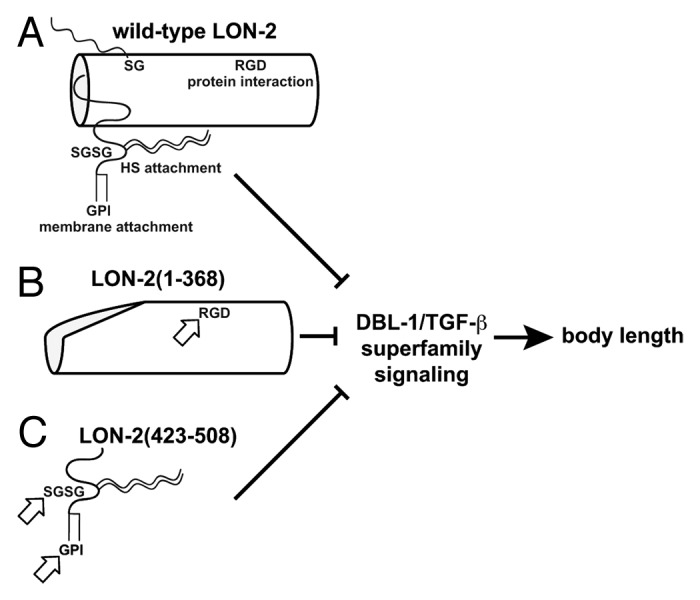
Regulated intercellular signaling is critical for the normal development and maintenance of multicellular organisms. Glypicans have been shown to regulate signaling by TGFβs, hedgehogs and Wnts, in several cellular contexts. Glypicans comprise a conserved family of heparan sulfated, glycosylphosphatidylinositol (GPI)-linked extracellular proteins. The structural complexity of glypicans may underlie their functional complexity. In a recent study(31), we built on previous findings that one of the two C. elegans glypicans, LON-2, specifically inhibits signaling by the TGFβ superfamily member DBL-1. We tested the functional requirements of LON-2 protein core components and post-translational modifications for LON-2 activity. We provide the first evidence that two parts of a glypican can independently regulate TGFβ superfamily signaling in vivo: the N-terminal furin protease product and a C-terminal region containing heparan sulfate attachment sites. Furthermore, we show a protein-protein interaction motif is crucial for LON-2 activity in the N-terminal protein core, suggesting that LON-2 acts by serving as a scaffold for DBL-1 and an RGD-binding protein. In addition, we demonstrate specificity of glypican function by showing C. elegans GPN-1 does not functionally substitute for LON-2. This work reveals a molecular foundation for understanding the complexity and specificity of glypican function.
Keywords: LON-2; RGD-binding protein; TGFβ signaling; body size; glycosylphosphatidylinositol anchor; glypican; heparan sulfate proteoglycan.
Figures
Comment on
- S Taneja-Bageshwar, TL Gumienny. Two functional domains in C. elegans glypican LON-2 can independently inhibit BMP-like signaling Dev Biol 2012 371 66 76 10.1016/j.ydbio.2012.08.006 Commentary to: doi: 10.1016/j.ydbio.2012.08.006
References
Grants and funding
LinkOut - more resources
Full Text Sources
Other Literature Sources
Miscellaneous
