


The regulation of autophagy by influenza A virus
- PMID: 24779013
- PMCID: PMC3980786
- DOI: 10.1155/2014/498083
The regulation of autophagy by influenza A virus
Abstract
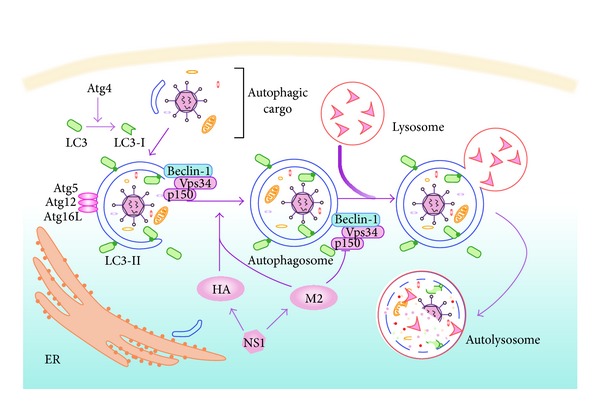
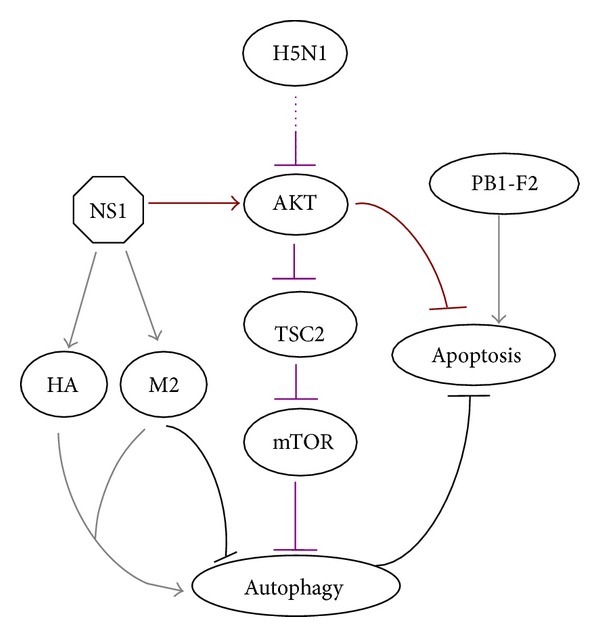
Influenza A virus is a dreadful pathogen of animals and humans, causing widespread infection and severe morbidity and mortality. It is essential to characterize the influenza A virus-host interaction and develop efficient counter measures against the viral infection. Autophagy is known as a catabolic process for the recycling of the cytoplasmic macromolecules. Recently, it has been shown that autophagy is a critical mechanism underlying the interaction between influenza A virus and its host. Autophagy can be induced by the infection with influenza A virus, which is considered as a necessary process for the viral proliferation, including the accumulation of viral elements during the replication of influenza A virus. On the other hand, influenza A virus can inhibit the autophagic formation via interaction with the autophagy-related genes (Atg) and signaling pathways. In addition, autophagy is involved in the influenza virus-regulated cell deaths, leading to significant changes in host apoptosis. Interestingly, the high pathogenic strains of influenza A virus, such as H5N1, stimulate autophagic cell death and appear to interplay with the autophagy in distinct ways as compared with low pathogenic strains. This review discusses the regulation of autophagy, an influenza A virus driven process.
Figures
References
-
- Krug R, Lamb R. Fields Virology. 2001. Orthomyxoviridae: the viruses and their replication; pp. 1487–1503.
-
- Lamb R. The Influenza Virus RNA Segments and Their Encoded Proteins. Vienna, Austria: Springer; 1983.
Publication types
MeSH terms
LinkOut - more resources
Full Text Sources
Other Literature Sources
Medical
