


Ambulatory quality indicators to prevent infection in sickle cell disease
- PMID: 24779032
- PMCID: PMC4450348
- DOI: 10.1002/ajh.23627
Ambulatory quality indicators to prevent infection in sickle cell disease
Abstract
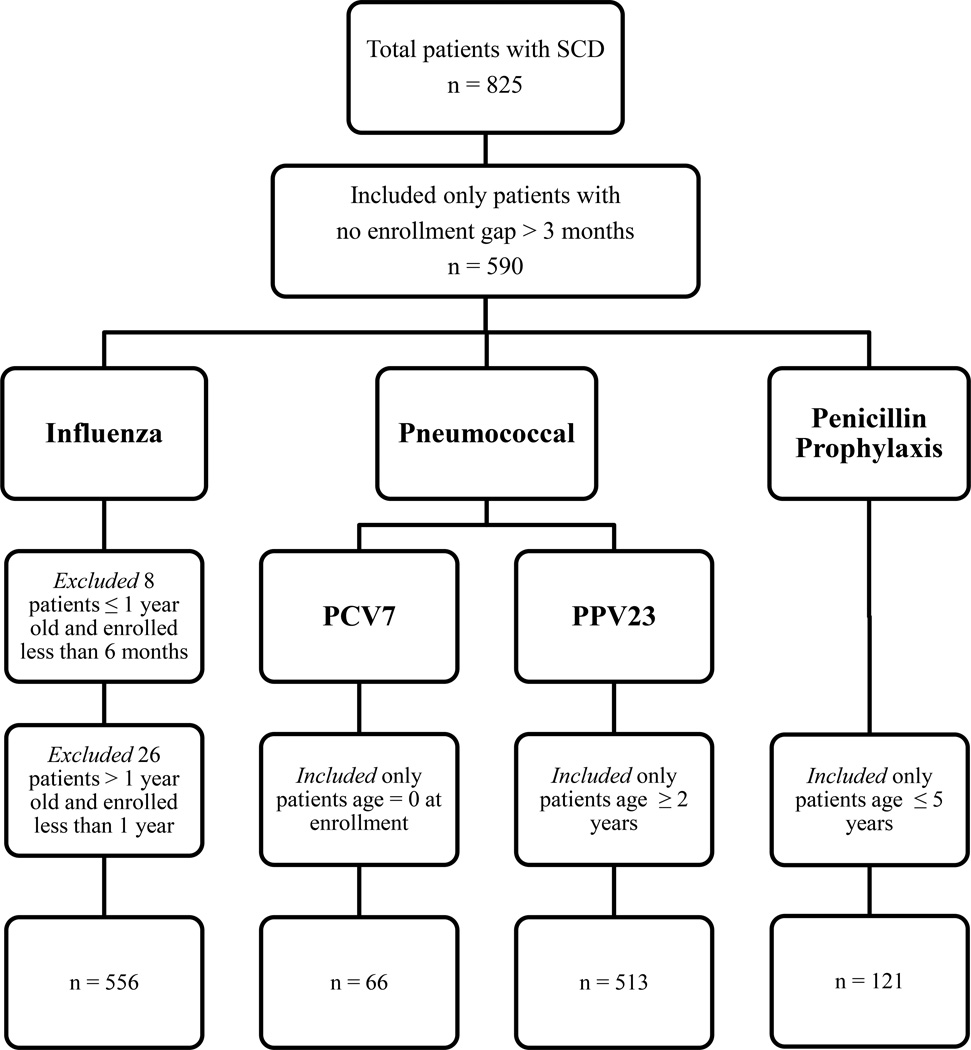
The purpose of this study was to identify rates of adherence for three outpatient quality indicators noted by Wang et al. (Pediatrics 2011;128:484–493): (1) influenza vaccine, (2) pneumococcal immunizations, and (3)penicillin prophylaxis in patients with sickle cell disease (SCD) in a Medicaid sample. These variables were chosen based on Wang and colleagues' suggestion that these variables are important for the assessment of the quality of care of children with SCD. We hypothesized that the overall rate of adherence would be poor with adults having worse rates of adherence than children. We conducted a retrospective cohort study using the Wisconsin State Medicaid database over a 5-year period to assess the preventative medication adherence of individuals with SCD. Preventative medication variables in this study included influenza vaccination,pneumococcal immunizations (PCV7, PPV23), and penicillin prophylaxis. As predicted, the 2003–2007 Wisconsin State Medicaid database showed patients with SCD had low adherence in terms of recommended influenza vaccinations (21.58% adherent), PPV23 pneumococcal immunizations (43.47% adherent), and penicillin prophylaxis (18.18% adherent). Pneumococcal immunizations for PCV7 were higher than expected (77.27%adherent). Although children tended to adhere to recommended preventative medications more than adults,overall adherence was low. Although we cannot explain why adherence is low, it is likely due to multiple factors at the patient- and provider-level. We encourage patients and providers to create a partnership to meet adherence recommendations, and we describe our strategies for increasing adherence.
Figures
References
-
- Brousseau DC, Panepinto JA, Nimmer M, et al. The number of people with sickle-cell disease in the united states: National and state estimates. Am J Hematol. 2010;85:77–78. - PubMed
-
- Panepinto JA, Bonner M. Health-related quality of life in sickle cell disease: Past, present, and future. Pediatr Blood Cancer. 2012;59:377–385. - PubMed
-
- Wang CJ, Kavanagh PL, Little AA, et al. Quality-of-care indicators for children with sickle cell disease. Pediatrics. 2011;128:484–493. - PubMed
-
- Shankar SM, Arbogast PG, Mitchel E, et al. Medical care utilization and mortality in sickle cell disease: A population-based study. Am J Hematol. 2005;80:262–270. - PubMed
MeSH terms
Substances
Grants and funding
LinkOut - more resources
Full Text Sources
Other Literature Sources
Medical
Research Materials