


Updates of reactive oxygen species in melanoma etiology and progression
- PMID: 24780245
- PMCID: PMC4209333
- DOI: 10.1016/j.abb.2014.04.007
Updates of reactive oxygen species in melanoma etiology and progression
Abstract
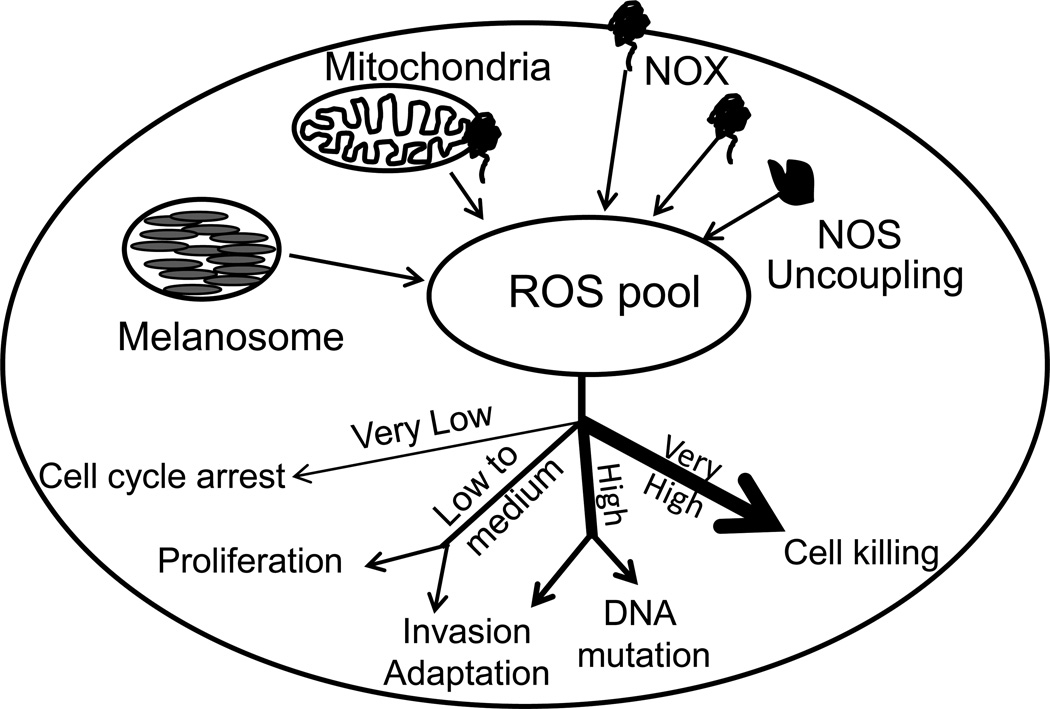
Reactive oxygen species (ROS) play crucial roles in all aspects of melanoma development, however, the source of ROS is not well defined. In this review we summarize recent advancement in this rapidly developing field. The cellular ROS pool in melanocytes can be derived from mitochondria, melanosomes, NADPH oxidase (NOX) family enzymes, and uncoupling of nitric oxide synthase (NOS). Current evidence suggests that Nox1, Nox4 and Nox5 are expressed in melanocytic lineage. While there is no difference in Nox1 expression levels in primary and metastatic melanoma tissues, Nox4 expression is significantly higher in a subset of metastatic melanoma tumors as compared to the primary tumors; suggesting distinct and specific signals and effects for NOX family enzymes in melanoma. Targeting these NOX enzymes using specific NOX inhibitors may be effective for a subset of certain tumors. ROS also play important roles in BRAF inhibitor induced drug resistance; hence identification and blockade of the source of this ROS may be an effective way to enhance efficacy and overcome resistance. Furthermore, ROS from different sources may interact with each other and interact with reactive nitrogen species (RNS) and drive the melanomagenesis process at all stages of disease. Further understanding ROS and RNS in melanoma etiology and progression is necessary for developing new prevention and therapeutic approaches.
Keywords: Melanoma; Mitochondria; NADPH oxidase; Nox1; Nox4; RNS; ROS; Reactive oxygen species.
Figures
References
-
- Fried L, Arbiser JL. The reactive oxygen-driven tumor: relevance to melanoma. Pigment Cell Melanoma Res. 2008;21(2):117–122. - PubMed
-
- Meyskens FL, Jr, et al. New perspectives on melanoma pathogenesis and chemoprevention. Recent Results Cancer Res. 2007;174:191–195. - PubMed
-
- Wittgen HG, van Kempen LC. Reactive oxygen species in melanoma and its therapeutic implications. Melanoma Res. 2007;17(6):400–409. - PubMed
-
- Ziech D, et al. Reactive oxygen species (ROS)--induced genetic and epigenetic alterations in human carcinogenesis. Mutat Res. 2011;711(1–2):167–173. - PubMed
-
- Wu WS. The signaling mechanism of ROS in tumor progression. Cancer Metastasis Rev. 2006;25(4):695–705. - PubMed
Publication types
MeSH terms
Substances
Grants and funding
LinkOut - more resources
Full Text Sources
Other Literature Sources
Medical
Research Materials
