


Intestinal type of lung adenocarcinoma in younger adults
- PMID: 24782938
- PMCID: PMC3981109
- DOI: 10.1155/2014/282196
Intestinal type of lung adenocarcinoma in younger adults
Abstract
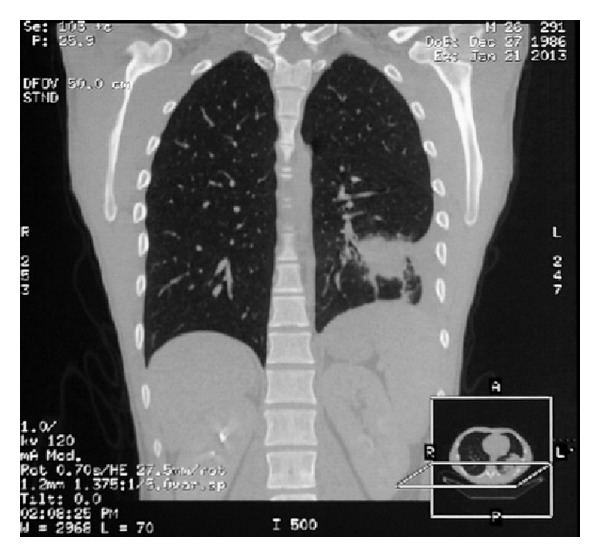
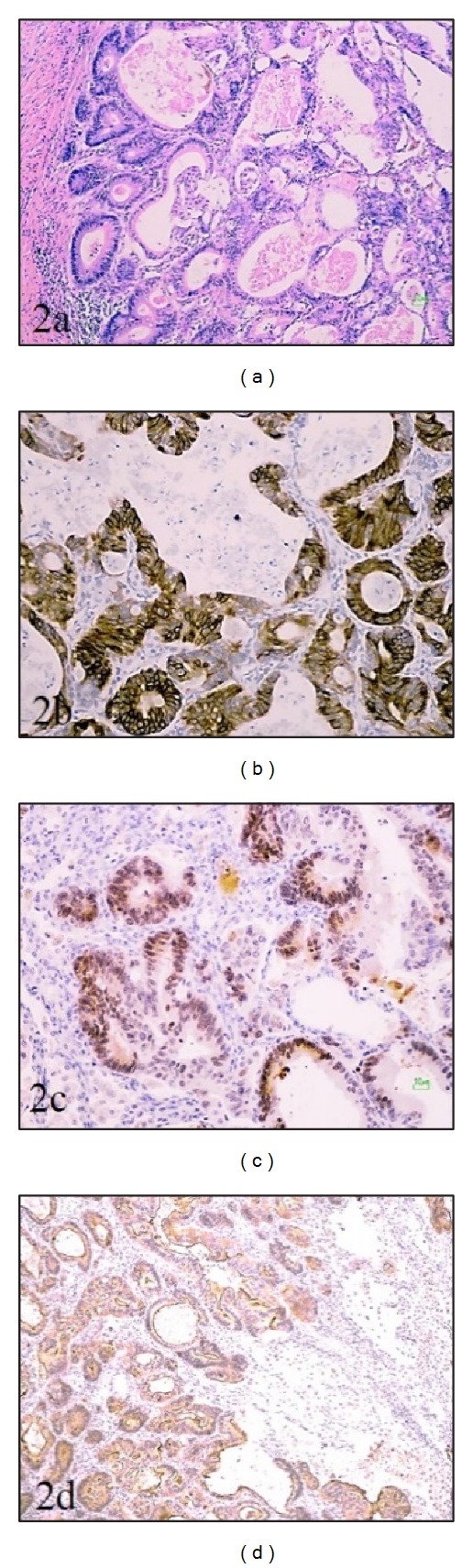
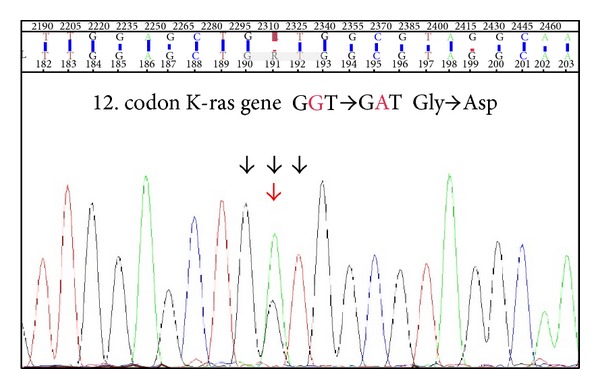
Intestinal type of lung adenocarcinoma (ILADC) was initially described by Tsao and Fraser in 1991. Morphology and immunophenotype of ILADC are the same as in colorectal adenocarcinoma. Rectocolonoscopy must be performed to exclude colorectal origin of adenocarcinoma. Colorectal adenocarcinoma claimed to be genetically similar to an ILADC. Patients. We describe 24- and 26-year-old patients of both genders who went under surgery because of a lung tumor mass detected on CT scan. ILADC was diagnosed on resected lung specimens. According to positivity of Cytokeratin20, CDX-2, and Villin, respectively, and negativity of Cytokeratin7, TTF-1, Napsin-A, SurfactantB, MUC-1, and MUC-2, respectively, ILADC was diagnosed. KRAS mutation was detected in tumor tissue of the male patient. Conclusion. Rectocolonoscopy is the only relevant method for distinguishing the intestinal type of lung adenocarcinoma from metastatic colorectal carcinoma because immunohistochemistry and detection of mutation status are frequently the same in both types of adenocarcinoma. More investigations are needed for further understanding of ILADC in purpose of personalized lung carcinoma therapy particularly introducing detection of mutation status, especially in younger patients.
Figures
References
-
- Travis WD, Brambilla E, Muller-Hermelink HK, et al. World Health Organisation Classification of Tumours. Pathology and Genetics of the Lung, Pleura, Thymus and Heart. Lyon, France: IARC Press; 2004.
-
- Travis WD, Colby TV, Corrin B, Shimamoto Y, Brambilla E, Sobin LH. World Health Organization International Histological Classification of Tumors. Berlin, Germany: Springer; 1999.
-
- Kerr KM. Pulmonary adenocarcinomas: classification and reporting. Histopathology. 2009;54(1):12–27. - PubMed
-
- Travis WD, Brambilla E, Riely GJ. New pathologic classification of lung carcinoma: relevance for clinical practice and clinical trials. Journal of Clinical Oncology. 2013;31(8):992–1001. - PubMed
LinkOut - more resources
Full Text Sources
Other Literature Sources
Research Materials
Miscellaneous
