


Relative impact of iodine supplementation and maternal smoking on cord blood thyroglobulin in pregnant women with normal thyroid function
- PMID: 24783029
- PMCID: PMC3821487
- DOI: 10.1159/000342915
Relative impact of iodine supplementation and maternal smoking on cord blood thyroglobulin in pregnant women with normal thyroid function
Abstract
Objective: To assess the impact on cord blood (CB) thyroglobulin (Tg) of early iodine supplementation during pregnancy.
Methods: A total of 111 healthy pregnant women with normal thyroid function were included in a prospective randomized study and divided into two groups with (150 μg/day) or without iodine supplementation started during the first trimester. Maternal smoking was assessed qualitatively by self-reported statements and quantitatively by cotininuria. Exhaustive thyroid tests were performed at delivery in the mother and in CB.
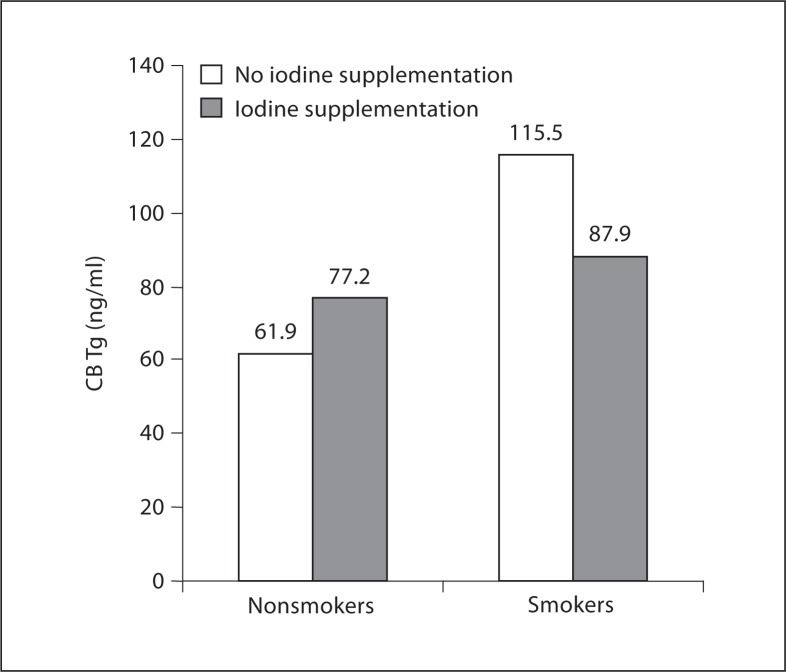
Results: Third-trimester ioduria documented compliance with iodine supplementation (160 vs. 76 μg/l in controls). CB Tg was not different between the iodine and control groups (median 77 vs. 79.5 ng/ml, respectively) and did not correlate with maternal ioduria. CB Tg was higher in newborns from smoking mothers (114 vs. 64.7 ng/ml) and correlated with self-reported smoking status more than with maternal cotininuria. Nonsmokers had no difference in CB Tg whether they took iodine supplementation or not, as opposed to smokers, who tended to benefit from supplementation.
Conclusions: Iodine supplementation does not significantly impact CB Tg in healthy nonsmoker pregnant women selected for normal thyroid function, as opposed to maternal smoking. CB Tg appears to be a marker of in utero tobacco exposure. In areas of mild iodine deficiency, iodine supplementation could especially benefit the fetuses of smokers.
Keywords: Cord blood; Iodine; Pregnancy; Smoking; Thyroglobulin; Thyroid tests.
Figures
References
-
- Zimmermann MB. Iodine deficiency. Endocr Rev. 2009;30:376–408. - PubMed
-
- WHO Secretariat. Andersson M, de Benoist B, Delange F, Zupan J. Prevention and control of iodine deficiency in pregnant and lactating women, and in children less than 2 years of age: conclusions and recommendations of the Technical Consultation. Public Health Nutr. 2007;10:1606–1611. - PubMed
-
- Vejbjerg P, Knudsen N, Perrild H, Laurberg P, Carlé A, Bülow Pedersen I, Rasmussen L, Ovesen L, Jorgensen T. Thyroglobulin as a marker of iodine nutrition status in the general population. Eur J Endocrinol. 2009;161:475–481. - PubMed
-
- Sava L, Tomaselli L, Runello F, Belfiore A, Vigneri R. Serum thyroglobulin levels are elevated in newborns from iodine-deficient areas. J Clin Endocrinol Metab. 1986;62:429–432. - PubMed
-
- Pacini F, Lari R, La Ricca P, Grasso L, Taddei D, Bardini N, Fenzi GF, Di Bartolo F, Baschieri L, Pinchera A. Serum thyroglobulin in newborns’ cord blood, in childhood and adolescence: a physiological indicator of thyroidal status. J Endocrinol Invest. 1984;7:467–471. - PubMed
LinkOut - more resources
Full Text Sources
Miscellaneous
