


An etiological model of perfectionism
- PMID: 24787357
- PMCID: PMC4006919
- DOI: 10.1371/journal.pone.0094757
An etiological model of perfectionism
Abstract
Objective: Perfectionism has been recognized as a transdiagnostic factor that is relevant to anxiety disorders, eating disorders and depression. Despite the importance of perfectionism in psychopathology to date there has been no empirical test of an etiological model of perfectionism.
Method: The present study aimed to address the paucity of research on the etiology of perfectionism by developing and testing an etiological model using a sample of 311 clients seeking treatment.
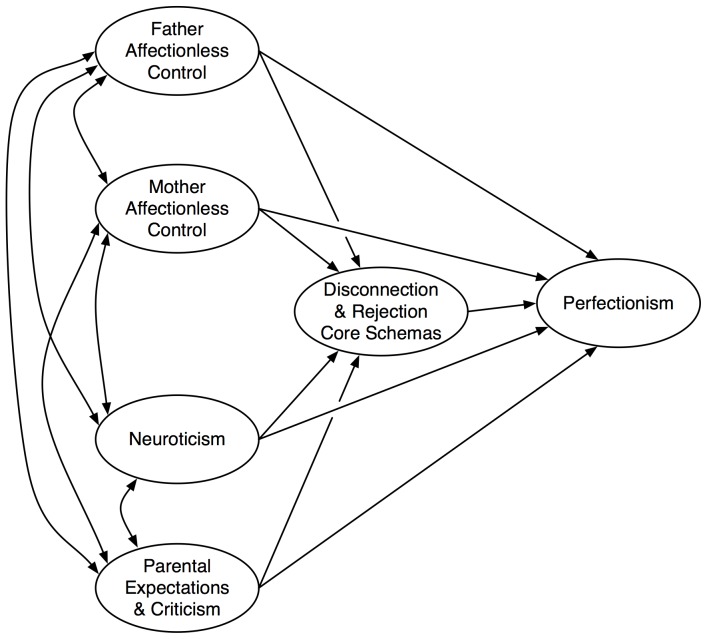
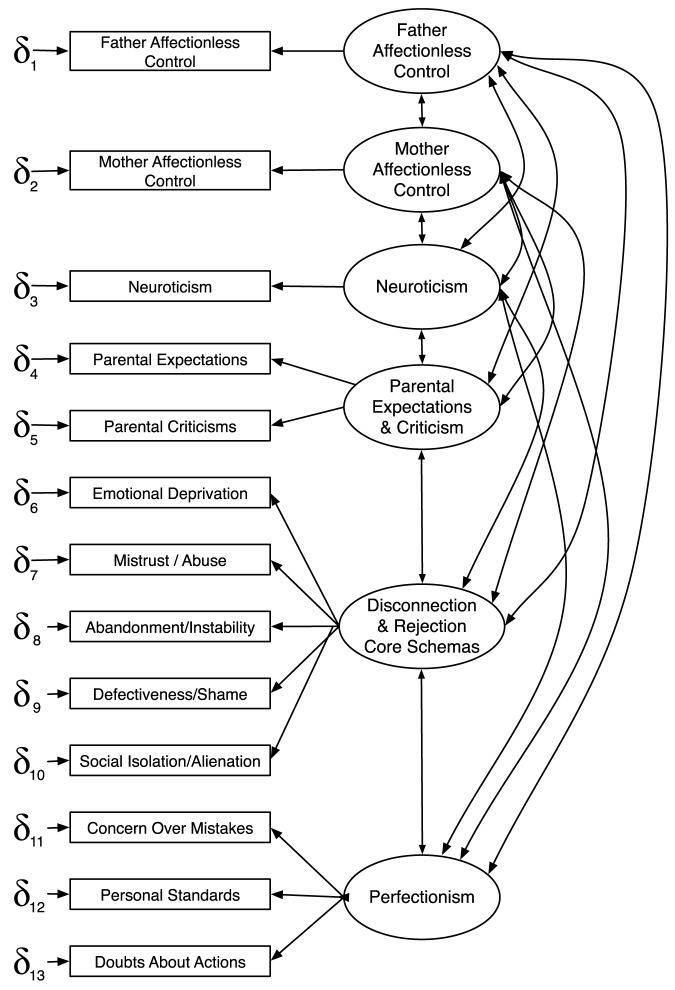
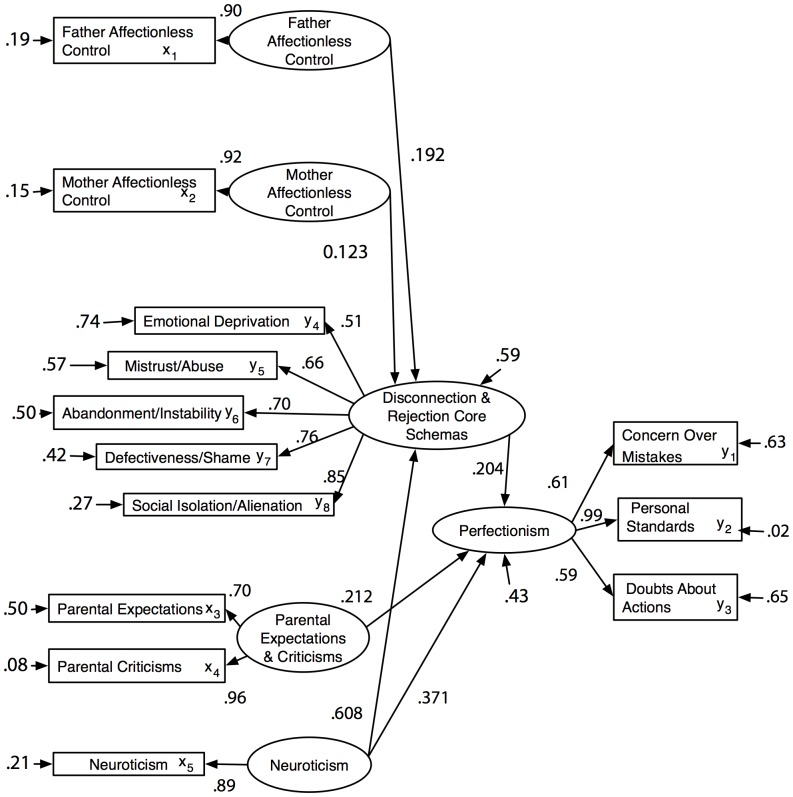
Results: Structural equation modeling showed a direct relationship between high Parental Expectations and Criticism, and Perfectionism. There was also an indirect relationship between Parental Bonding and Perfectionism that was mediated by core schemas of disconnection and rejection. Finally, it was found that Neuroticism had both an indirect relationship, which was mediated by core schemas, and a direct relationship with perfectionism.
Conclusions: The study provided the first direct test of an etiological model of perfectionism to date. Clinical implications include investigating whether the inclusion of etiological factors in the understanding and treatment of perfectionism is effective.
Conflict of interest statement
Figures
References
-
- Shafran R, Egan SJ, Wade TD (2010) Overcoming perfectionism: A self-help guide using cognitive behavioural techniques. London, UK: Constable & Robinson.
-
- Flett GL, Hewitt PL, Oliver JM, Macdonald S (2002) Perfectionism in children and their parents: A developmental analysis. In: Flett GL, Hewitt PL, editors. Perfectionism: Theory, research and treatment. Washington, DC: American Psychological Association. doi: 10.1007/s10942-007-0066-1. - DOI
MeSH terms
LinkOut - more resources
Full Text Sources
Other Literature Sources
Medical
