


DNA damage in buccal mucosa cells of pre-school children exposed to high levels of urban air pollutants
- PMID: 24789200
- PMCID: PMC4008603
- DOI: 10.1371/journal.pone.0096524
DNA damage in buccal mucosa cells of pre-school children exposed to high levels of urban air pollutants
Abstract
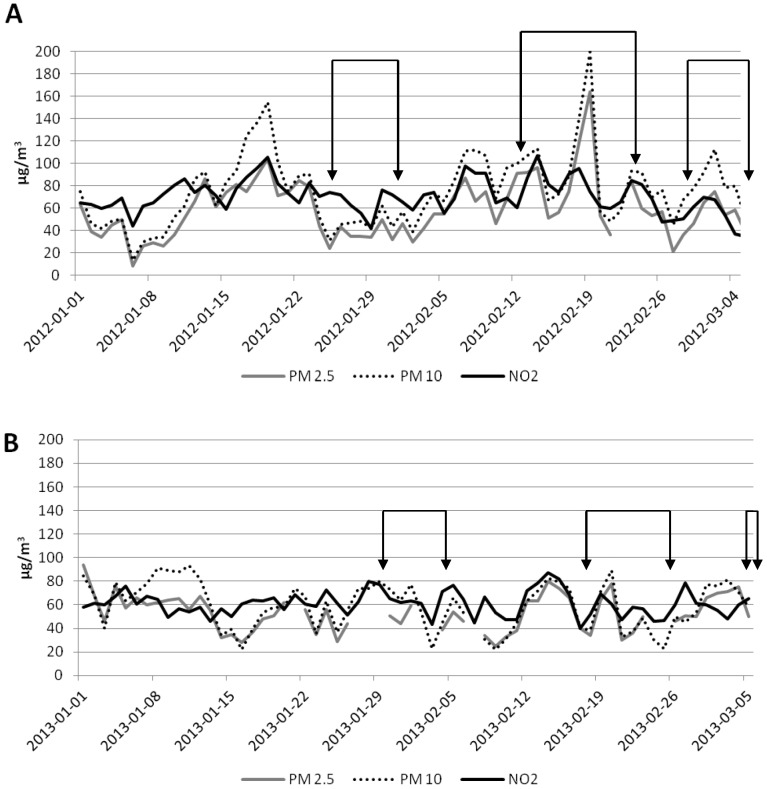
Air pollution has been recognized as a human carcinogen. Children living in urban areas are a high-risk group, because genetic damage occurring early in life is considered able to increase the risk of carcinogenesis in adulthood. This study aimed to investigate micronuclei (MN) frequency, as a biomarker of DNA damage, in exfoliated buccal cells of pre-school children living in a town with high levels of air pollution. A sample of healthy 3-6-year-old children living in Brescia, Northern Italy, was investigated. A sample of the children's buccal mucosa cells was collected during the winter months in 2012 and 2013. DNA damage was investigated using the MN test. Children's exposure to urban air pollution was evaluated by means of a questionnaire filled in by their parents that included items on various possible sources of indoor and outdoor pollution, and the concentration of fine particulate matter (PM10, PM2.5) and NO2 in the 1-3 weeks preceding biological sample collection. 181 children (mean age ± SD: 4.3 ± 0.9 years) were investigated. The mean ± SD MN frequency was 0.29 ± 0.13%. A weak, though statistically significant, association of MN with concentration of air pollutants (PM10, PM2.5 and NO2) was found, whereas no association was apparent between MN frequency and the indoor and outdoor exposure variables investigated via the questionnaire. This study showed a high MN frequency in children living in a town with heavy air pollution in winter, higher than usually found among children living in areas with low or medium-high levels of air pollution.
Conflict of interest statement
Figures
References
-
- WHO (2006) Air Quality Guidelines. Global Update 2005. World Health Organization Office for Europe, Copenhagen, Denmark.
-
- WHO (2007) Children's health and the environment in Europe: a baseline assessment. World Health Organization Regional Office for Europe, Copenhagen, Denmark.
-
- EAA (2012) Air Quality in Europe 2011. European Environment Agency, Technical report No 4/2012.
-
- ERS (2010) Air quality and health. European Respiratory Society. Lausanne, Switzerland.
Publication types
MeSH terms
Substances
LinkOut - more resources
Full Text Sources
Other Literature Sources
Medical
