


Short-term variation in sperm competition causes sperm-mediated epigenetic effects on early offspring performance in the zebrafish
- PMID: 24789902
- PMCID: PMC4024299
- DOI: 10.1098/rspb.2014.0422
Short-term variation in sperm competition causes sperm-mediated epigenetic effects on early offspring performance in the zebrafish
Abstract
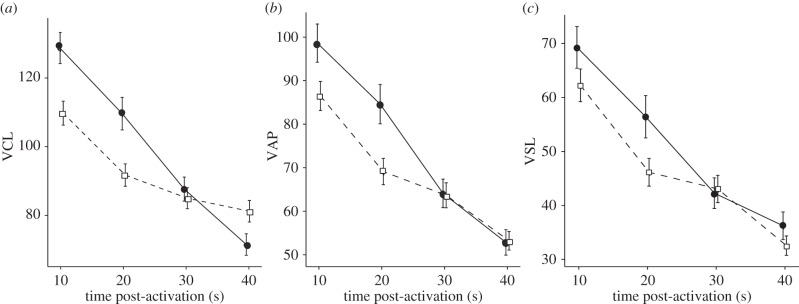
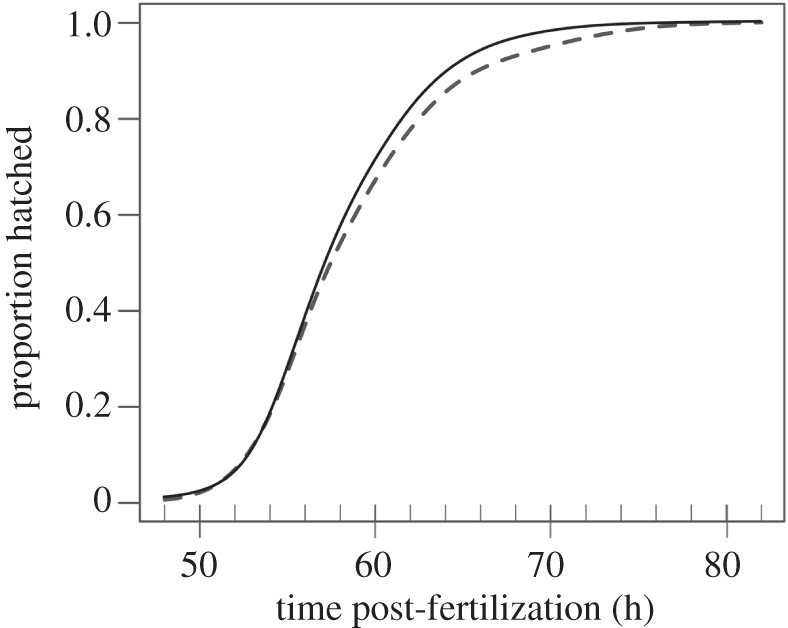
The inheritance of non-genetic factors is increasingly seen to play a major role in ecology and evolution. While the causes and consequences of epigenetic effects transmitted from the mother to the offspring have received ample attention, much less is known about how variation in the condition of the father affects the offspring. Here, we manipulated the intensity of sperm competition experienced by male zebrafish Danio rerio to investigate the potential for sperm-mediated epigenetic effects over a relatively short period of time. We found that the rapid responses of males to varying intensity of sperm competition not only affected sperm traits as shown previously, but also the performance of the resulting offspring. We observed that males exposed to high intensity of sperm competition produced faster swimming and more motile sperm, and sired offspring that hatched over a narrower time frame but exhibited a lower survival rate than males exposed to low intensity of sperm competition. Our results provide striking evidence for short-term paternal effects and the possible fitness consequences of such sperm-mediated non-genetic factors not only for the resulting offspring but also for the female.
Keywords: Danio rerio; epigenetic inheritance; larval hatching; offspring survival; paternal effects; social environment.
Figures
References
-
- Bonduriansky R, Day T. 2009. Nongenetic inheritance and its evolutionary implications. Annu. Rev. Ecol. Evol. Syst. 40, 103–125. ( 10.1146/annurev.ecolsys.39.110707.173441) - DOI
Publication types
MeSH terms
LinkOut - more resources
Full Text Sources
Other Literature Sources
