


PPARG in Human Adipogenesis: Differential Contribution of Canonical Transcripts and Dominant Negative Isoforms
- PMID: 24790595
- PMCID: PMC3981527
- DOI: 10.1155/2014/537865
PPARG in Human Adipogenesis: Differential Contribution of Canonical Transcripts and Dominant Negative Isoforms
Abstract
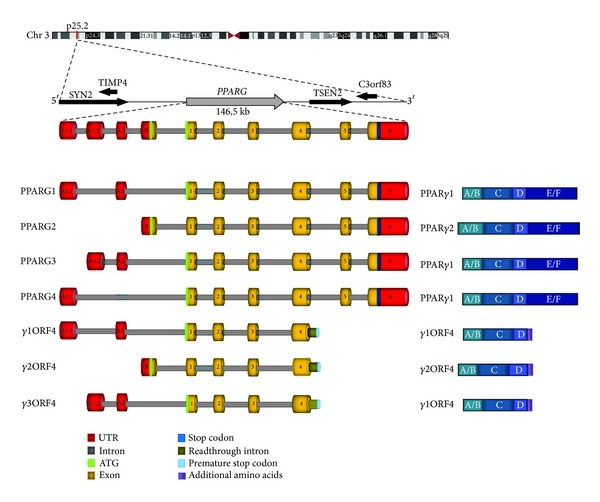
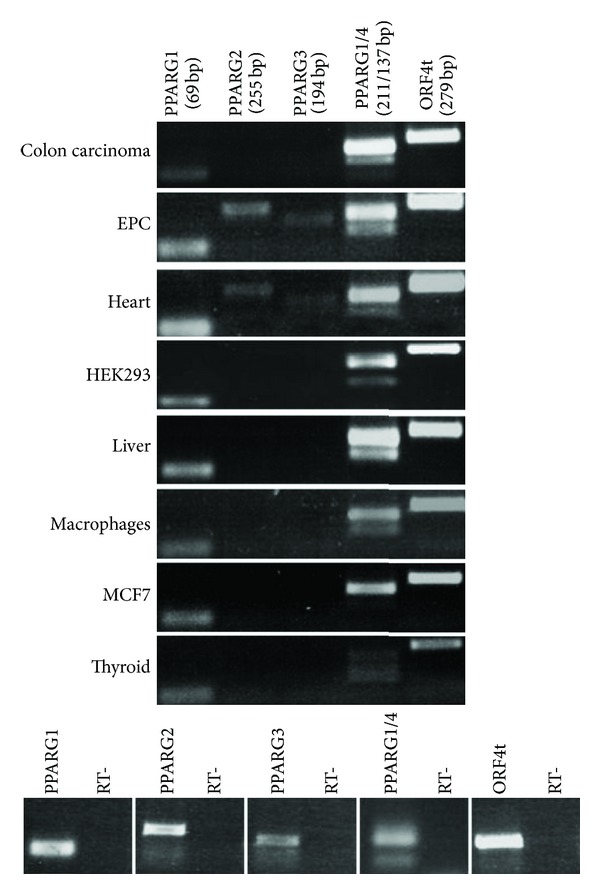
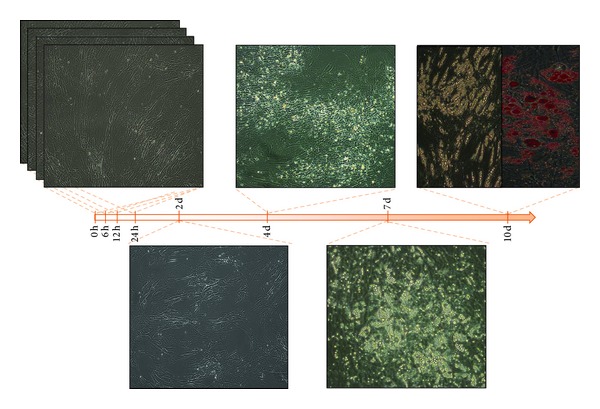
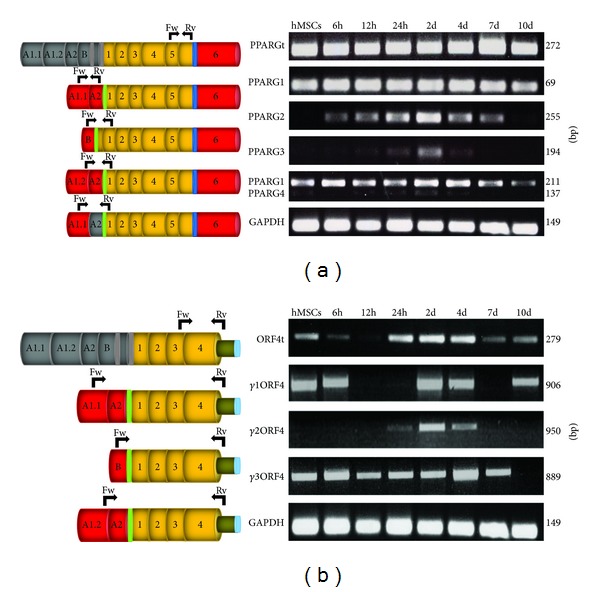
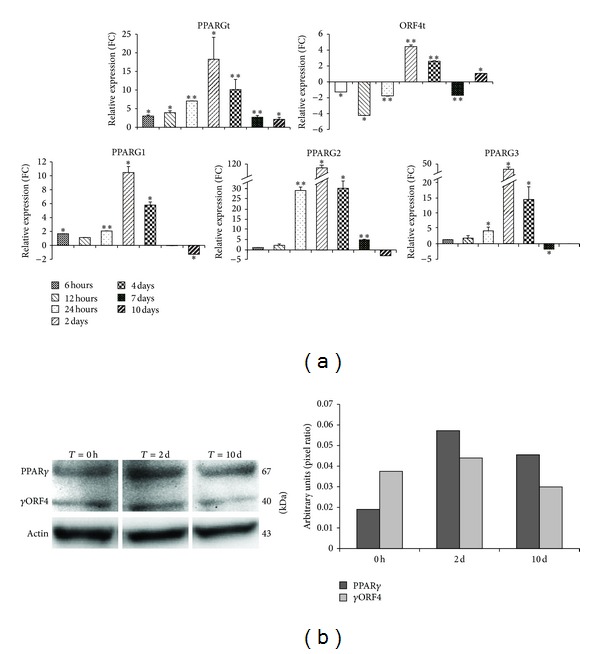
The nuclear receptor PPAR γ is a key regulator of adipogenesis, and alterations of its function are associated with different pathological processes related to metabolic syndrome. We recently identified two PPARG transcripts encoding dominant negative PPAR γ isoforms. The existence of different PPARG variants suggests that alternative splicing is crucial to modulate PPAR γ function, underlying some underestimated aspects of its regulation. Here we investigate PPARG expression in different tissues and cells affected in metabolic syndrome and, in particular, during adipocyte differentiation of human mesenchymal stem cells. We defined the transcript-specific expression pattern of PPARG variants encoding both canonical and dominant negative isoforms and identified a novel PPARG transcript, γ 1ORF4. Our analysis indicated that, during adipogenesis, the transcription of alternative PPARG variants is regulated in a time-specific manner through differential usage of distinct promoters. In addition, our analysis describes-for the first time-the differential contribution of three ORF4 variants to this process, suggesting a still unexplored role for these dominant negative isoforms during adipogenesis. Therefore, our results highlight crucial aspects of PPARG regulation, suggesting the need of further investigation to rule out the differential impact of all PPARG transcripts in both physiologic and pathologic conditions, such as metabolism-related disorders.
Figures
References
-
- Willson TM, Brown PJ, Sternbach DD, Henke BR. The PPARs: from orphan receptors to drug discovery. Journal of Medicinal Chemistry. 2000;43(4):527–550. - PubMed
-
- Rosen ED, Spiegelman BM. PPARγ: a nuclear regulator of metabolism, differentiation, and cell growth. Journal of Biological Chemistry. 2001;276(41):37731–37734. - PubMed
-
- Ahmed W, Ziouzenkova O, Brown J, et al. PPARs and their metabolic modulation: new mechanisms for transcriptional regulation? Journal of Internal Medicine. 2007;262(2):184–198. - PubMed
LinkOut - more resources
Full Text Sources
Other Literature Sources
