


Pair housing reverses post-stroke depressive behavior in mice
- PMID: 24793492
- PMCID: PMC4114771
- DOI: 10.1016/j.bbr.2014.04.044
Pair housing reverses post-stroke depressive behavior in mice
Abstract
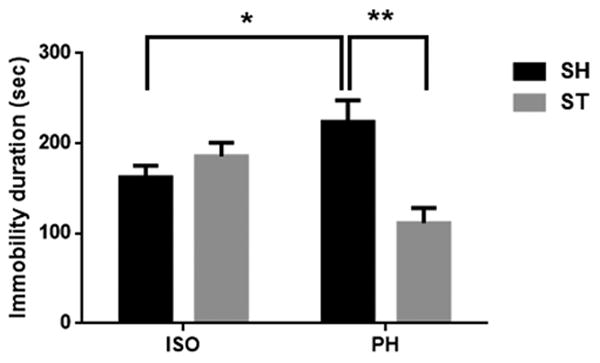
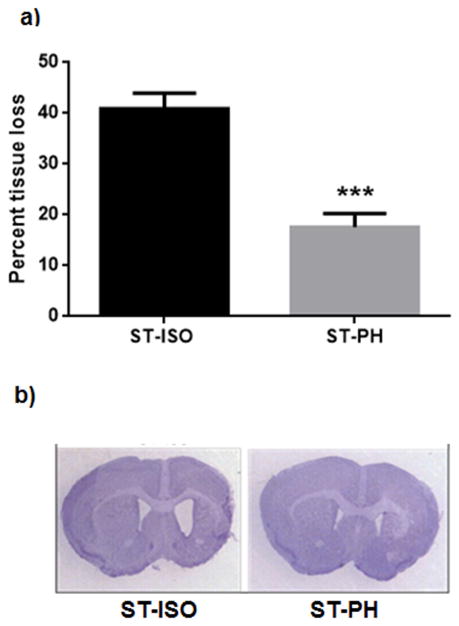
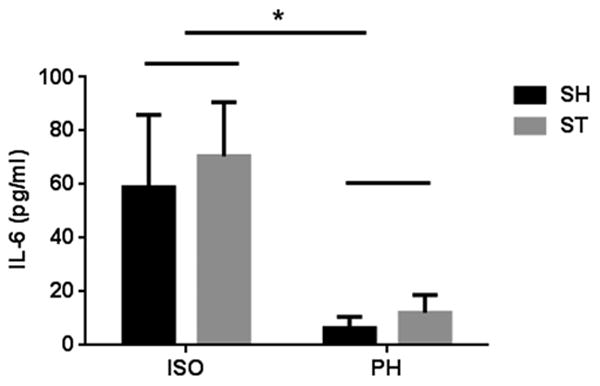
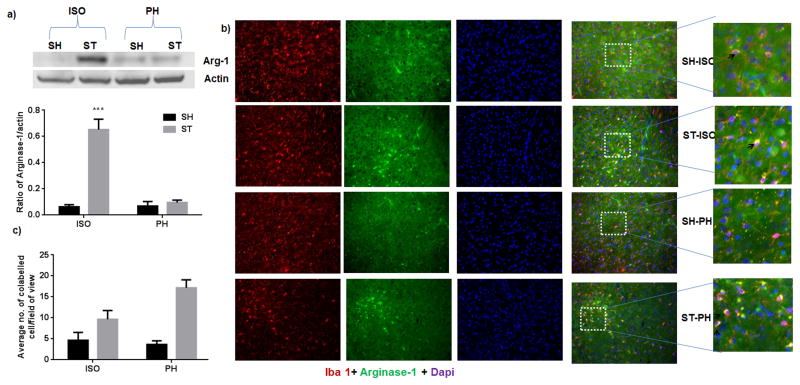
Social isolation (SI) has been linked epidemiologically to high rates of morbidity and mortality following stroke. In contrast, strong social support enhances recovery and lowers stroke recurrence. However, the mechanism by which social support influences stroke recovery has not been adequately explored. The goal of this study was to examine the effect of post-stroke pair housing and SI on behavioral phenotypes and chronic functional recovery in mice. Young male mice were paired for 14 days before a 60 min transient middle cerebral artery occlusion (MCAO) or sham surgery and assigned to various housing environments immediately after stroke. Post-stroke mice paired with either a sham or stroke partner showed significantly higher (P<0.05) sociability after MCAO than isolated littermates. Sociability deficits worsened over time in isolated animals. Pair-housed mice showed restored sucrose consumption (P<0.05) and reduced immobility in the tail suspension test compared to isolated cohorts. Pair-housed stroked mice demonstrated significantly reduced cerebral atrophy after 6 weeks (17.5 ± 1.5% in PH versus 40.8 ± 1.3% in SI; P<0.001). Surprisingly, total brain arginase-1, a marker of a M2 "alternatively activated" myeloid cells was higher in isolated mice. However, a more detailed assessment of cellular expression showed a significant increase in the number of microglia that co-labeled with arginase-1 in the peri-infarct region in PH stroke mice compared to SI mice. Pair housing enhances sociability and reduces avolitional and anhedonic behavior. Pair housing reduced serum IL-6 and enhanced peri-infarct microglia arginase-1 expression. Social interaction reduces post-stroke depression and improves functional recovery.
Keywords: Arginase-1; IL-6; Ischemic stroke; Post stroke depression; Sociability; Social isolation.
Copyright © 2014 Elsevier B.V. All rights reserved.
Conflict of interest statement
Figures
References
-
- Glass TA, Matchar DB, Belyea M, Feussner JR. Impact of social support on outcome in first stroke. Stroke; a journal of cerebral circulation. 1993;24:64–70. - PubMed
-
- Glass TA, Maddox GL. The quality and quantity of social support: stroke recovery as psycho- social transition. Social science & medicine. 1992;34:1249–61. - PubMed
-
- Ditzen B, Schmidt S, Strauss B, Nater UM, Ehlert U, Heinrichs M. Adult attachment and social support interact to reduce psychological but not cortisol responses to stress. Journal of psychosomatic research. 2008;64:479–86. - PubMed
-
- Hinojosa R, Haun J, Hinojosa MS, Rittman M. Social isolation poststroke: relationship between race/ethnicity, depression, and functional independence. Topics in stroke rehabilitation. 2011;18:79–86. - PubMed
Publication types
MeSH terms
Substances
Grants and funding
LinkOut - more resources
Full Text Sources
Other Literature Sources
Research Materials
