


Randomized trial outcomes of a TTM-tailored condom use and smoking intervention in urban adolescent females
- PMID: 24794584
- PMCID: PMC4296884
- DOI: 10.1093/her/cyu015
Randomized trial outcomes of a TTM-tailored condom use and smoking intervention in urban adolescent females
Abstract
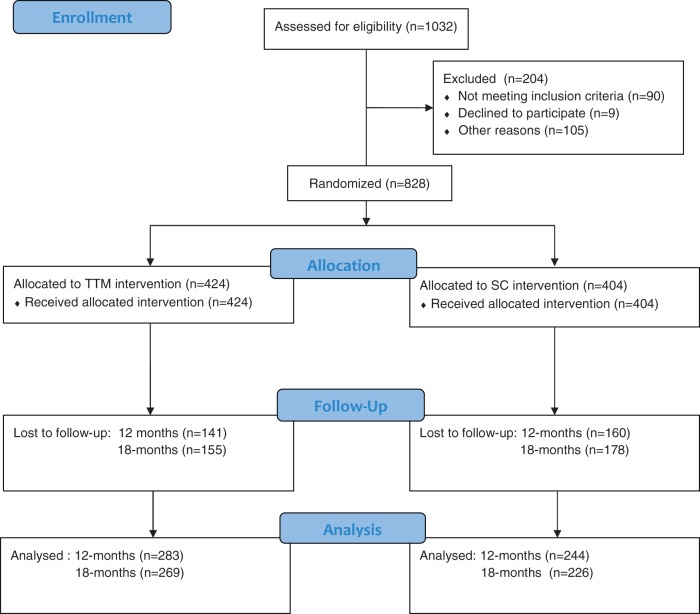
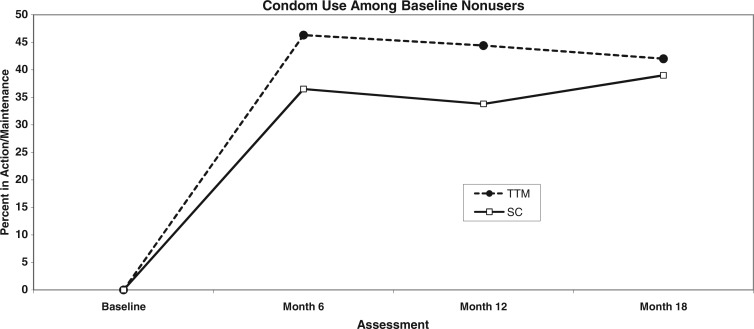
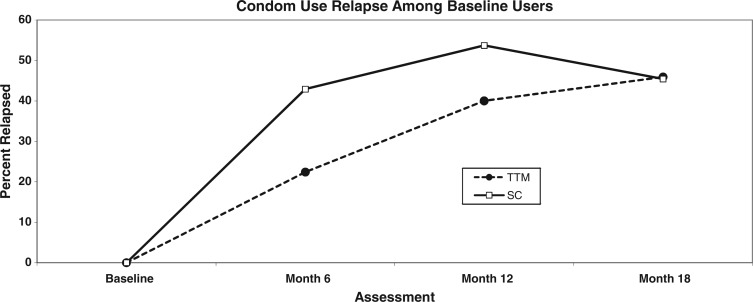
Smoking and sexual risk behaviors in urban adolescent females are prevalent and problematic. Family planning clinics reach those who are at most risk. This randomized effectiveness trial evaluated a transtheoretical model (TTM)-tailored intervention to increase condom use and decrease smoking. At baseline, a total of 828 14- to 17-year-old females were recruited and randomized within four urban family planning clinics. Participants received TTM or standard care (SC) computerized feedback and stage-targeted or SC counseling at baseline, 3, 6 and 9 months. Blinded follow-up telephone surveys were conducted at 12 and 18 months. Analyses revealed significantly more consistent condom use in the TTM compared with the SC group at 6 and 12, but not at 18 months. In baseline consistent condom users (40%), significantly less relapse was found in the TTM compared with the SC group at 6 and 12, but not at 18 months. No significant effects for smoking prevention or cessation were found, although cessation rates matched those found previously. This TTM-tailored intervention demonstrated effectiveness for increasing consistent condom use at 6 and 12 months, but not at 18 months, in urban adolescent females. This intervention, if replicated, could be disseminated to promote consistent condom use and additional health behaviors in youth at risk.
© The Author 2014. Published by Oxford University Press. All rights reserved. For permissions, please email: journals.permissions@oup.com.
Figures


References
-
- Glynn TJ, Anderson DM, Schwarz L. Tobacco use reduction among high risk youth: recommendations of a National Cancer Institute expert advisory panel. Prev Med. 1992;24:354–62. - PubMed
-
- Wardle J, Jarvis MJ, Steggles N, et al. Socioeconomic disparities in cancer-risk behaviors in adolescence: baseline results from the Health and Behaviour in Teenagers Study (HABITS) Prev Med. 2003;36:721–30. - PubMed
-
- DiClemente RJ, Durbin M, Siegel D, et al. Determinants of condom use among junior high school students in a minority, inner-city school district. Pediatrics. 1992;89:197–200. - PubMed
-
- Geringer W, Marks S, Allen W, et al. Knowledge, attitudes and behavior related to condom use and STD in a high risk population. J Sex Res. 1993;30:75–83.
-
- Finer LB, Henshaw SK. Disparities in rates of unintended pregnancy in the United States, 1994 and 2001. Perspect Sex Reprod Health. 2006;38:90–6. - PubMed
Publication types
MeSH terms
Grants and funding
LinkOut - more resources
Full Text Sources
Other Literature Sources
Medical
Molecular Biology Databases
