Transforming growth factor-β induced Warburg-like metabolic reprogramming may underpin the development of peritoneal endometriosis
- PMID: 24796928
- PMCID: PMC4207934
- DOI: 10.1210/jc.2014-1026
Transforming growth factor-β induced Warburg-like metabolic reprogramming may underpin the development of peritoneal endometriosis
Abstract
Context: TGF-β is believed to play a major role in the etiology of peritoneal endometriosis. In tumors, TGF-β induces the metabolic conversion of glucose to lactate via glycolysis, a process referred to as the "Warburg effect." Lactate increases cell invasion, angiogenesis, and immune suppression, all crucial steps in the development of endometriosis.
Objective: The aim of this study was to determine whether TGF-β induces a "Warburg-like" effect in peritoneal endometriosis.
Design: The study was informed by human tissue analysis and cel culture.
Setting: The study was conducted at the university research institute.
Patients or other participants: We studied women undergoing surgical investigation for endometriosis.
Interventions: Concentrations of lactate and TGF-β1 in peritoneal fluid (n = 16) were measured by commercial assay. Expression of genes implicated in glycolysis was measured in endometrial and peritoneal biopsies (n = 31) by quantitative RT-PCR and immunohistochemistry. The effect of TGF-β1 on primary human peritoneal mesothelial cells (n = 6) and immortalized mesothelial (MeT-5A) cells (n = 3) was assessed by quantitative RT-PCR, Western blot, and commercial assays.
Main outcome measures: Lactate, TGF-β1, and markers of glycolysis were measured.
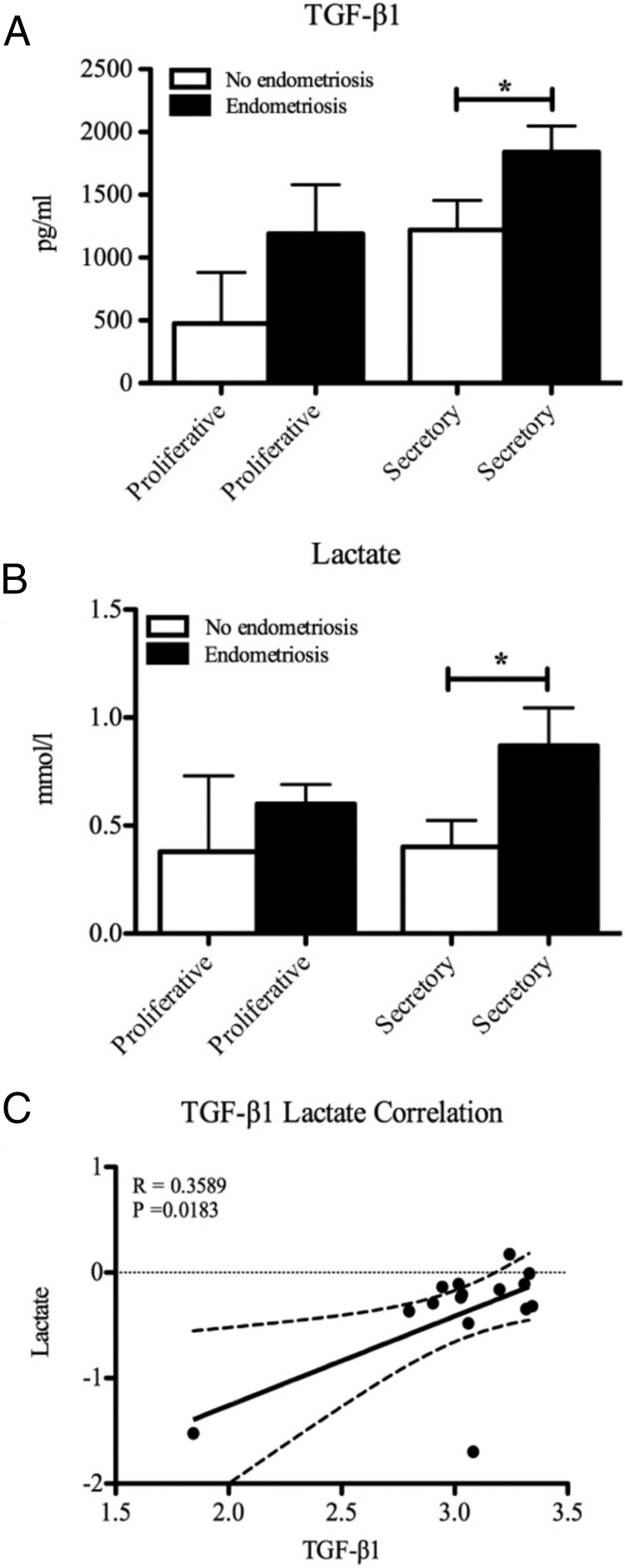
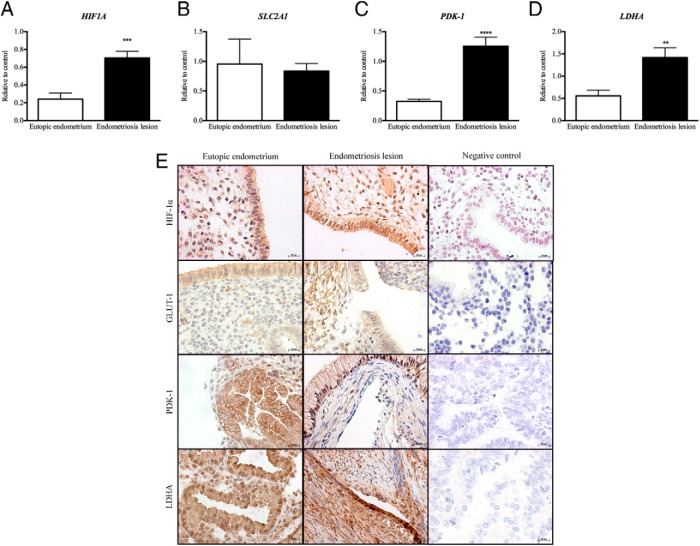
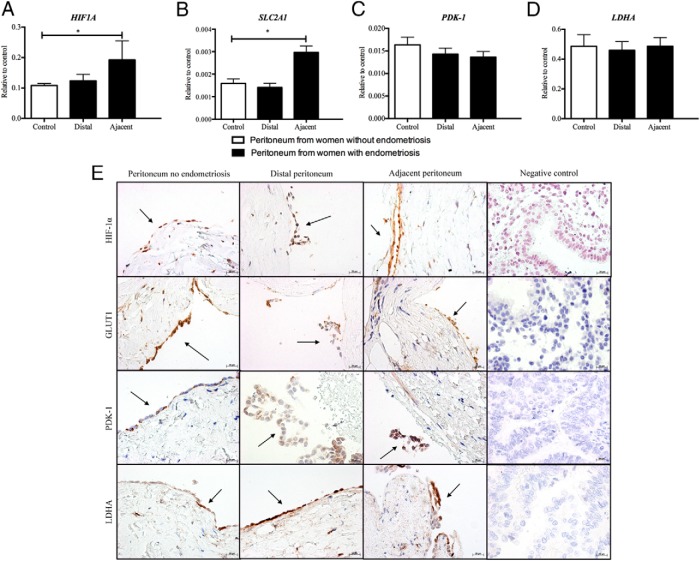
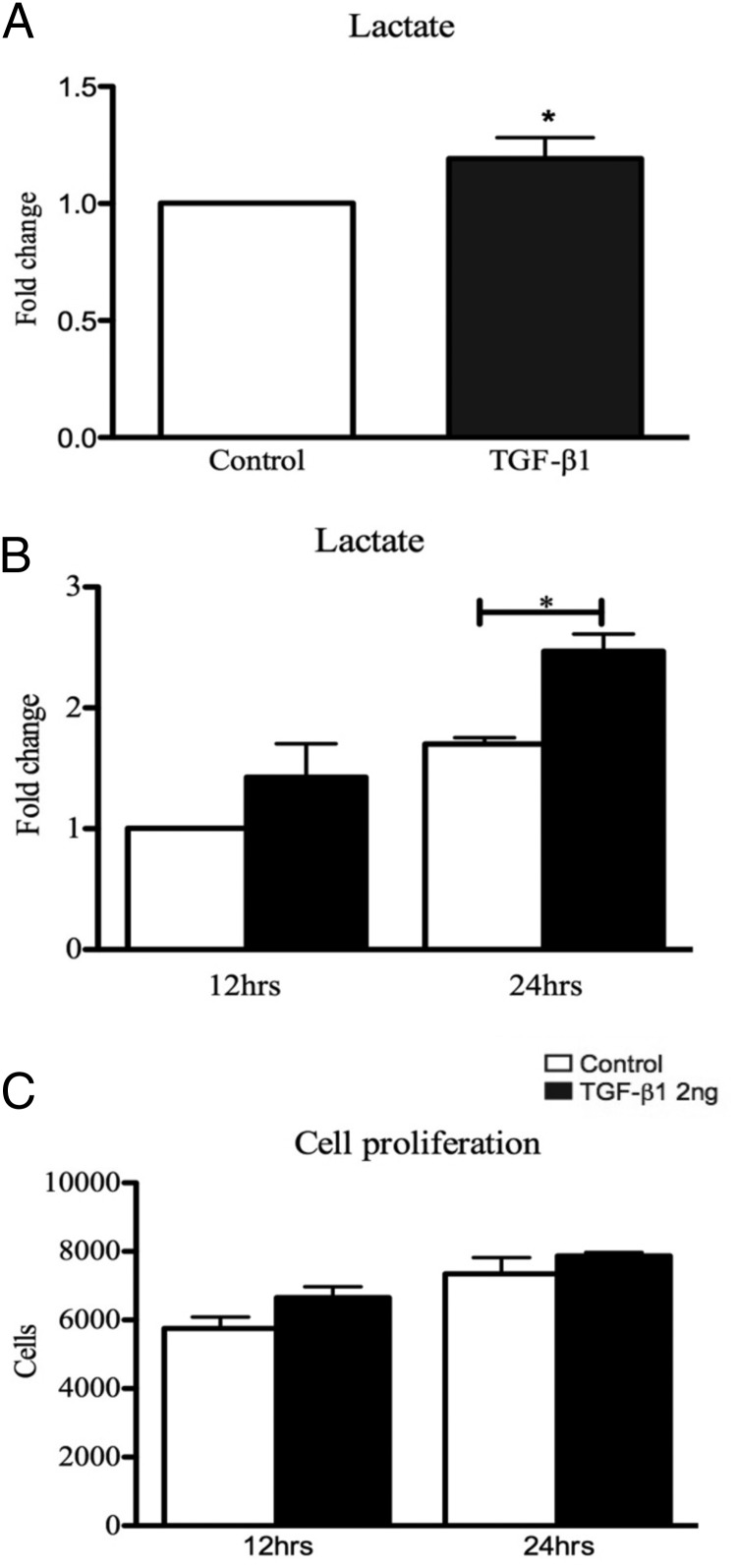
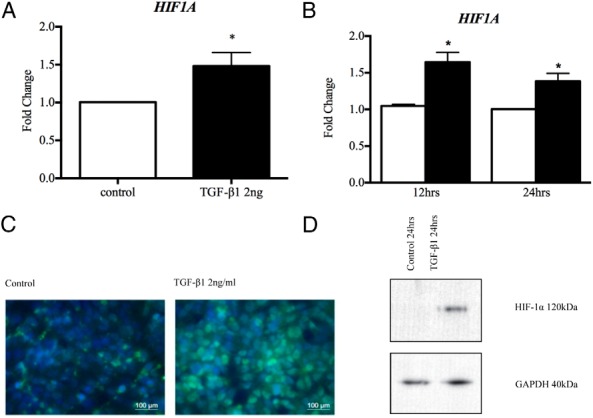
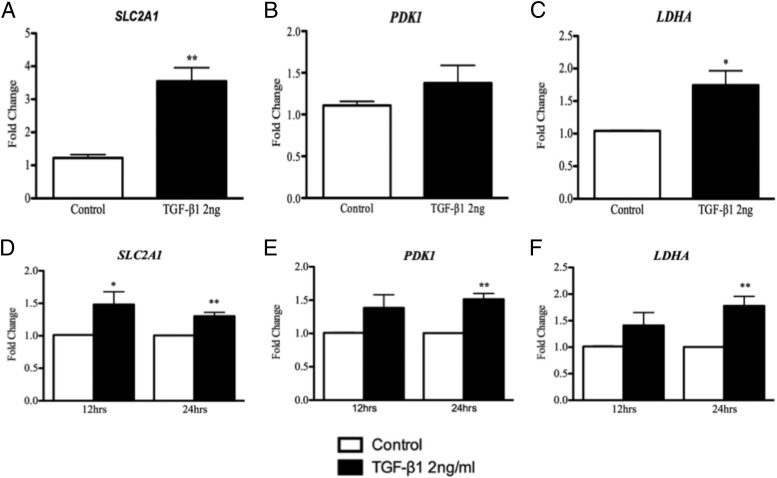
Results: Concentrations of lactate in peritoneal fluid paralleled those of TGF-β1, being significantly higher in women with endometriosis compared to women without (P < .05). Endometriosis lesions expressed higher levels of glycolysis-associated genes HIF1A, PDK1, and LDHA than eutopic endometrium, and adjacent peritoneum had higher levels of HIF1A and SLC2A1 than peritoneum from women without disease (P < .05 to P < .001). Exposure of mesothelial cells to TGF-β1 increased production of lactate (P < .05), increased HIF1A mRNA (P < .05), and protein, and increased concentrations of mRNAs encoded by glycolysis-associated genes (LDHA, PDK1, SLC2A1; P < .05).
Conclusions: A change in the metabolic phenotype of endometriosis lesions and peritoneal mesothelium in women with endometriosis may favor development of endometriosis.
Figures
References
-
- Simoens S, Dunselman G, Dirksen C, et al. The burden of endometriosis: costs and quality of life of women with endometriosis and treated in referral centres. Hum Reprod. 2012;27:1292–1299. - PubMed
-
- Jacobson TZ, Duffy JM, Barlow D, Koninckx PR, Garry R. Laparoscopic surgery for pelvic pain associated with endometriosis. Cochrane Database Syst Rev. 2009;4:CD001300. - PubMed
-
- Sampson J. Peritoneal endometriosis due to the menstrual dissemination of endometrial tissue into the peritoneal cavity. Am J Obstet Gynecol. 1927;14:422–469.
-
- Young VJ, Brown JK, Saunders PT, Horne AW. The role of the peritoneum in the pathogenesis of endometriosis. Hum Reprod Update. 2013;19:558–569. - PubMed
Publication types
MeSH terms
Substances
Grants and funding
LinkOut - more resources
Full Text Sources
Other Literature Sources
Medical
Miscellaneous