


Generalization of human fear acquisition and extinction within a novel arbitrary stimulus category
- PMID: 24798047
- PMCID: PMC4010469
- DOI: 10.1371/journal.pone.0096569
Generalization of human fear acquisition and extinction within a novel arbitrary stimulus category
Abstract
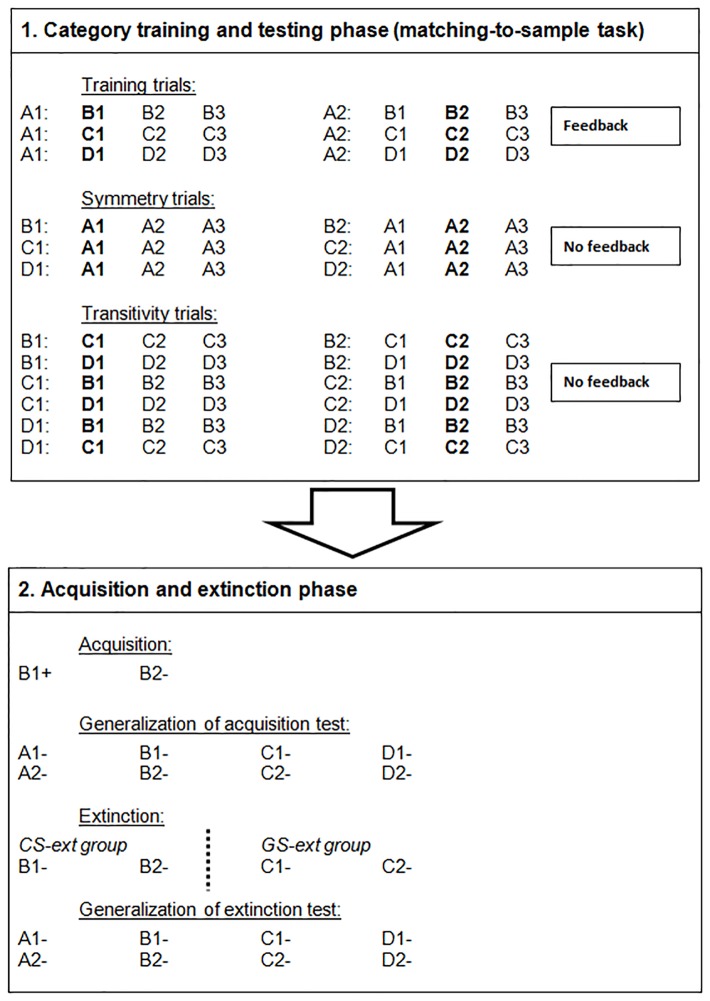
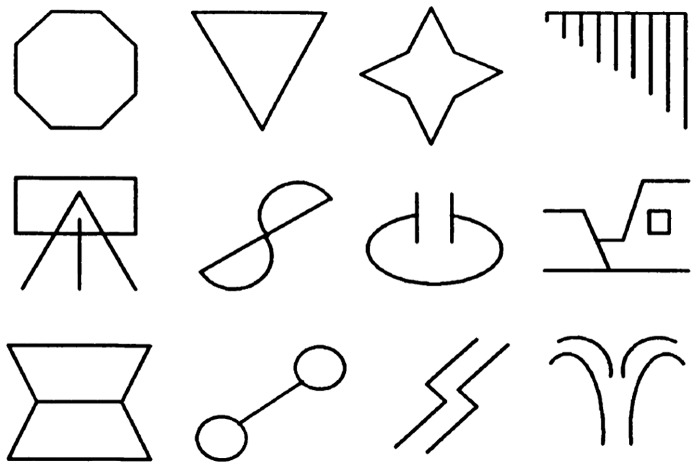
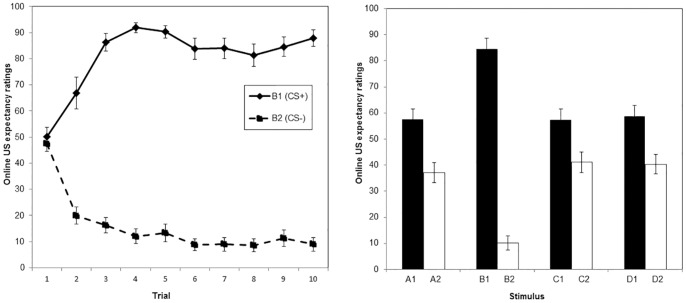
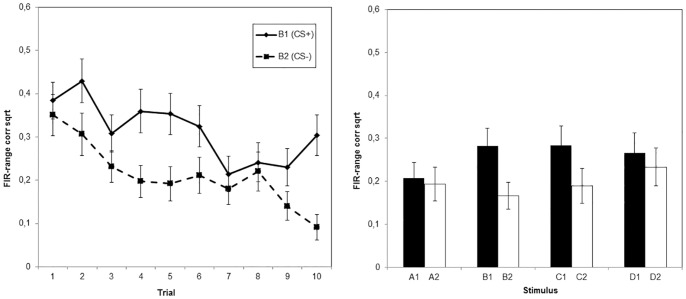
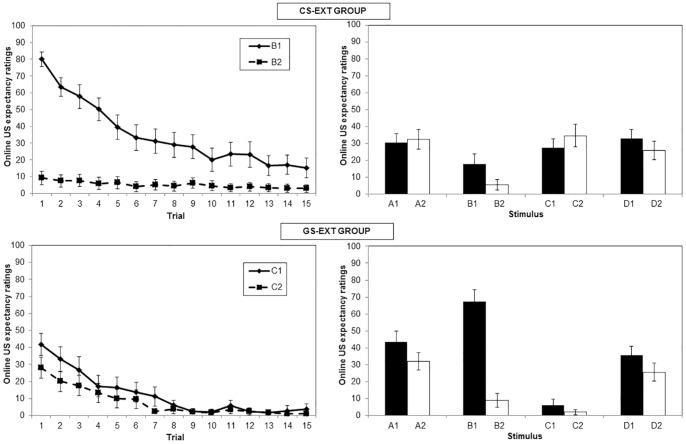
Adaptive anxiety relies on a balance between the generalization of fear acquisition and fear extinction. Research on fear (extinction) generalization has focused mostly on perceptual similarity, thereby ignoring the importance of conceptual stimulus relations in humans. The present study used a laboratory procedure to create de novo conceptual categories of arbitrary stimuli and investigated fear and extinction generalization among these stimuli. A matching-to-sample task produced two four-member categories of abstract figures. Next, a member from one category was coupled with an aversive electrical stimulation, while a member from the other category was presented alone. As expected, conditioned fear responses generalized to the other members of the first category (skin conductance and online shock-expectancy). Subsequent extinction of the conditioned member also generalized to the other members. However, extinguishing a non-conditioned member failed to reduce fear of the conditioned member itself. We conclude that fears generalize readily across conceptually related stimuli, but that the degree of extinction generalization depends on the stimulus subjected to extinction.
Conflict of interest statement
Figures
References
-
- Craske MG, Hermans D, Vansteenwegen D (2006) Fear and learning: From basic processes to clinical implications. Washington DC: American Psychological Association. 319 p. doi: 10.1037/11474-000.
-
- Hermans D, Baeyens F, Vervliet B (2013) Generalization of acquired emotional responses. In: Robinson MD, Watkins ER, Harmon-Jones E, editors. Handbook of cognition and emotion. New York: Guilford Press. pp. 117–134.
-
- Foa EB, Kozak MJ (1986) Emotional processing of fear: exposure to corrective information. Psychol Bull 99: 20–35 10.1037/0033-2909.99.1.20.. - PubMed
Publication types
MeSH terms
LinkOut - more resources
Full Text Sources
Other Literature Sources
Research Materials
