


Biopharmaceutical characterization of nebulized antimicrobial agents in rats: 1. Ciprofloxacin, moxifloxacin, and grepafloxacin
- PMID: 24798283
- PMCID: PMC4068515
- DOI: 10.1128/AAC.02818-14
Biopharmaceutical characterization of nebulized antimicrobial agents in rats: 1. Ciprofloxacin, moxifloxacin, and grepafloxacin
Abstract
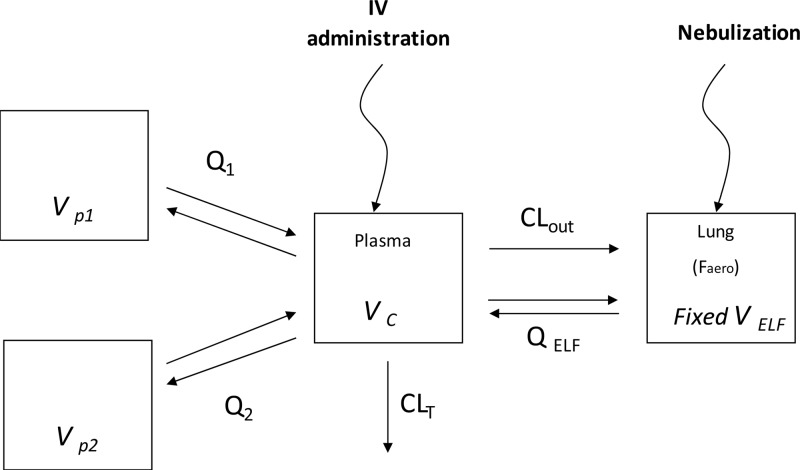
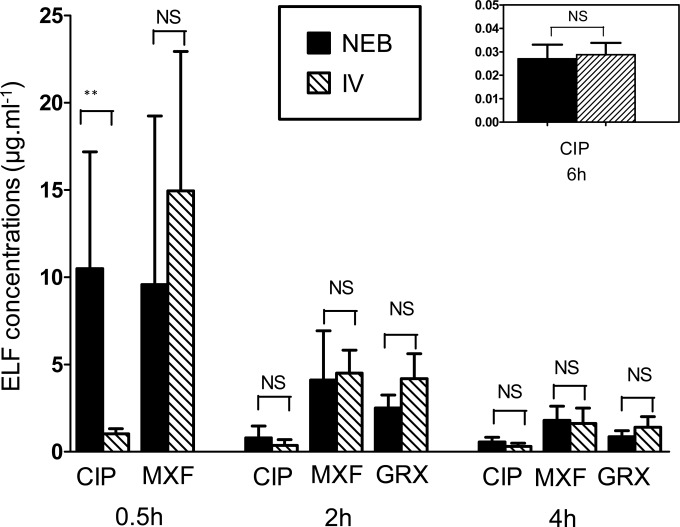
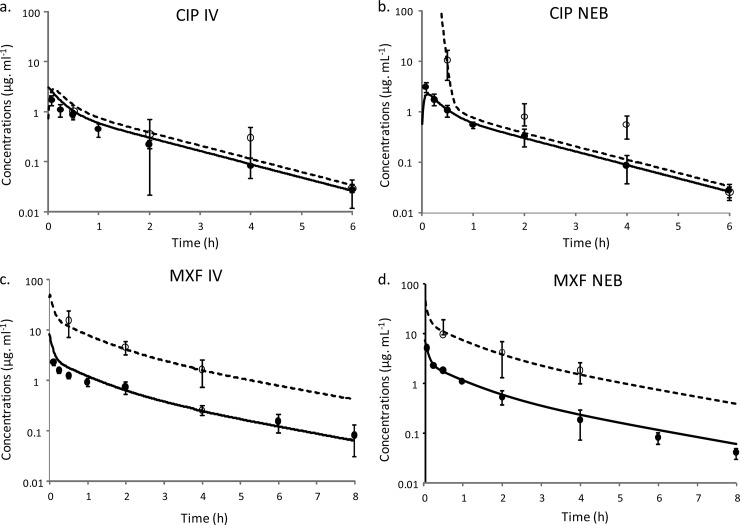
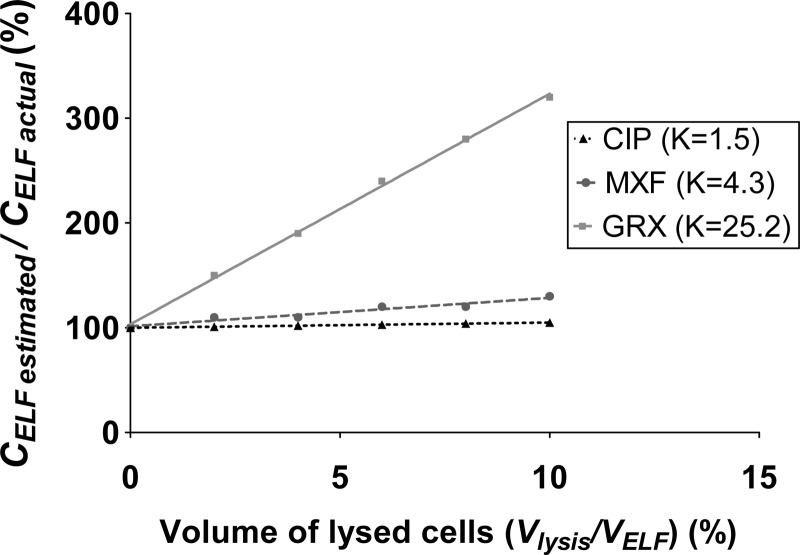
The aim of this study was to evaluate the biopharmaceutical characteristics of three fluoroquinolones (FQs), ciprofloxacin (CIP), moxifloxacin (MXF), and grepafloxacin (GRX), after delivery via a nebulized aerosol to rats. Bronchoalveolar lavages (BAL) were conducted 0.5, 2, 4, and 6 h after FQ intravenous administration and nebulized aerosol delivery to estimate epithelial lining fluid (ELF) drug concentrations. Plasma drug concentrations were also measured, and profiles of drug concentrations versus time after intravenous administration and nebulized aerosol delivery were virtually superimposable, attesting for rapid and complete systemic absorption of FQs. ELF drug concentrations were systematically higher than corresponding plasma drug concentrations, whatever the route of administration, and average ELF-to-unbound plasma drug concentration ratios post-distribution equilibrium did not change significantly between the ways of administration and were equal: 4.0 ± 5.3 for CIP, 12.6 ± 7.3 for MXF, and 19.1 ± 10.5 for GRX (means ± standard deviations). The impact of macrophage lysis on estimated ELF drug concentrations was significant for GRX but reduced for MXF and CIP; therefore, simultaneous pharmacokinetic modeling of plasma and ELF drug concentrations was only performed for the latter two drugs. The model was characterized by a fixed volume of ELF (VELF), passive diffusion clearance (QELF), and active efflux clearance (CLout) between plasma and ELF, indicating active efflux transport systems. In conclusion, this study demonstrates that ELF drug concentrations of these three FQs are several times higher than plasma drug concentrations, probably due to the presence of efflux transporters at the pulmonary barrier level, but no biopharmaceutical advantage of FQ nebulization was observed compared with intravenous administration.
Copyright © 2014, American Society for Microbiology. All Rights Reserved.
Figures
References
-
- Michalopoulos AS, Falagas ME. 2014. Inhaled antibiotics in mechanically ventilated patients. Minerva Anestesiol. 80:236–244 - PubMed
Publication types
MeSH terms
Substances
LinkOut - more resources
Full Text Sources
Other Literature Sources
Medical
