


Associations of fine particulate matter species with mortality in the United States: a multicity time-series analysis
- PMID: 24800826
- PMCID: PMC4123030
- DOI: 10.1289/ehp.1307568
Associations of fine particulate matter species with mortality in the United States: a multicity time-series analysis
Erratum in
-
Erratum: "Associations of Fine Particulate Matter Species with Mortality in the United States: A Multicity Time-Series Analysis".Environ Health Perspect. 2016 Jun 1;124(6):A104. doi: 10.1289/EHP301. Environ Health Perspect. 2016. PMID: 27248007 Free PMC article. No abstract available.
Abstract
Background: Epidemiological studies have examined the association between PM2.5 and mortality, but uncertainty remains about the seasonal variations in PM2.5-related effects and the relative importance of species.
Objectives: We estimated the effects of PM2.5 species on mortality and how infiltration rates may modify the association.
Methods: Using city-season specific Poisson regression, we estimated PM2.5 effects on approximately 4.5 million deaths for all causes, cardiovascular disease (CVD), myocardial infarction (MI), stroke, and respiratory diseases in 75 U.S. cities for 2000-2006. We added interaction terms between PM2.5 and monthly average species-to-PM2.5 proportions of individual species to determine the relative toxicity of each species. We combined results across cities using multivariate meta-regression, and controlled for infiltration.
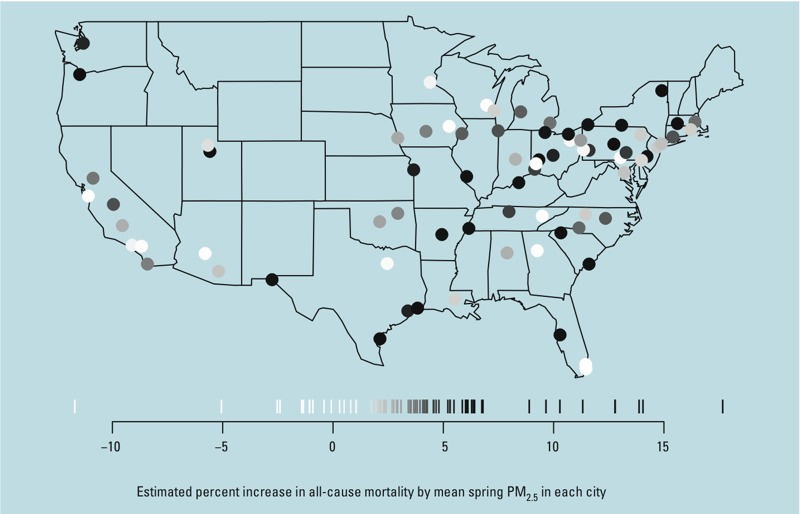
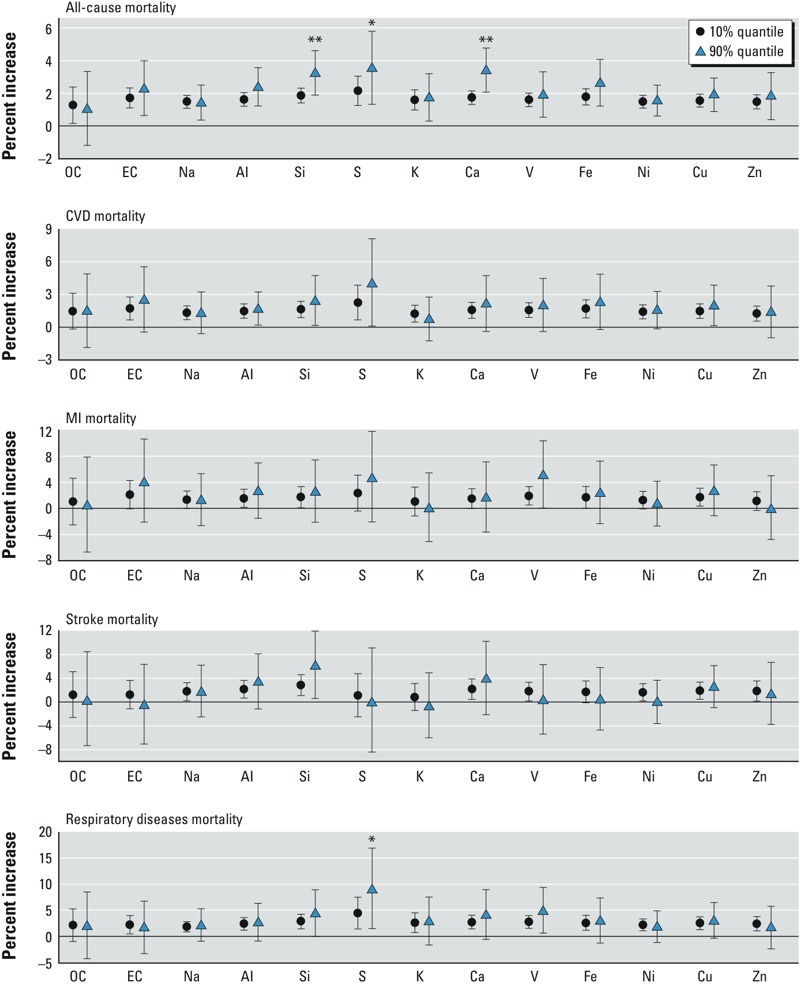
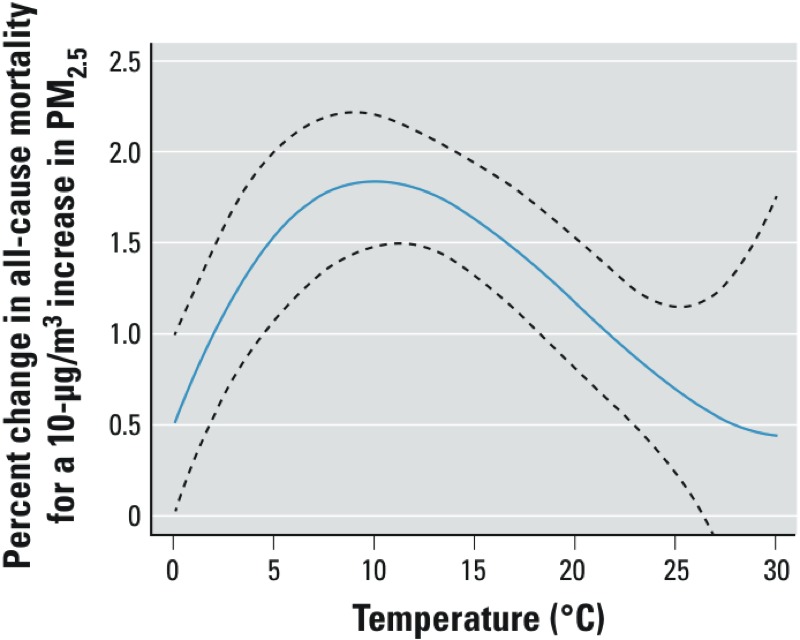
Results: We estimated a 1.18% (95% CI: 0.93, 1.44%) increase in all-cause mortality, a 1.03% (95% CI: 0.65, 1.41%) increase in CVD, a 1.22% (95% CI: 0.62, 1.82%) increase in MI, a 1.76% (95% CI: 1.01, 2.52%) increase in stroke, and a 1.71% (95% CI: 1.06, 2.35%) increase in respiratory deaths in association with a 10-μg/m3 increase in 2-day averaged PM2.5 concentration. The associations were largest in the spring. Silicon, calcium, and sulfur were associated with more all-cause mortality, whereas sulfur was related to more respiratory deaths. County-level smoking and alcohol were associated with larger estimated PM2.5 effects.
Conclusions: Our study showed an increased risk of mortality associated with PM2.5, which varied with seasons and species. The results suggest that mass alone might not be sufficient to evaluate the health effects of particles.
Conflict of interest statement
The authors declare they have no actual or potential competing financial interests.
Figures
References
-
- Amdur M. Cambridge, MA: Harvard University Press, 85–121; 1996. Animal toxicology. In: Particles in Our Air: Concentrations and Health Effects (Wilson R, Spengler J, eds)
-
- Atkinson RW, Fuller GW, Anderson HR, Harrison RM, Armstrong B. Urban ambient particle metrics and health: a time-series analysis. Epidemiology. 2010;21(4):501–511. - PubMed
-
- Baja ES, Schwartz JD, Wellenius GA, Coull BA, Zanobetti A, Vokonas PS, et al. 2010Traffic-related air pollution and QT interval: modification by diabetes, obesity, and oxidative stress gene polymorphisms in the Normative Aging Study. Environ Health Perspect 118840–846.; 10.1289/ehp.0901396 - DOI - PMC - PubMed
-
- Baker K, Scheff P. Photochemical model performance for PM2.5 sulfate, nitrate, ammonium, and precursor species SO2, HNO3, and NH3 at background monitor locations in the central and eastern United States. Atmos Environ. 2007;41(29):6185–6195.
Publication types
MeSH terms
Substances
LinkOut - more resources
Full Text Sources
Other Literature Sources