. 2014 Sep;231(17):3503-3515.
doi: 10.1007/s00213-014-3588-0. Epub 2014 May 7.

Inhibition of CaV3.2 T-type calcium channels in peripheral sensory neurons contributes to analgesic properties of epipregnanolone

Affiliations

Inhibition of CaV3.2 T-type calcium channels in peripheral sensory neurons contributes to analgesic properties of epipregnanolone

Christine Ayoola et al. Psychopharmacology (Berl). 2014 Sep.

Abstract

Rationale: T-type calcium channels (T-channels) play an important role in controlling excitability of nociceptors. We have previously shown that a synthetic series of 5β-reduced steroids induce a voltage-dependent blockade of T-currents in rat dorsal root ganglia (DRG) cells in vitro and induce potent analgesia to thermal stimuli in rats in vivo (Mol Pharmacol 66:1223-1235, 2004).

Objectives: Here, we investigated the effects of the endogenous 5β-reduced neuroactive steroid molecule, epipregnanolone [(3β,5β)-3-hydroxypregnan-20-one], on peripheral nociception.

Methods: We used acutely dissociated DRG cells in vitro from adult rats as well as in vivo pain studies in mice and rats to investigate the effects of epipregnanolone on DRG T-channels.

Results: We found that epipregnanolone reversibly blocked DRG T-currents with a half-maximal inhibitory concentration (IC50) of 2 μM and stabilized the channel in the inactive state. However, sodium, potassium, and gamma-aminobutyric acid (GABA)-gated ionic currents were not sensitive to the blocking effects of epipregnanolone even at 10 μM. In ensuing in vivo studies, we found that intraplantar (i.pl.) injections of epipregnanolone directly into peripheral receptive fields reduced responses to nociceptive heat stimuli in rats in a dose-dependent fashion. Furthermore, i.pl. epipregnanolone injections effectively reduced responses to peripheral nociceptive thermal and mechanical stimuli in wild-type mice but had no effect on the responses of CaV3.2 knockout mice.

Conclusions: We conclude that the inhibition of peripheral CaV3.2 T-channels contributes to the potent analgesic effect of the endogenous steroid epipregnanolone.


Figures
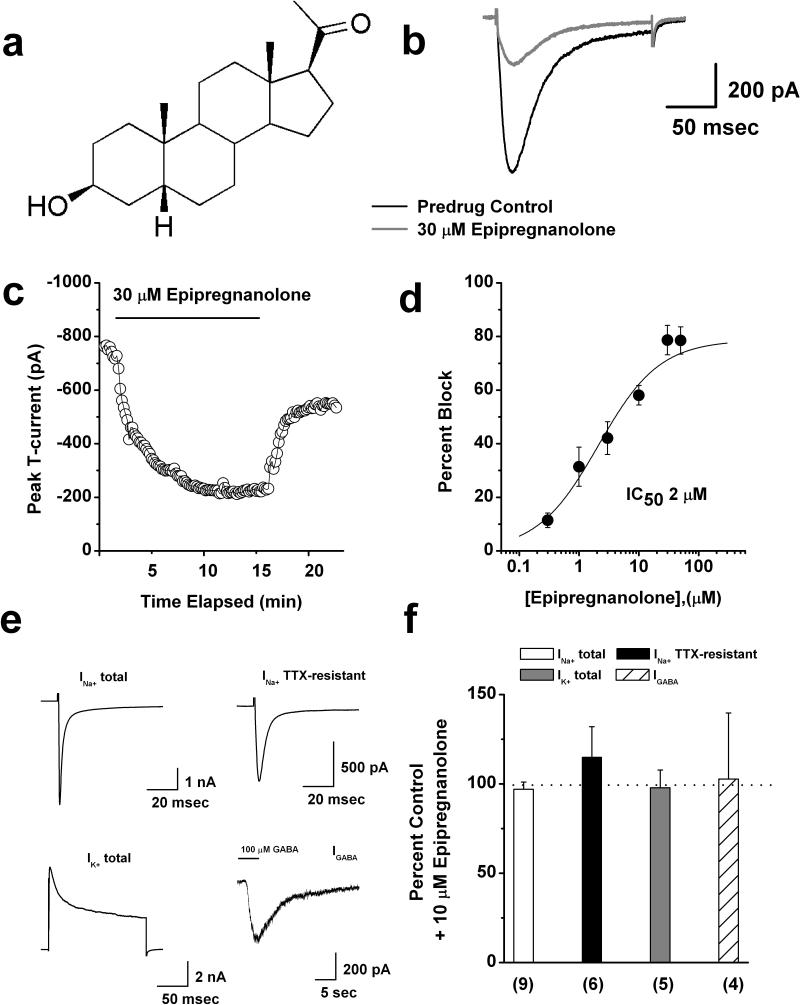
Figure 1
Figure 1. Concentration-dependent inhibition of rat DRG T-currents by epipregnanolone
a: Scheme represents chemical structure of epipregnanonolone. b: Original traces show DRG T-currents in predrug control conditions (black trace) and after application of 30 μM epipregnanolone (gray trace). c: Time course of T-current inhibition by 30 μM epipregnanolone in the same representative DRG cell presented on panel b. d: Concentration-response relationship for epipregnanolone inhibition of T-current in rat DRG cells (n = 3-18 per data point). Solid line is the best fit (equation # 1, see Materials and Methods) yielding IC50 of 2.1 ± 0.5 μM, slope coefficient 0.8 ± 0.2, and maximal inhibition of 79 % of the peak of T-current. e: Original control current traces from different representative DRG cells show total Na+ current, TTX-resistant Na+ current, total K+ current, and GABA-gated currents. f: Bar graphs show average effects of 10 μM epipregnanolone upon different ionic currents in DRG cells as depicted on panel e of this figure. Dashed line indicates control predrug levels of currents. Number of cells per each experiment is indicated in parenthesis.
Figure 2
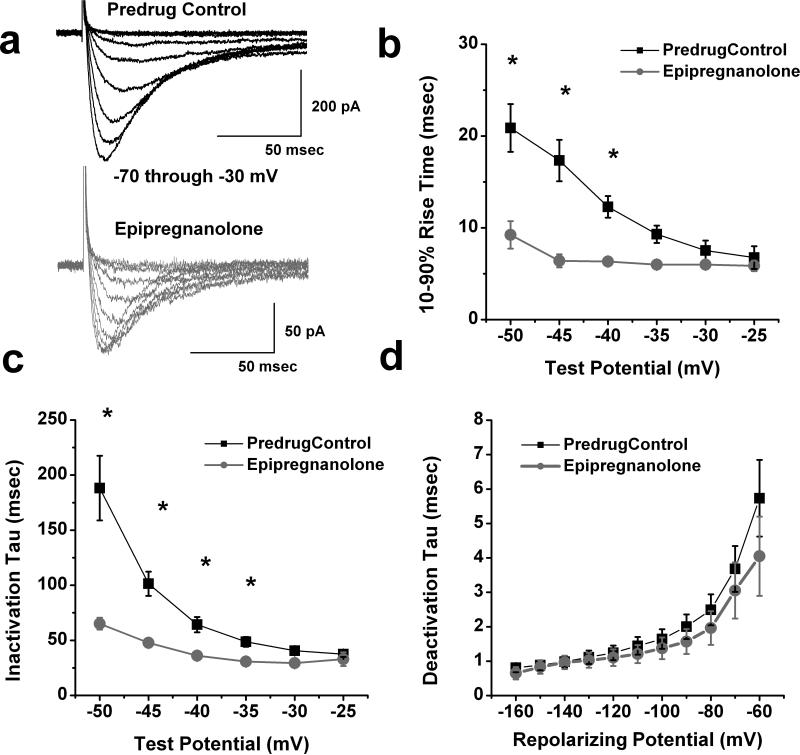
Figure 2. Effects of epipregnanolone of macroscopic T-current kinetics and deactivation in rat DRG cells
a: Traces represent families of T-currents evoked in a representative DRG cell in predrug control conditions (black traces on top panel) and during application of 10 μM epipregnanolone (gray traces on lower panel) by voltage steps from Vh of -90 mV to Vt from −70 through −30 mV in 5-mV increments. Bars indicate calibration. b,c: We measured time-dependent activation (10%-90% rise time, panel b) and inactivation τ(single exponential fit of decaying portion of the current waveforms, panel c) in 8 DRG cells over the range of test potentials from −50 mV to −25 mV before (■) and after application of 10 μM epipregnanolone (●). Note that epipregnanolone speeded T-current kinetics at more negative Vt. Symbol * indicates significance of p < 0.05. d: Deactivating tail currents in control predrug conditions (■) and after application of 10 μM epipregnanolone (●) were fit with a single exponential function. The resulting tau values are plotted (n = 6). All points are not statistically significant between two groups (p > 0.05).
Figure 3
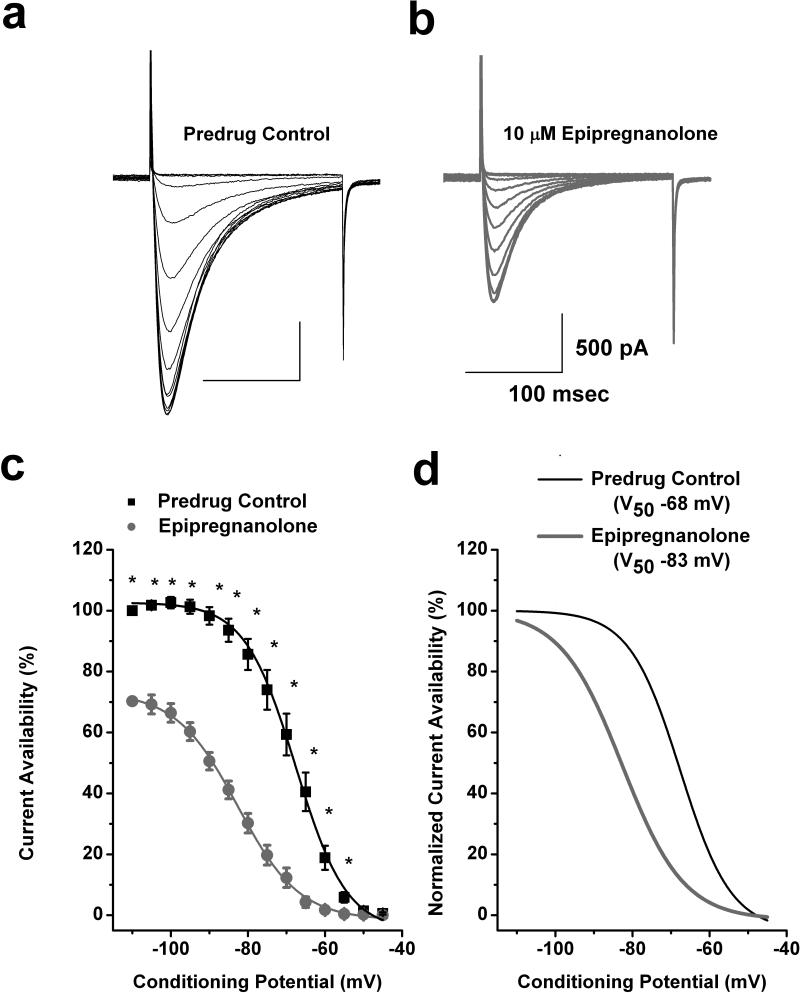
Figure 3. Epipregnanolone stabilizes inactive states of T-channels in rat DRG cells
a,b: Representative original current traces of a T-rich DRG cell in control conditions (panel a) and after 5 minutes of bath application of 10 μM epipregnanolone (panel b). Calibration bars pertain to both panels. c: The average T-current steady-state inactivation curves from similar experiments shown in the upper panels of this figure (n = 14 cells). Black filled squares represent the control conditions; gray filled circles represent the conditions after bath applications of epipregnanolone in the same DRG cells. All points are normalized to maximal current at −110 mV in predrug control conditions. Solid lines are fitted using equation #2 (see Materials and Methods), giving half-maximal availability (V50), which occurred at −68 ± 1 mV with a slope k of 7 ± 1 mV in control conditions. V50 was −83 ± 1 mV with a slope k of 8 ± 1 mV in the conditions after epipregnanolone was applied. Symbol * indicates significance of p < 0.05. d: The same steady state-inactivation curves as depicted on panel c of this figure are normalized to its own maximal current. Solid black curve represent control conditions and gray solid curve reflects the hyperpolarizing shift of steady-state inactivation by 15 mV induced by epipregnanolone.
Figure 4
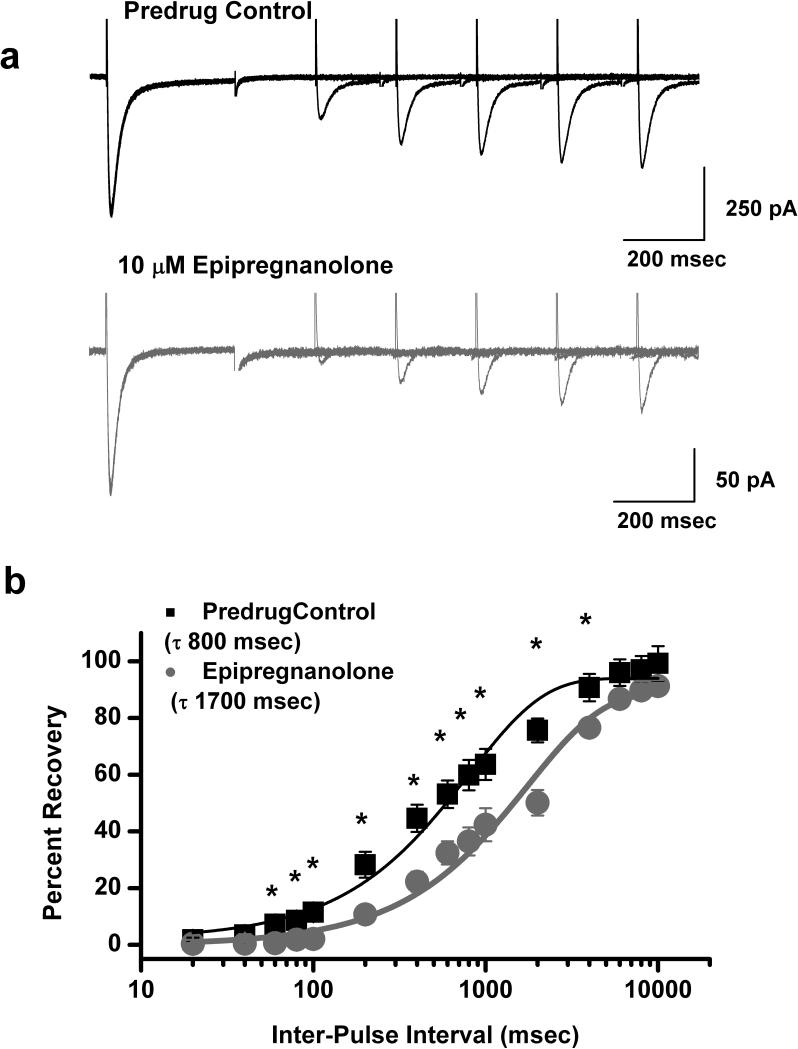
Figure 4. Epipregnanolone slows recovery from inactivation of T-currents in rat DRG cells
a: Representative original current traces of a DRG cell in control conditions (top panel) and after 5 minutes of bath application of 10 μM epipregnanolone (bottom panel). b: Symbols indicate averaged data from multiple DRG cells (n = 8) that were fitted with a single exponential equation (solid lines). Recovery in control predrug conditions (black symbols and black solid line) was best described with τ of 800 ± 80 msec. After application of epipregnanolone in the same DRG cells (gray symbols and gray solid line) τ was about 2-fold slower: 1700 ± 200 msec. Symbol * indicates significance of p < 0.05.
Figure 5
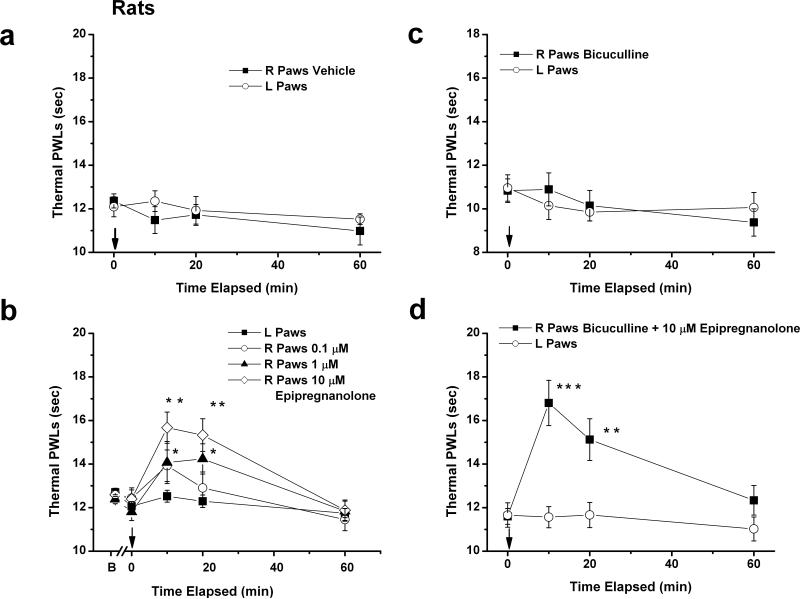
Figure 5. Local application of epipregnanolone induces potent dose-dependent decrease in heat nociception in healthy rats
a: Injection of 100 μl of solution containing vehicle into right paws (■) had very little effects on thermal PWLs. Note that PWL in uninjected, left paws (□) also remained stable during the course of experiment. Data points are averages from 6 rats. b: Injection of 1 μM (▲) and 10 μM (◊) but not 0.1 μM (○) epipregnanolone into right paws significantly increased thermal PWLs at 10 and 20 minutes time points when we compared right and left paws (*p<0.05; ** p<0.01; n = 8-9 rats per group). c: Injection of 100 μl of solution containing 60 μM bicuculline into right paws (■) had very little effects on thermal PWLs. Note that PWL in uninjected, left paws (□) also remained stable during the course of experiment (n=8 rats). d: Injection of 10 μM epipregnanolone with 60 μM bicuculline (■) into right paws significantly increased thermal PWLs at 10 and 20 minutes time points when we compared right and left paws (**p<0.01; *** p<0.001; n = 8 rats). Note that PWLs in uninjected left paws (□) remained stable. Solid arrows on all panels indicate time of injection.
Figure 6
Figure 6. Local application of epipregnanolone induces potent dose-dependent analgesia to heat in WT mice but is ineffective in CaV3.2 KO mice
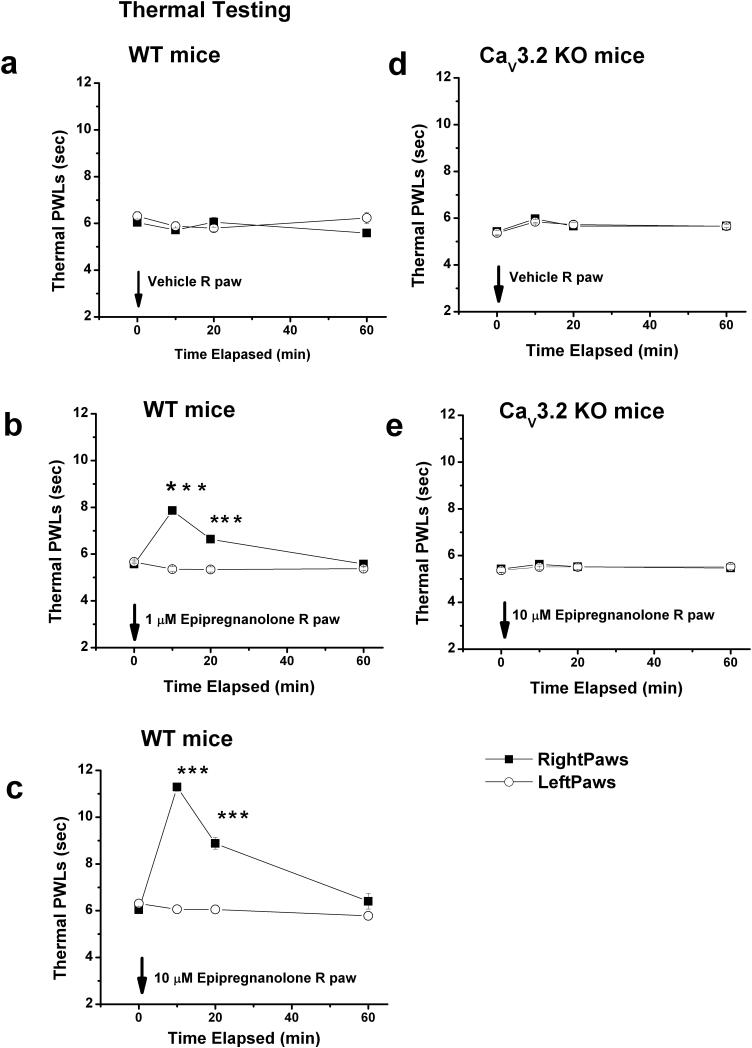
a: Injection of 10 μl of saline containing vehicle (0.1 % DMSO) into right paws (■) of WT (CaV3.2 +/+) mice had very little effects on thermal PWLs. Note that PWL in uninjected, left paws (○) also remained stable during the course of experiment. b,c: Dose dependent analgesia with 1 μM (b) and 10 μM (c) epipregnanolone is evidenced by significant prolongation of thermal PWLs in injected (right paws) at 10 and 20 minutes following i.pl. injection. d,e: Injection of 10 μl of saline containing vehicle (d) or 10 μM epipregnanolone (e) into right paws (■) of KO (CaV3.2 −/−) mice had very little effects on thermal PWLs. Solid arrow indicates times of injection in all panels. Symbol *** indicates p < 0.001 for right versus left paw. We used 6-9 mice per experiment.
Figure 7
Figure 7. Local application of epipregnanolone induces potent dose-dependent analgesia to mechanical stimuli in WT mice but is ineffective in CaV3.2 KO mice
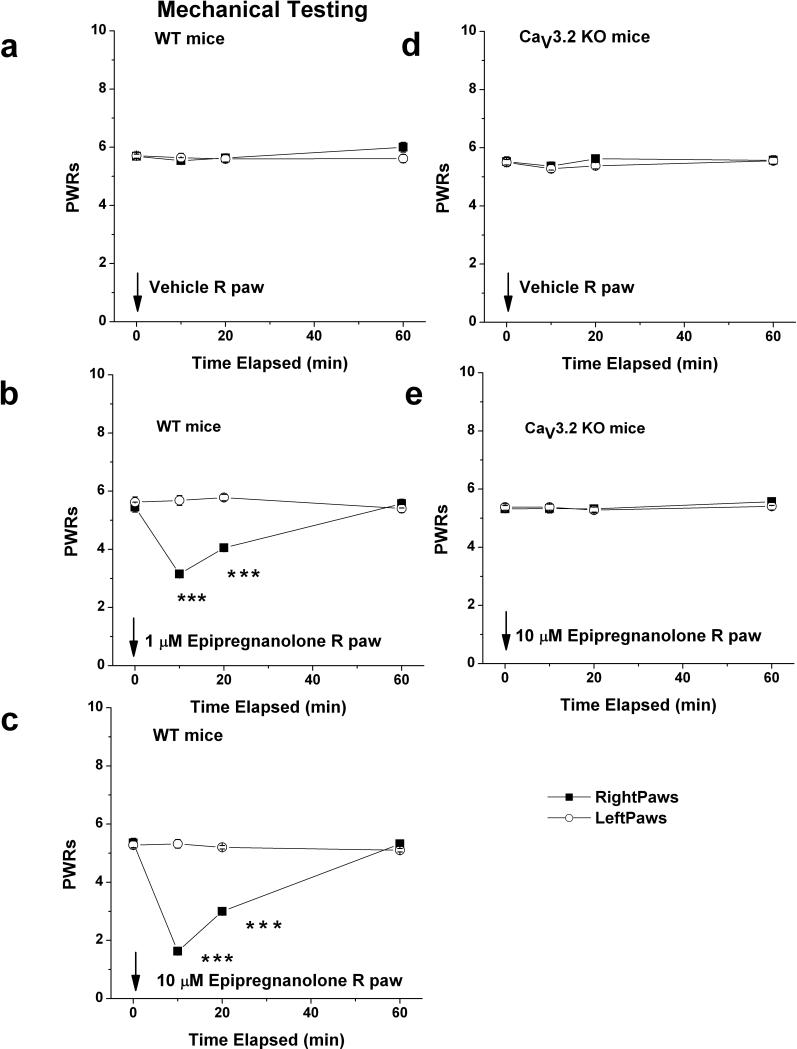
a: Injection of 10 l of saline containing vehicle (0.1 % DMSO) into right paws (■) of WT (CaV3.2 +/+) mice had very little effects on mechanical PWRs. Note that PWRs in uninjected, left paws (○) also remained stable during the course of experiment. b,c: Dose dependent analgesia with 1 μM (b) and 10 μM (c) epipregnanolone is evidenced by significant prolongation of mechanical PWRs in injected (right paws) at 10 and 20 minutes following i.pl. injection. d,e: Injection of 10 μl of saline containing vehicle (d) or 10 μM epipregnanolone (e) into right paws (■) of KO (CaV3.2 −/−) mice had very little effects on mechanical PWRs. Solid arrow indicates times of injection in all panels. Symbol *** indicates p < 0.001 for right versus left paw. We used 6-9 mice per experiment.

References

    1. Barbara G, Alloui A, Nargeot J, Lory P, Eschalier A, Bourinet E, Chemin J. T-type calcium channel inhibition underlies the analgesic effects of the endogenous lipoamino acids. J Neurosci. 2009;29:13106–14. - PMC - PubMed
    1. Bicikova M, Hill M, Ripova D, Mohr P, Hampl R. Determination of steroid metabolome as a possible tool for laboratory diagnosis of schizophrenia. J Steroid Biochem Mol Biol. 2013;133:77–83. - PubMed
    1. Campbell JN, Meyer RA. Mechanisms of neuropathic pain. Neuron. 2006;52(1):77–92. - PMC - PubMed
    1. Chen CC, Lamping KG, Nuno DW, Barresi R, Prouty SJ, Lavoie JL, Cribbs LL, England SK, Sigmund CD, Weiss RM, Williamson RA, Hill JA, Campbell CP. Abnormal coronary function in mice deficient in alpha1H T-type Ca2+ channels. Science. 2003;302:1416–8. - PubMed
    1. Choe WJ, Messinger RB, Leach E, Eckle V-S, Obradovic A, Salajegheh R, Jevtovic-Todorovic V, Todorovic SM. TTA-P2 is a potent and selective blocker of T-type calcium channels in rat sensory neurons and a novel antinociceptive agent. Molecular Pharmacology. 2011;80(5):900–10. - PMC - PubMed

Publication types

LinkOut - more resources