


Oropharyngeal squamous cell carcinoma in the veteran population: Association with traditional carcinogen exposure and poor clinical outcomes
- PMID: 24801106
- PMCID: PMC4496314
- DOI: 10.1002/hed.23740
Oropharyngeal squamous cell carcinoma in the veteran population: Association with traditional carcinogen exposure and poor clinical outcomes
Abstract
Background: A significant fraction of oropharyngeal squamous cell carcinoma (SCC) cases is associated with traditional carcinogens; in these patients, treatment response and clinical outcomes remain poor.
Methods: We evaluated patient, tumor, and treatment characteristics for 200 veterans with oropharyngeal SCC treated at the Michael E. DeBakey Veterans Affairs Medical Center (MEDVAMC) between 2000 and 2012.
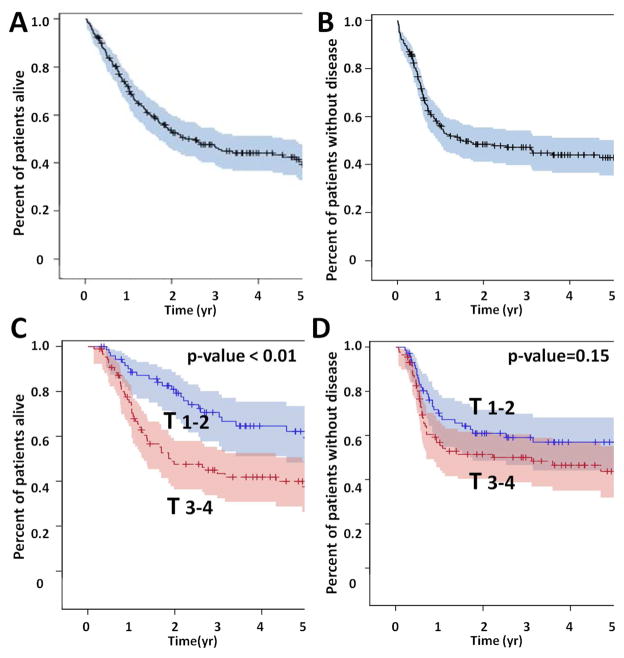
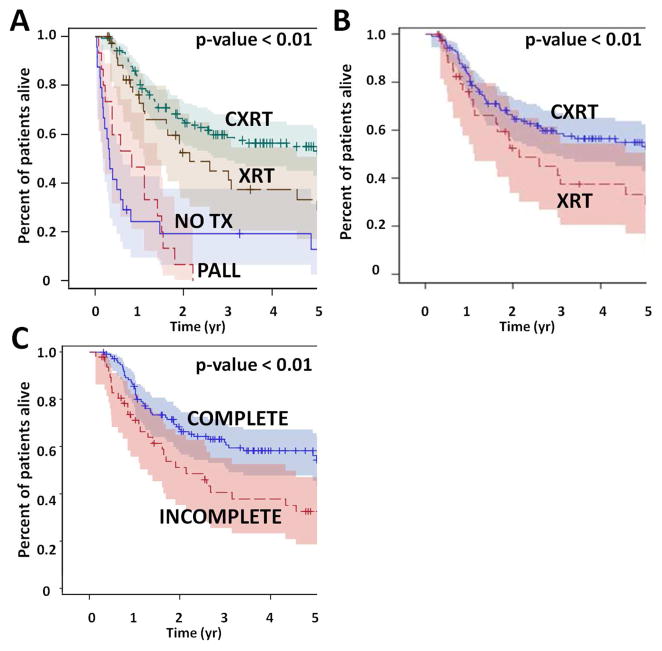
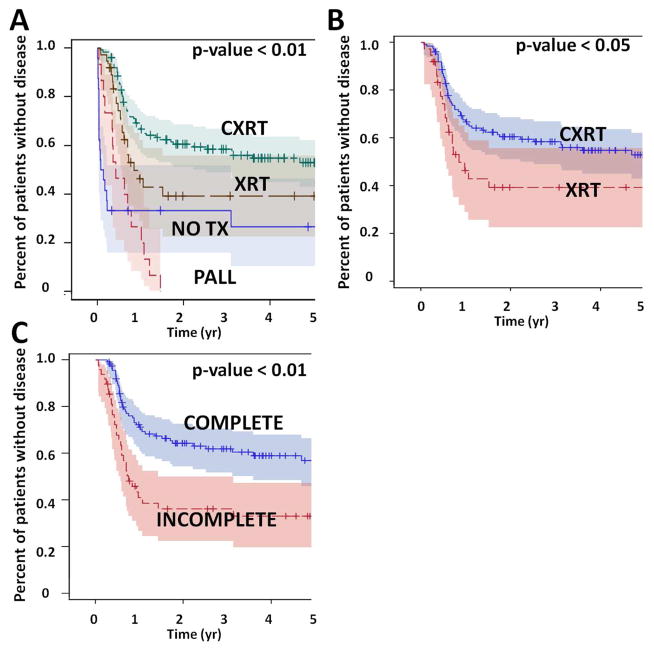
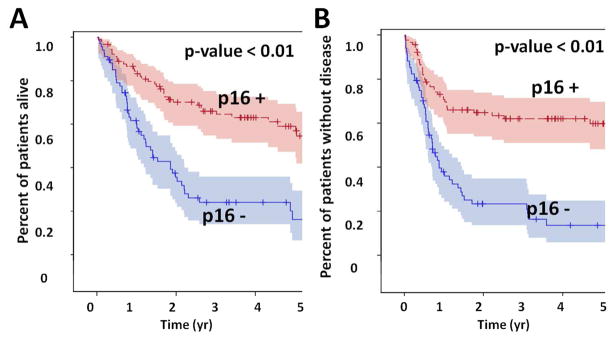
Results: Most patients (77%) were white and heavy smokers. Twenty-seven patients required tracheostomy and 63 required gastrostomy placement during treatment. Overall survival (OS) at 5 years was 40%. Survival was impacted by T classification, treatment intensity, completion of treatment, and p16 tumor status. Almost 30% of patients were unable to complete a treatment regimen consistent with National Comprehensive Cancer Network (NCCN) guidelines.
Conclusion: Oropharyngeal SCC in veterans is associated with traditional carcinogens and poor clinical outcomes. Despite heavy smoking exposure, p16 tumor status significantly impacts survival. Careful consideration must be given to improving treatment paradigms for this cohort given their limited tolerance for treatment escalation.
Keywords: gastrostomy; oropharyngeal cancer; smoking; tracheostomy; veteran.
© 2014 Wiley Periodicals, Inc.
Conflict of interest statement
None of the authors have any relationships that they believe could be construed as resulting in an actual, potential, or perceived conflict of interest with regard to the manuscript submitted for review.
Figures
References
-
- Siegel R, Naishadham D, Jemal A. Cancer statistics, 2013. CA Cancer J Clin. 2013;63(1):11–30. - PubMed
-
- Mehanna H, Jones TM, Gregoire V, Ang KK. Oropharyngeal carcinoma related to human papillomavirus. BMJ. 2010;340:c1439. - PubMed
-
- Parsons JT, Mendenhall WM, Stringer SP, et al. Squamous cell carcinoma of the oropharynx: surgery, radiation therapy, or both. Cancer. 2002;94(11):2967–80. - PubMed
Publication types
MeSH terms
Substances
Grants and funding
LinkOut - more resources
Full Text Sources
Other Literature Sources
Research Materials
