


Decreased BDNF and TrkB mRNA expression in multiple cortical areas of patients with schizophrenia and mood disorders
- PMID: 24802307
- PMCID: PMC4035720
- DOI: 10.1038/tp.2014.26
Decreased BDNF and TrkB mRNA expression in multiple cortical areas of patients with schizophrenia and mood disorders
Abstract
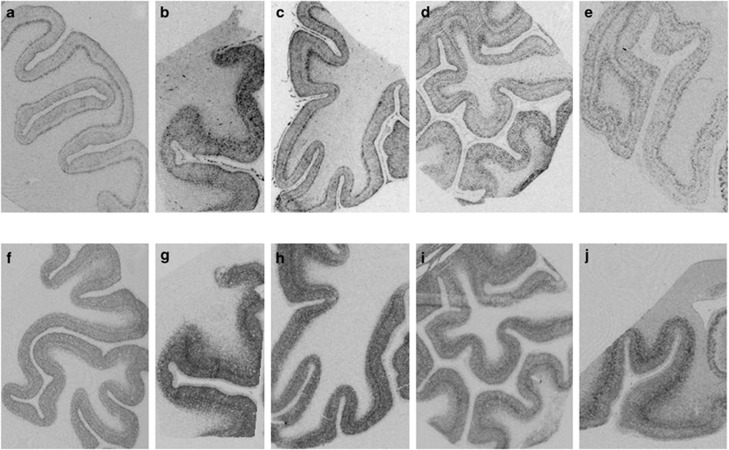
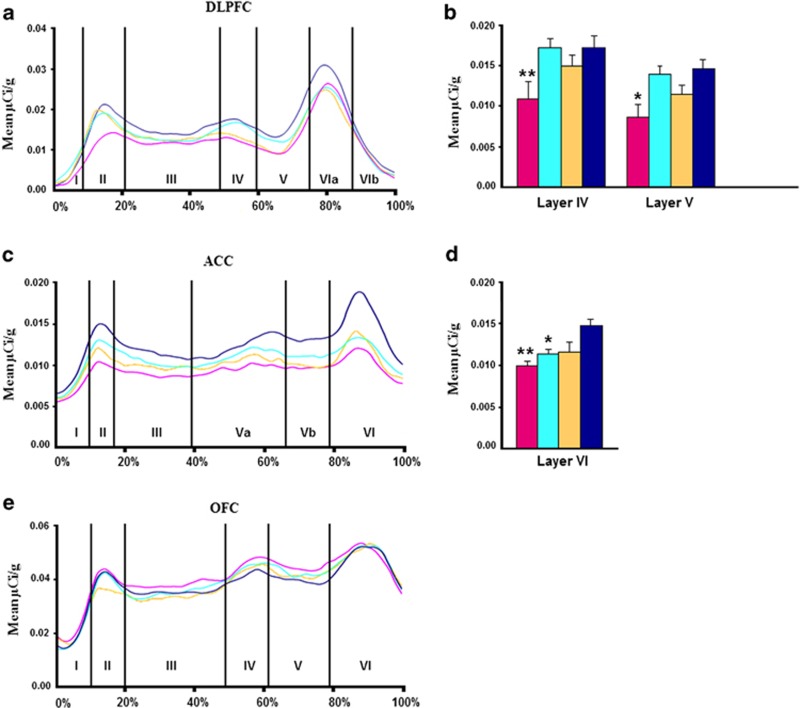
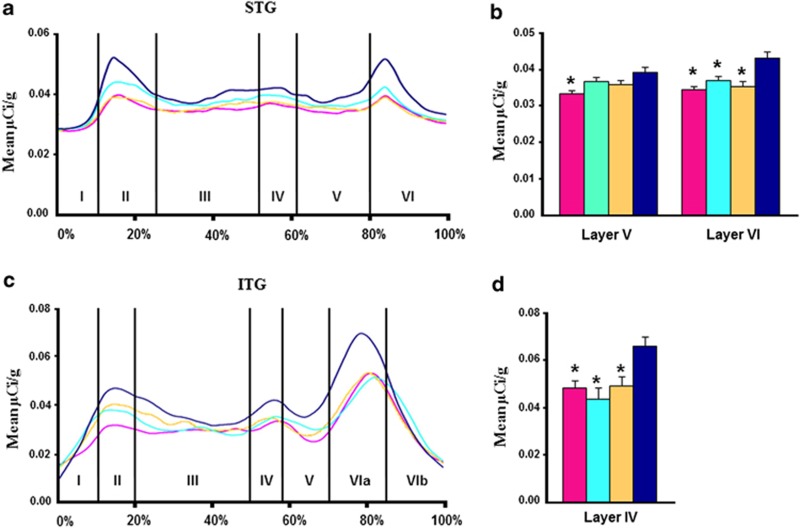
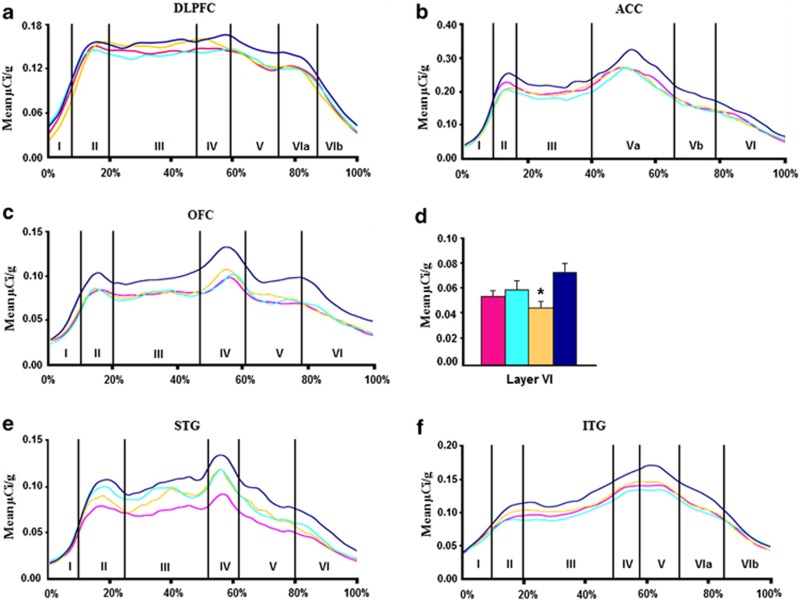
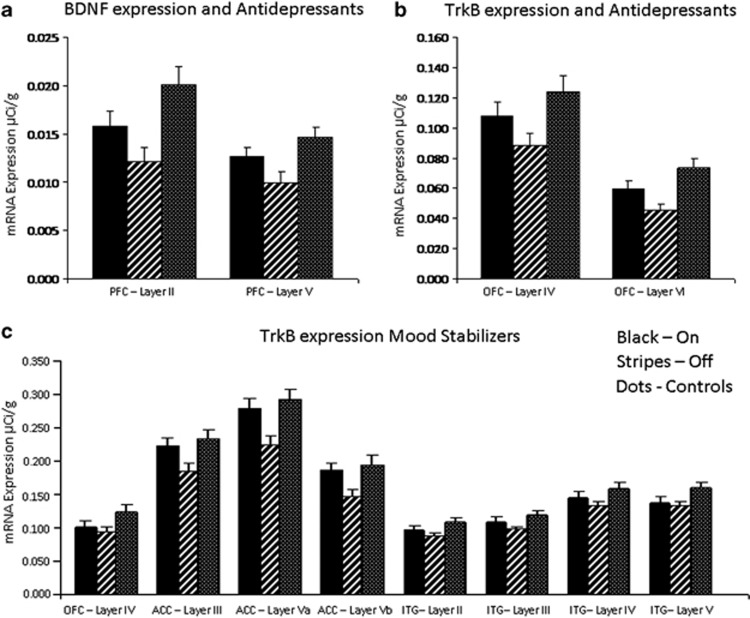
Abnormalities in brain-derived neurotrophic factor (BDNF)/trkB signaling have been implicated in the etiology of schizophrenia and mood disorders. Patients with schizophrenia, bipolar disorder (BPD) and major depression (MDD) have reduced levels of neurotrophins in their brains when compared with normal unaffected individuals; however, only a few brain areas have been examined to date. Owing to the broad range of symptoms manifested in these disorders, we hypothesized that multiple associative areas of the neocortex may be implicated and that the degree of change in BDNF and trkB-TK+ mRNA expression and the cortical region or layers involved may vary according to Diagnostic and Statistical Manual of Mental Disorders (DSM) diagnosis. We compared BDNF and trkB-TK+ mRNA levels across all layers of the prefrontal cortex (dorsolateral prefrontal cortex, DLPFC), orbital frontal cortex (OFC), anterior cingulate cortex (ACC), inferior temporal gyrus (ITG) and superior temporal gyrus (STG) in four groups: schizophrenia, BPD, MDD and unaffected controls (n=60). BDNF mRNA levels were significantly decreased in layers IV and V of DLPFC in schizophrenia patients, in layer VI of ACC in schizophrenia and MDD and in layer VI of ITG in schizophrenia, BPD and MDD. BDNF mRNA levels were also significantly decreased in layer V and/or VI of STG in schizophrenia, BPD and MDD. TrkB-TK+ mRNA levels were only significantly decreased in the cortical layer VI of OFC in BPD. The shared and distinct patterns of neurotrophin transcript reductions, with some specific to each group, may compromise the function and plasticity of distinct cortical areas to various degrees in the different groups and contribute to the range and overlap of symptoms manifested across the diagnoses.
Figures
References
-
- Harrison PJ. The neuropathology of schizophrenia. A critical review of the data and their interpretation. Brain. 1999;122:593–624. - PubMed
-
- Hirsch SR, Weinberger DR. Schizophrenia. Blackwell Science: Oxford; Cambridge, MA, USA; 1995.
-
- Taylor MA. Are schizophrenia and affective disorder related? A selective literature review. Am J Psychiatry. 1992;149:22–32. - PubMed
-
- Taylor MA, Amir N. Are schizophrenia and affective disorder related? The problem of schizoaffective disorder and the discrimination of the psychoses by signs and symptoms. Comp Psychiatry. 1994;35:420–429. - PubMed
-
- Bora E, Fornito A, Radua J, Walterfang M, Seal M, Wood SJ, et al. Neuroanatomical abnormalities in schizophrenia: a multimodal voxelwise meta-analysis and meta-regression analysis. Schizophr Res. 2011;127:46–57. - PubMed
Publication types
MeSH terms
Substances
Grants and funding
LinkOut - more resources
Full Text Sources
Other Literature Sources
Medical
