


p16INK4A and p14ARF gene promoter hypermethylation as prognostic biomarker in oral and oropharyngeal squamous cell carcinoma: a review
- PMID: 24803719
- PMCID: PMC3997957
- DOI: 10.1155/2014/260549
p16INK4A and p14ARF gene promoter hypermethylation as prognostic biomarker in oral and oropharyngeal squamous cell carcinoma: a review
Abstract
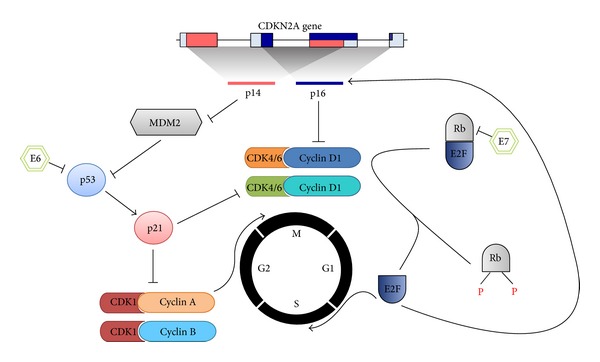
Head and neck squamous cell carcinoma is a heterogeneous group of tumors with each subtype having a distinct histopathological and molecular profile. Most tumors share, to some extent, the same multistep carcinogenic pathways, which include a wide variety of genetic and epigenetic changes. Epigenetic alterations represent all changes in gene expression patterns that do not alter the actual DNA sequence. Recently, it has become clear that silencing of cancer related genes is not exclusively a result of genetic changes such as mutations or deletions, but it can also be regulated on epigenetic level, mostly by means of gene promoter hypermethylation. Results from recent studies have demonstrated that DNA methylation patterns contain tumor-type-specific signatures, which could serve as biomarkers for clinical outcome in the near future. The topic of this review discusses gene promoter hypermethylation in oral and oropharyngeal squamous cell carcinoma (OSCC). The main objective is to analyse the available data on gene promoter hypermethylation of the cell cycle regulatory proteins p16(INK4A) and p14(ARF) and to investigate their clinical significance as novel biomarkers in OSCC. Hypermethylation of both genes seems to possess predictive properties for several clinicopathological outcomes. We conclude that the methylation status of p16(INK4A) is definitely a promising candidate biomarker for predicting clinical outcome of OSCC, especially for recurrence-free survival.
Figures
References
-
- Ferlay J, Shin H, Bray F, Forman D, Mathers C, Parkin DM. Estimates of worldwide burden of cancer in 2008: GLOBOCAN 2008. International Journal of Cancer. 2010;127(12):2893–2917. - PubMed
-
- Vokes EE, Weichselbaum RR, Lippman SM, Waun Ki Hong WKH. Medical progress: head and neck cancer. New England Journal of Medicine. 1993;328(3):184–194. - PubMed
-
- Leemans CR, Braakhuis BJM, Brakenhoff RH. The molecular biology of head and neck cancer. Nature Reviews Cancer. 2011;11(1):9–22. - PubMed
-
- Blot WJ, McLaughlin JK, Winn DM, et al. Smoking and drinking in relation to oral and pharyngeal cancer. Cancer Research. 1988;48(11):3282–3287. - PubMed
-
- Tuyns AJ, Esteve J, Raymond L, et al. Cancer of the larynx/hypopharynx, tobacco and alcohol: IARC international case-control study in Turin and Varese (Italy), Zaragoza and Navarra (Spain), Geneva (Switzerland) and Calvados (France) International Journal of Cancer. 1988;41(4):483–491. - PubMed
Publication types
MeSH terms
Substances
LinkOut - more resources
Full Text Sources
Other Literature Sources
Medical
Research Materials
