


Biology of ageing and role of dietary antioxidants
- PMID: 24804252
- PMCID: PMC3996317
- DOI: 10.1155/2014/831841
Biology of ageing and role of dietary antioxidants
Abstract
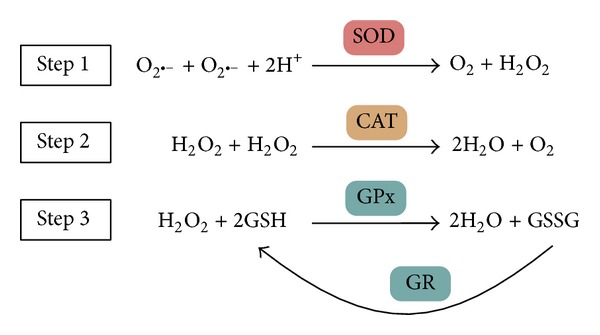
Interest in relationship between diet and ageing is growing. Research has shown that dietary calorie restriction and some antioxidants extend lifespan in various ageing models. On the one hand, oxygen is essential to aerobic organisms because it is a final electron acceptor in mitochondria. On the other hand, oxygen is harmful because it can continuously generate reactive oxygen species (ROS), which are believed to be the factors causing ageing of an organism. To remove these ROS in cells, aerobic organisms possess an antioxidant defense system which consists of a series of enzymes, namely, superoxide dismutase (SOD), catalase (CAT), glutathione peroxidase (GPx), and glutathione reductase (GR). In addition, dietary antioxidants including ascorbic acid, vitamin A, vitamin C, α-tocopherol, and plant flavonoids are also able to scavenge ROS in cells and therefore theoretically can extend the lifespan of organisms. In this connection, various antioxidants including tea catechins, theaflavins, apple polyphenols, black rice anthocyanins, and blueberry polyphenols have been shown to be capable of extending the lifespan of fruit flies. The purpose of this review is to brief the literature on modern biological theories of ageing and role of dietary antioxidants in ageing as well as underlying mechanisms by which antioxidants can prolong the lifespan with focus on fruit flies as an model.
Figures

References
-
- Harman D. Aging: a theory based on free radical and radiation chemistry. Journal of Gerontology. 1956;11(3):298–300. - PubMed
-
- Gutteridge JM, Halliwell B. Free radicals and antioxidants in the year 2000. A historical look to the future. Annals of the New York Academy of Sciences. 2000;899(1):136–147. - PubMed
-
- Sroka J, Madeja Z. Reactive oxygen species in regulation of cell migration. The role of thioredoxin reductase. Postepy Biochemii. 2009;55(2):145–152. - PubMed
-
- Douglas JG, Bakris GL, Epstein M, et al. Management of high blood pressure in African Americans: consensus statement of the hypertension in African Americans Working Group of the International Society on Hypertension in blacks. Archives of Internal Medicine. 2003;163(5):525–541. - PubMed
Publication types
MeSH terms
Substances
LinkOut - more resources
Full Text Sources
Other Literature Sources
Medical
Miscellaneous
