


Calorie restriction decreases murine and human pancreatic tumor cell growth, nuclear factor-κB activation, and inflammation-related gene expression in an insulin-like growth factor-1-dependent manner
- PMID: 24804677
- PMCID: PMC4013119
- DOI: 10.1371/journal.pone.0094151
Calorie restriction decreases murine and human pancreatic tumor cell growth, nuclear factor-κB activation, and inflammation-related gene expression in an insulin-like growth factor-1-dependent manner
Abstract
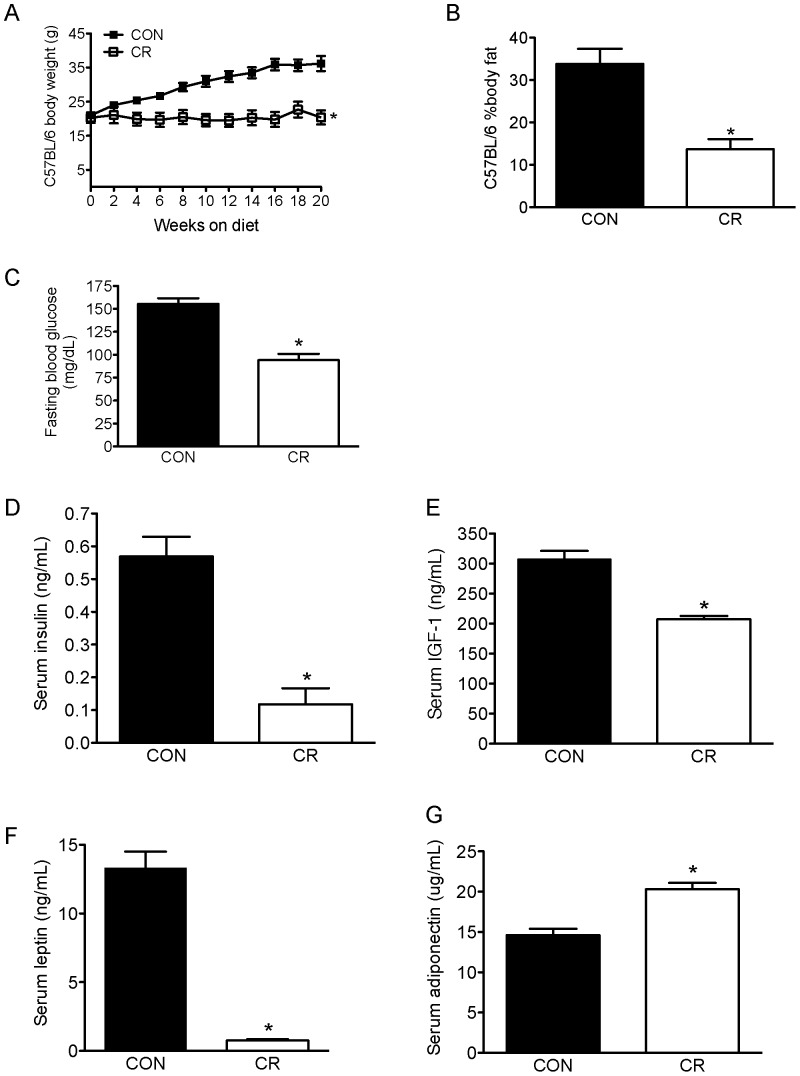
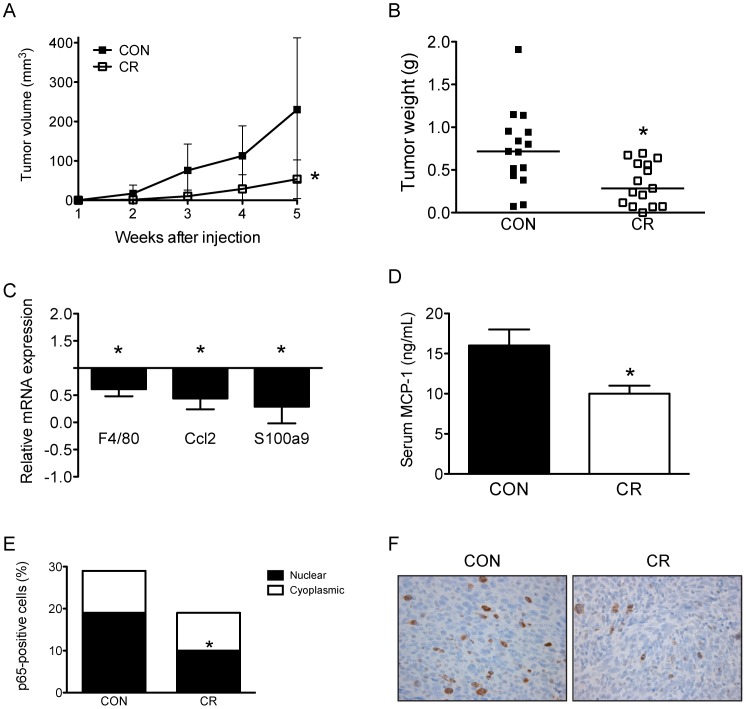
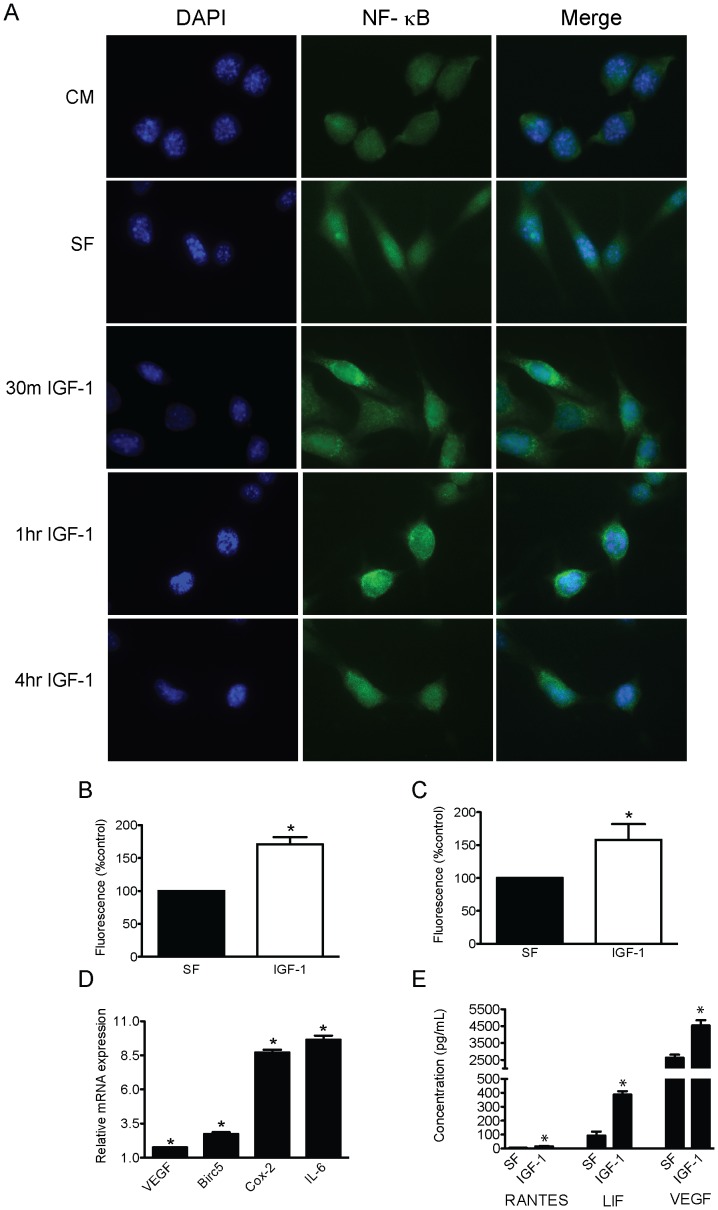
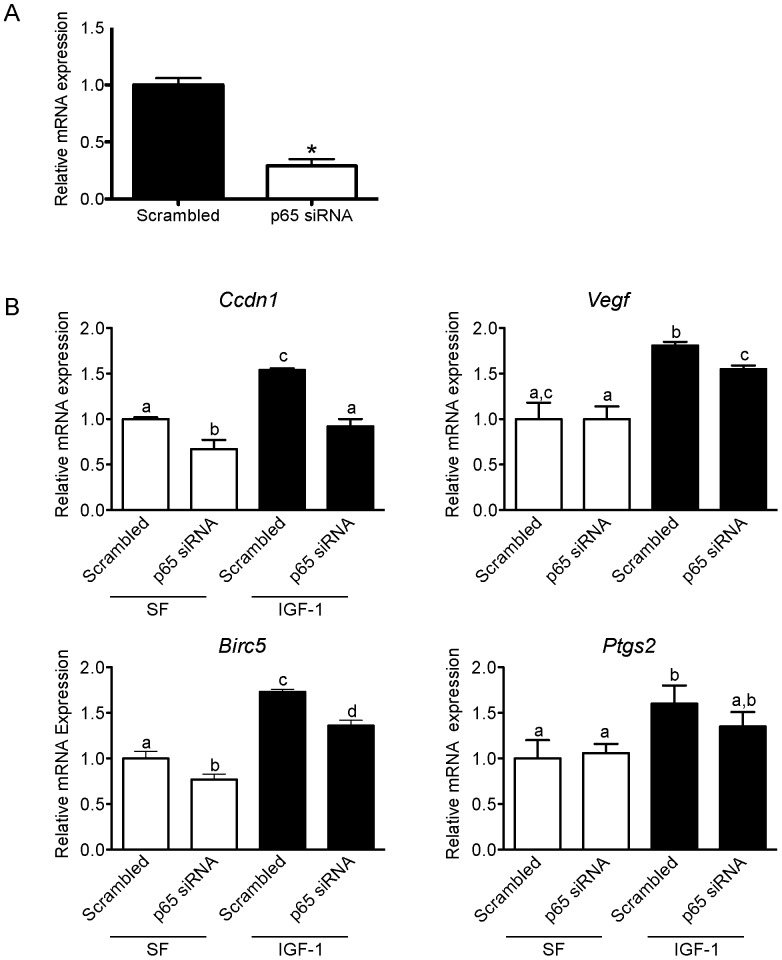
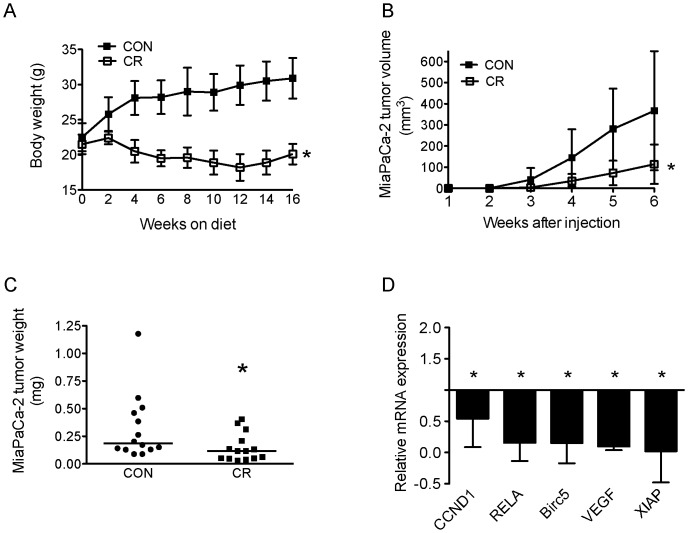
Calorie restriction (CR) prevents obesity and has potent anticancer effects that may be mediated through its ability to reduce serum growth and inflammatory factors, particularly insulin-like growth factor (IGF)-1 and protumorigenic cytokines. IGF-1 is a nutrient-responsive growth factor that activates the inflammatory regulator nuclear factor (NF)-κB, which is linked to many types of cancers, including pancreatic cancer. We hypothesized that CR would inhibit pancreatic tumor growth through modulation of IGF-1-stimulated NF-κB activation and protumorigenic gene expression. To test this, 30 male C57BL/6 mice were randomized to either a control diet consumed ad libitum or a 30% CR diet administered in daily aliquots for 21 weeks, then were subcutaneously injected with syngeneic mouse pancreatic cancer cells (Panc02) and tumor growth was monitored for 5 weeks. Relative to controls, CR mice weighed less and had decreased serum IGF-1 levels and smaller tumors. Also, CR tumors demonstrated a 70% decrease in the expression of genes encoding the pro-inflammatory factors S100a9 and F4/80, and a 56% decrease in the macrophage chemoattractant, Ccl2. Similar CR effects on tumor growth and NF-κB-related gene expression were observed in a separate study of transplanted MiaPaCa-2 human pancreatic tumor cell growth in nude mice. In vitro analyses in Panc02 cells showed that IGF-1 treatment promoted NF-κB nuclear localization, increased DNA-binding of p65 and transcriptional activation, and increased expression of NF-κB downstream genes. Finally, the IGF-1-induced increase in expression of genes downstream of NF-κB (Ccdn1, Vegf, Birc5, and Ptgs2) was decreased significantly in the context of silenced p65. These findings suggest that the inhibitory effects of CR on Panc02 pancreatic tumor growth are associated with reduced IGF-1-dependent NF-κB activation.
Conflict of interest statement
Figures
References
-
- Siegel R, Naishadham D, Jemal A (2012) Cancer statistics, 2012. CA: a cancer journal for clinicians 62: 10–29. - PubMed
-
- Shaib YH, Davila JA, El-Serag HB (2006) The epidemiology of pancreatic cancer in the United States: changes below the surface. Aliment Pharmacol Ther 24: 87–94. - PubMed
-
- Calle EE, Rodriguez C, Walker-Thurmond K, Thun MJ (2003) Overweight, obesity, and mortality from cancer in a prospectively studied cohort of U.S. adults. N Engl J Med 348: 1625–1638. - PubMed
-
- Giovannucci E, Michaud D (2007) The role of obesity and related metabolic disturbances in cancers of the colon, prostate, and pancreas. Gastroenterology 132: 2208–2225. - PubMed
Publication types
MeSH terms
Substances
Grants and funding
LinkOut - more resources
Full Text Sources
Other Literature Sources
Medical
Research Materials
Miscellaneous
