


Progranulin gene delivery protects dopaminergic neurons in a mouse model of Parkinson's disease
- PMID: 24804730
- PMCID: PMC4013129
- DOI: 10.1371/journal.pone.0097032
Progranulin gene delivery protects dopaminergic neurons in a mouse model of Parkinson's disease
Abstract
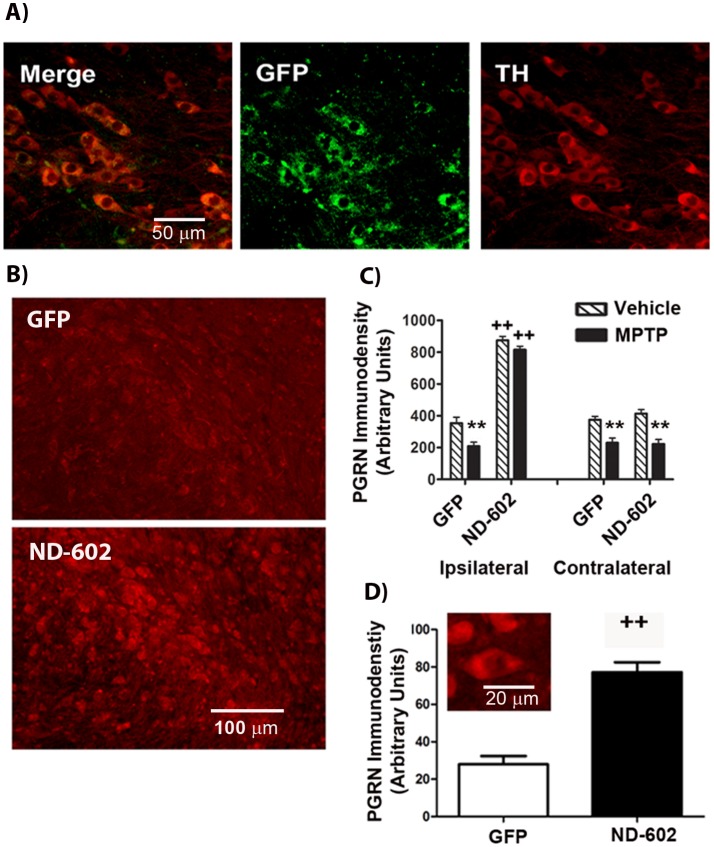
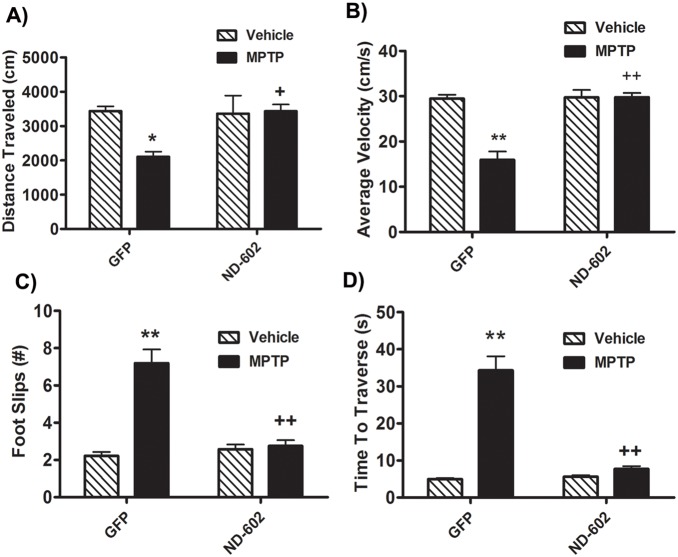
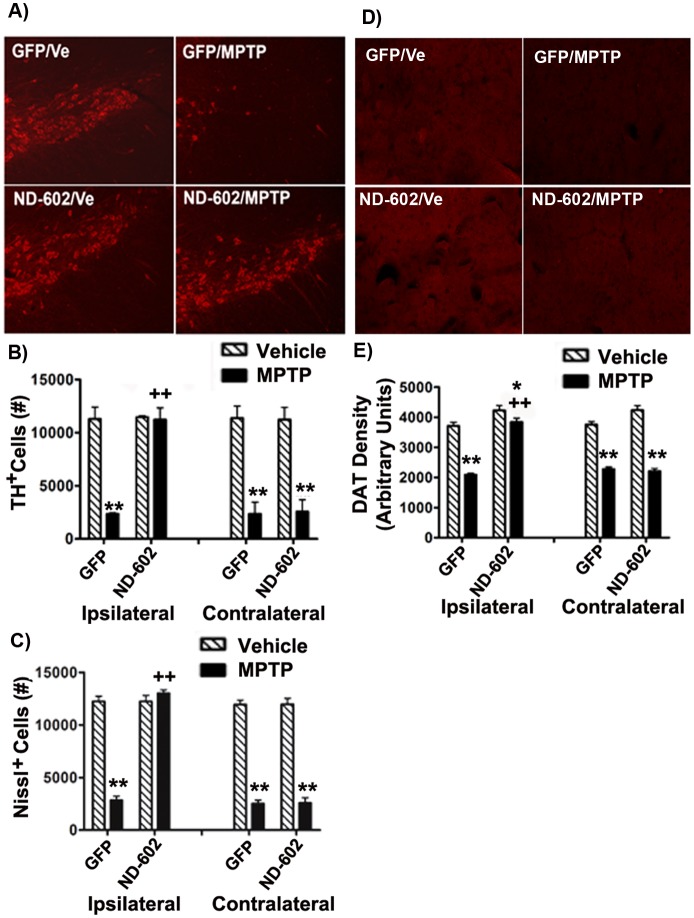
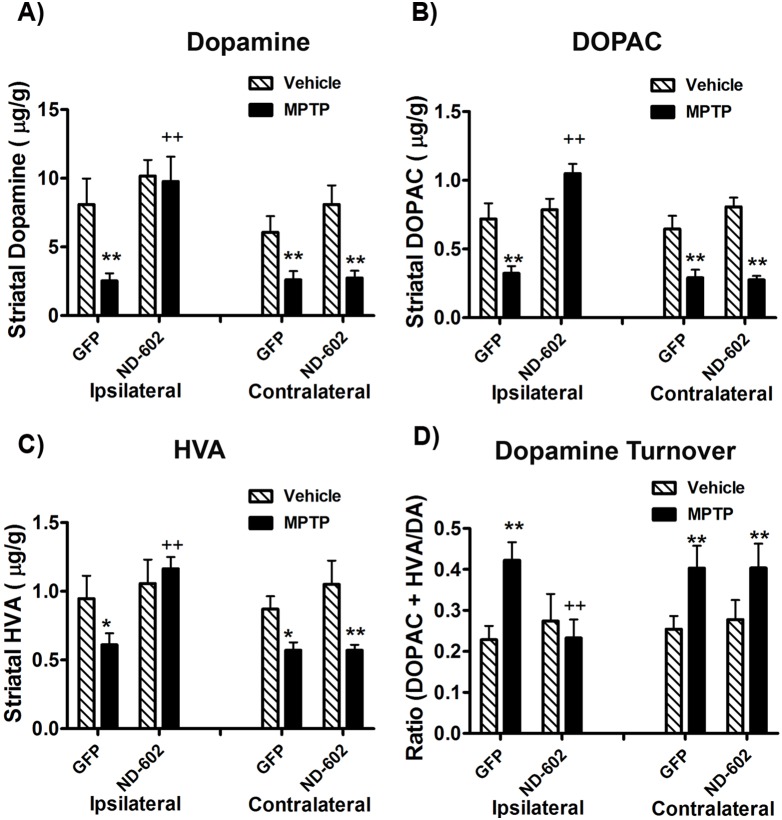
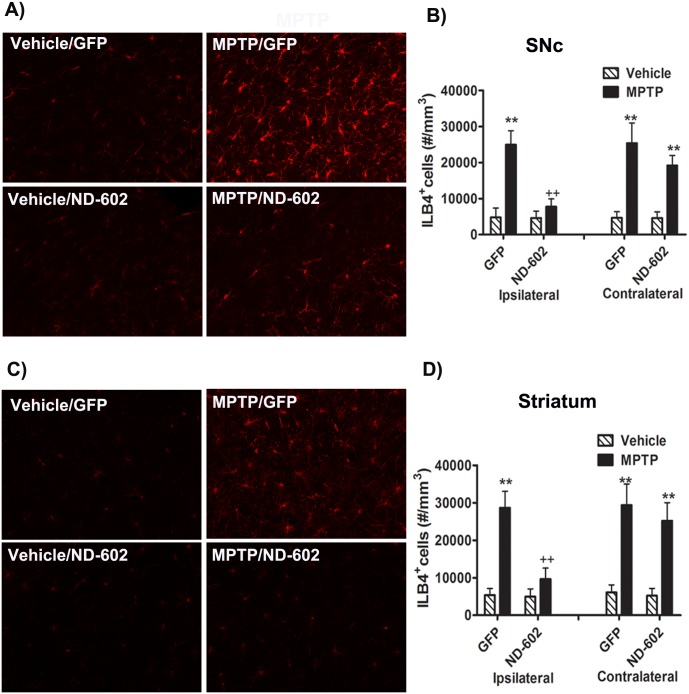
Parkinson's disease (PD) is a progressive neurodegenerative disorder characterized by tremor, rigidity and akinesia/bradykinesia resulting from the progressive loss of nigrostriatal dopaminergic neurons. To date, only symptomatic treatment is available for PD patients, with no effective means of slowing or stopping the progression of the disease. Progranulin (PGRN) is a 593 amino acid multifunction protein that is widely distributed throughout the CNS, localized primarily in neurons and microglia. PGRN has been demonstrated to be a potent regulator of neuroinflammation and also acts as an autocrine neurotrophic factor, important for long-term neuronal survival. Thus, enhancing PGRN expression may strengthen the cells resistance to disease. In the present study, we have used the 1-methyl-4-phenyl-1,2,3,6-tetrahydropyridine (MPTP) model of PD to investigate the possible use of PGRN gene delivery as a therapy for the prevention or treatment of PD. Viral vector delivery of the PGRN gene was an effective means of elevating PGRN expression in nigrostriatal neurons. When PGRN expression was elevated in the SNC, nigrostriatal neurons were protected from MPTP toxicity in mice, along with a preservation of striatal dopamine content and turnover. Further, protection of nigrostriatal neurons by PGRN gene therapy was accompanied by reductions in markers of MPTP-induced inflammation and apoptosis as well as a complete preservation of locomotor function. We conclude that PGRN gene therapy may have beneficial effects in the treatment of PD.
Conflict of interest statement
Figures
References
-
- Eriksen JL, MacKenzie IR (2008) Progranulin: normal function and role in neurodegeneration. Journal of Neurochemistry 104: 287–297. - PubMed
-
- Jin FY, Nathan C, Radzioch D, Ding A (1997) Secretory leukocyte protease inhibitor: a macrophage product induced by and antagonistic to bacterial lipopolysaccharide. Cell 88: 417–426. - PubMed
-
- Baker M, MacKenzie IR, Pickering-Brown SM, Gass J, Rademakers R, et al. (2006) Mutations in progranulin cause tau-negative frontotemporal dementia linked to chromosome 17. Nature 442: 916–919. - PubMed
-
- Cruts M, Kumar-Singh S, Van Broeckhoven C (2006) Progranulin mutations in ubiquitin-positive frontotemporal dementia linked to chromosome 17q21. Curr Alzheimer Res 3: 485–491. - PubMed
-
- Cruts M, Gijselinck I, van der Zee J, Engelborghs S, Wils H, et al. (2006) Null mutations in progranulin cause ubiquitin-positive frontotemporal dementia linked to chromosome 17q21. Nature 442: 920–924. - PubMed
Publication types
MeSH terms
Substances
LinkOut - more resources
Full Text Sources
Other Literature Sources
Medical
