


Patient age and dentists' decisions about occlusal caries treatment thresholds
- PMID: 24809540
- PMCID: PMC4145017
- DOI: 10.2341/13-141-C
Patient age and dentists' decisions about occlusal caries treatment thresholds
Abstract
Objectives: This study was performed to 1) quantify dentists' treatment thresholds for occlusal primary caries; 2) determine if the patient's age affects dentists' decisions to surgically treat these carious lesions; and 3) test the hypothesis that patients', dentists', and practices' characteristics are significantly associated with surgical enamel intervention.
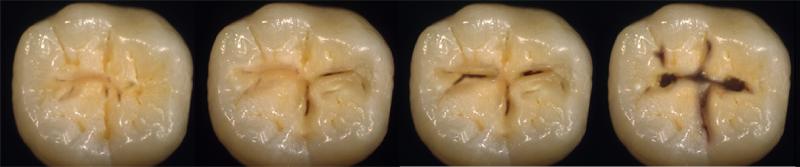
Methods: The study used a cross-sectional design consisting of a questionnaire survey in Japan. This study queried dentists working in outpatient dental practices who were affiliated with the Dental Practice-Based Research Network Japan (JDPBRN), which aims to allow dentists to investigate research questions and share experiences and expertise (n=282). Participants were asked whether they would surgically intervene in a series of cases depicting occlusal caries. Each case included a photograph of an occlusal surface displaying typical characteristics of caries penetration and written descriptions of adult and pediatric patients at high caries risk.
Results: In a case of a carious lesion within inner enamel, the proportion of dentists who indicated surgical intervention was significantly higher in adult patients (48%) when compared with pediatric patients (34%; p<0.01). Logistic regression analysis showed that using a dental explorer for the diagnosis of primary occlusal caries, type of practice, practice busyness, and percentage of patients who self-pay were significantly associated with dentists' decisions to intervene surgically into the inner enamel carious lesion.
Conclusions: These findings demonstrate that more than one-third of participants chose to intervene surgically into inner enamel carious lesions, and patients' age affects dentists' decisions about when to intervene surgically (clinicaltrials.gov registration number NCT01680848).
Figures
References
-
- Pitts NB. Diagnostic tools and measurements – impact on appropriate care. Community Dentistry and Oral Epidemiology. 1997;25(1):24–35. - PubMed
-
- Diagnosis and management of dental caries throughout life. National Institutes of Health Consensus Development Conference Statement. Journal of Dental Education. 2001;65(10):1162–1168. No Authors Listed. - PubMed
-
- Thylstrup A, Bille J, Qvist V. Radiographic and observed tissue changes in approximal carious lesions at the time of operative treatment. Caries Research. 1986;20(1):75–84. - PubMed
-
- Mejàre I, Sundberg H, Espelid I, Tveit B. Caries assessment and restorative treatment thresholds reported by Swedish dentists. Acta odontologica Scandinavica. 1999;57(3):149–154. - PubMed
-
- Tveit AB, Espelid I, Skodje F. Restorative treatment decisions on approximal caries in Norway. International Dental Journal. 1999;49(3):165–172. - PubMed
Publication types
MeSH terms
Associated data
Grants and funding
LinkOut - more resources
Full Text Sources
Other Literature Sources
Medical
