


A pathogenic mosaic TP53 mutation in two germ layers detected by next generation sequencing
- PMID: 24810334
- PMCID: PMC4014518
- DOI: 10.1371/journal.pone.0096531
A pathogenic mosaic TP53 mutation in two germ layers detected by next generation sequencing
Abstract
Background: Li-Fraumeni syndrome is caused by germline TP53 mutations and is clinically characterized by a predisposition to a range of cancers, most commonly sarcoma, brain tumours and leukemia. Pathogenic mosaic TP53 mutations have only rarely been described.
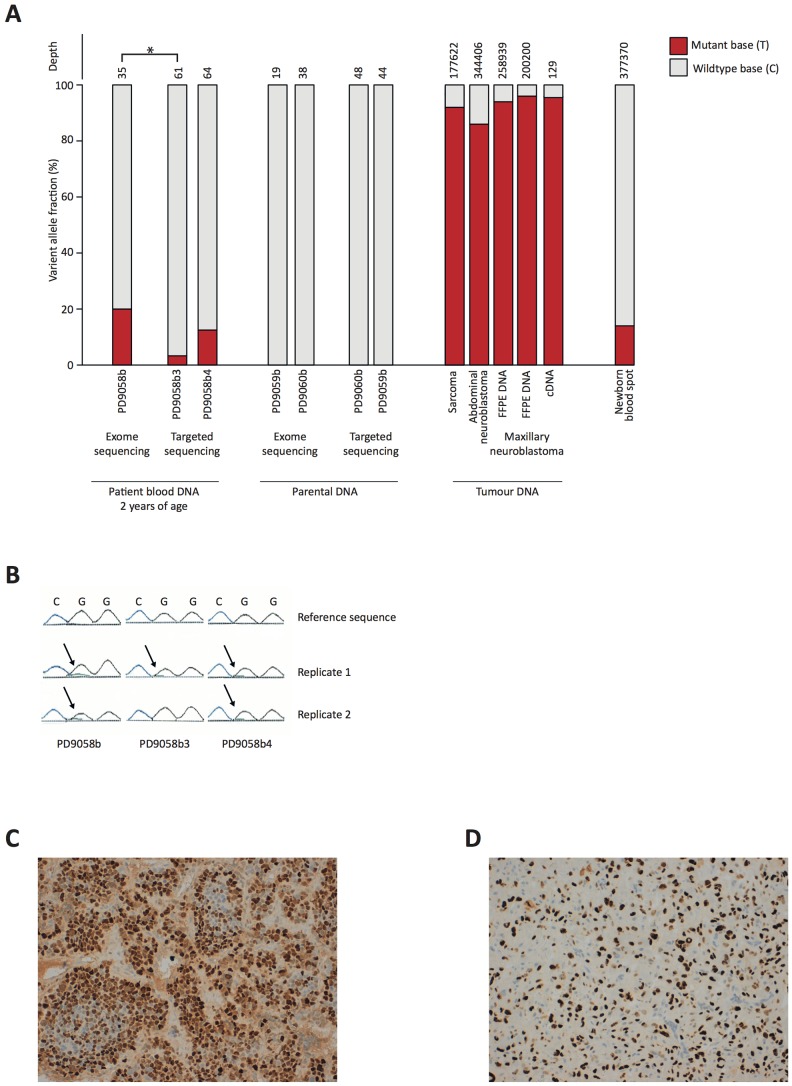
Methods and findings: We describe a 2 years old child presenting with three separate cancers over a 6 month period; two soft tissue mesenchymal tumors and an aggressive metastatic neuroblastoma. As conventional testing of blood DNA by Sanger sequencing for mutations in TP53, ALK, and SDH was negative, whole exome sequencing of the blood DNA of the patient and both parents was performed to screen more widely for cancer predisposing mutations. In the patient's but not the parents' DNA we found a c.743 G>A, p.Arg248Gln (CCDS11118.1) TP53 mutation in 3-20% of sequencing reads, a level that would not generally be detectable by Sanger sequencing. Homozygosity for this mutation was detected in all tumor samples analyzed, and germline mosaicism was demonstrated by analysis of the child's newborn blood spot DNA. The occurrence of separate tumors derived from different germ layers suggests that this de novo mutation occurred early in embryogenesis, prior to gastrulation.
Conclusion: The case demonstrates pathogenic mosaicim, detected by next generation deep sequencing, that arose in the early stages of embryogenesis.
Conflict of interest statement
Figures
References
-
- Li FP, Fraumeni JF Jr (1969) Rhabdomyosarcoma in children: epidemiologic study and identification of a familial cancer syndrome. J Natl Cancer Inst 43: 1365–1373. - PubMed
-
- Malkin D, Li FP, Strong LC, Fraumeni JF Jr, Nelson CE, et al. (1990) Germ line p53 mutations in a familial syndrome of breast cancer, sarcomas, and other neoplasms. Science 250: 1233–1238. - PubMed
-
- Trkova M, Hladikova M, Kasal P, Goetz P, Sedlacek Z (2002) Is there anticipation in the age at onset of cancer in families with Li-Fraumeni syndrome? J Hum Genet 47: 381–386. - PubMed
-
- Birch JM, Alston RD, McNally RJ, Evans DG, Kelsey AM, et al. (2001) Relative frequency and morphology of cancers in carriers of germline TP53 mutations. Oncogene 20: 4621–4628. - PubMed
Publication types
MeSH terms
Substances
Grants and funding
LinkOut - more resources
Full Text Sources
Other Literature Sources
Research Materials
Miscellaneous
