


Sequencing and validation of reference genes to analyze endogenous gene expression and quantify yellow dwarf viruses using RT-qPCR in viruliferous Rhopalosiphum padi
- PMID: 24810421
- PMCID: PMC4014588
- DOI: 10.1371/journal.pone.0097038
Sequencing and validation of reference genes to analyze endogenous gene expression and quantify yellow dwarf viruses using RT-qPCR in viruliferous Rhopalosiphum padi
Abstract
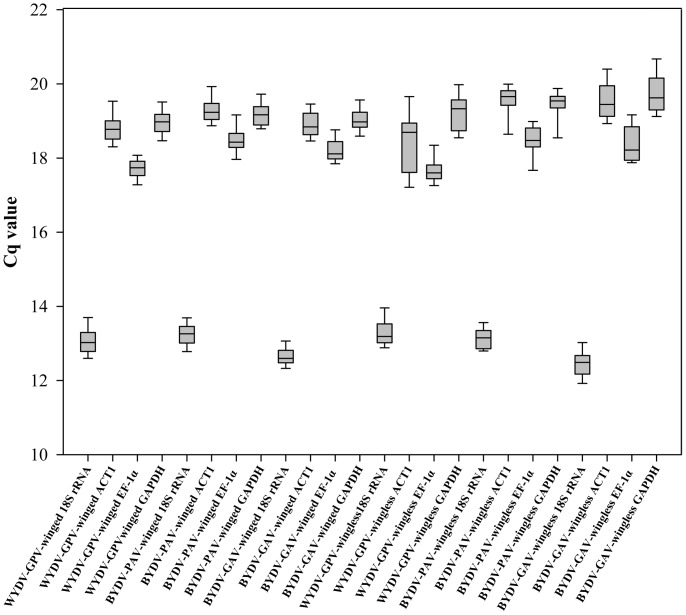
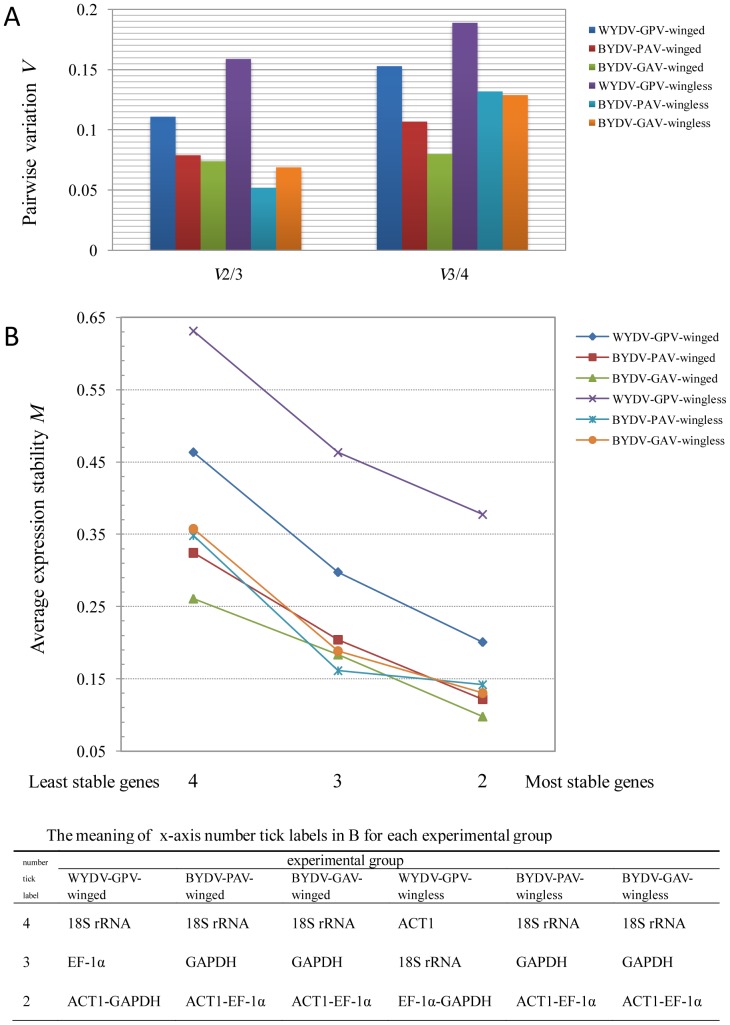
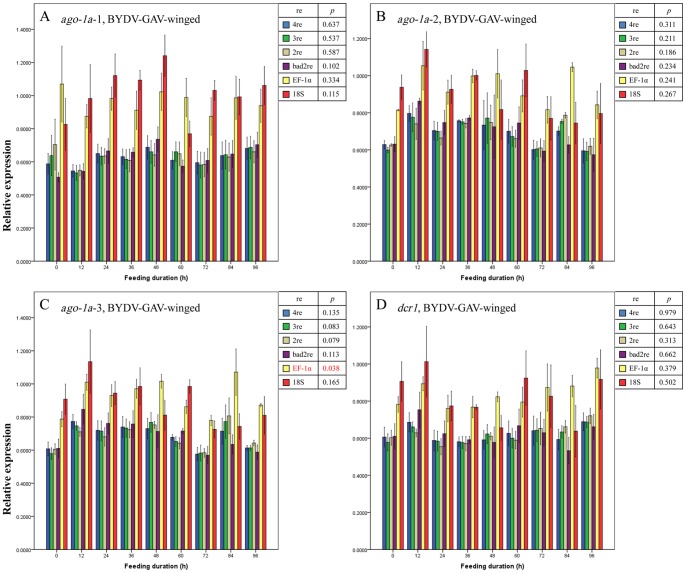
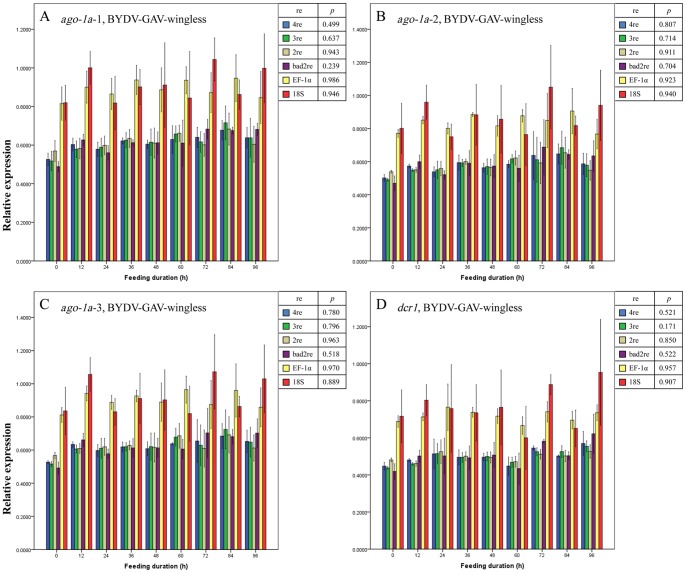
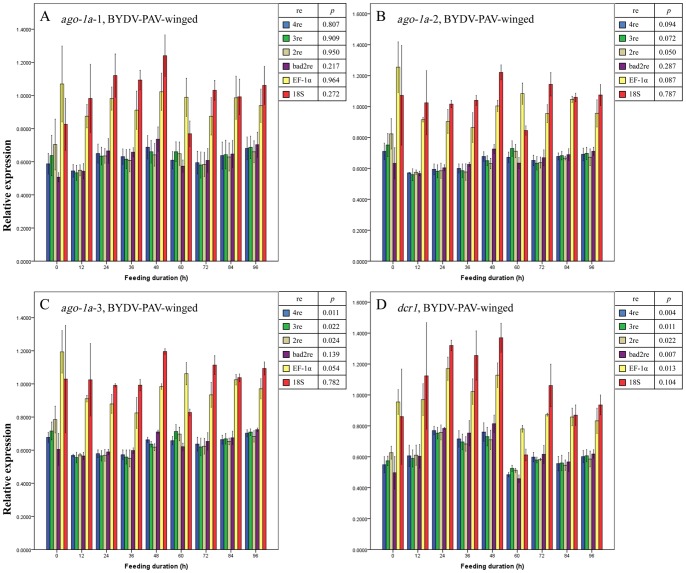
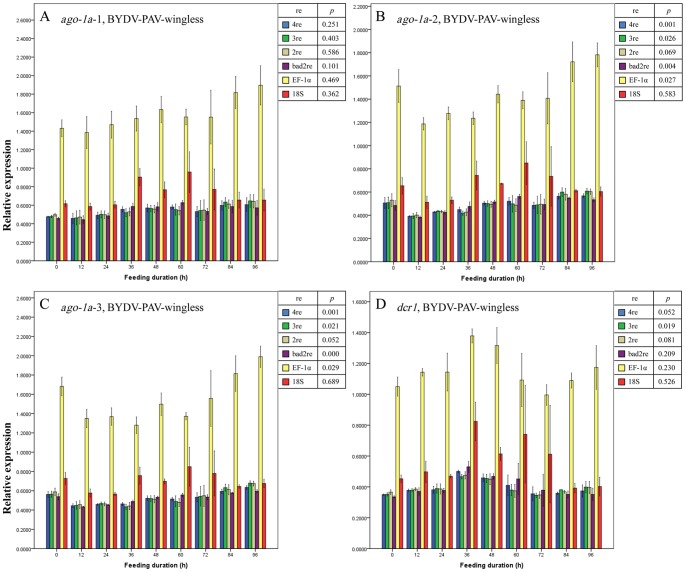
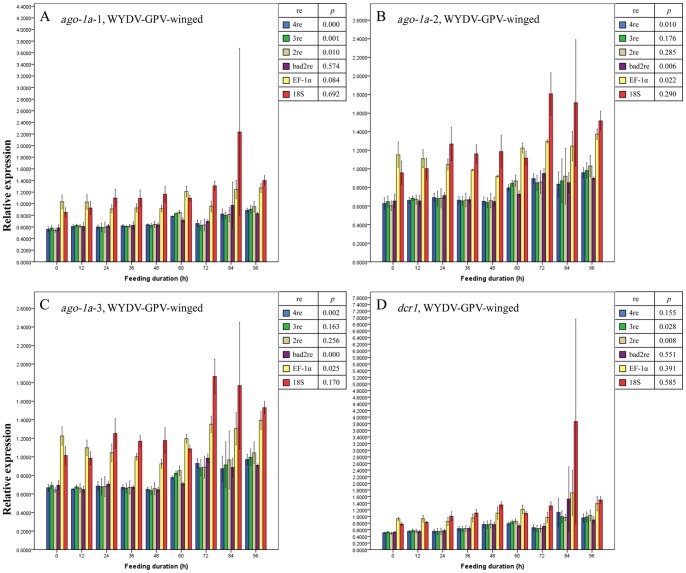
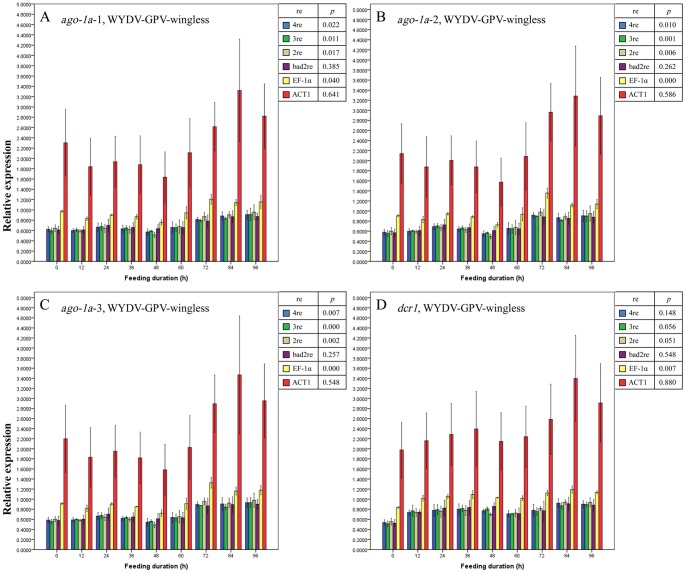
The bird cherry-oat aphid (Rhopalosiphum padi), an important pest of cereal crops, not only directly sucks sap from plants, but also transmits a number of plant viruses, collectively the yellow dwarf viruses (YDVs). For quantifying changes in gene expression in vector aphids, reverse transcription-quantitative polymerase chain reaction (RT-qPCR) is a touchstone method, but the selection and validation of housekeeping genes (HKGs) as reference genes to normalize the expression level of endogenous genes of the vector and for exogenous genes of the virus in the aphids is critical to obtaining valid results. Such an assessment has not been done, however, for R. padi and YDVs. Here, we tested three algorithms (GeNorm, NormFinder and BestKeeper) to assess the suitability of candidate reference genes (EF-1α, ACT1, GAPDH, 18S rRNA) in 6 combinations of YDV and vector aphid morph. EF-1α and ACT1 together or in combination with GAPDH or with GAPDH and 18S rRNA could confidently be used to normalize virus titre and expression levels of endogenous genes in winged or wingless R. padi infected with Barley yellow dwarf virus isolates (BYDV)-PAV and BYDV-GAV. The use of only one reference gene, whether the most stably expressed (EF-1α) or the least stably expressed (18S rRNA), was not adequate for obtaining valid relative expression data from the RT-qPCR. Because of discrepancies among values for changes in relative expression obtained using 3 regions of the same gene, different regions of an endogenous aphid gene, including each terminus and the middle, should be analyzed at the same time with RT-qPCR. Our results highlight the necessity of choosing the best reference genes to obtain valid experimental data and provide several HKGs for relative quantification of virus titre in YDV-viruliferous aphids.
Conflict of interest statement
Figures
References
-
- Hesler LS (2005) Resistance to Rhopalosiphum padi L. (Homoptera: Aphididae) in three triticale accessions. J Econ Entomol 98: 603–610. - PubMed
-
- Descamps LR, Sanchez C (2011) Population growth of Rhopalosiphum padi L. (Homoptera: Aphididae) on different cereal crops from the semiarid pampas of Argentina under laboratory conditions. Chilean Journal of Agricultural Research 71: 390–394.
-
- Hadi BAR, Flanders KL, Bowen KL, Murphy JF, Blount AR (2012) Survey of Barley Yellow Dwarf Virus and Cereal Yellow Dwarf Virus on Three Perennial Pasture Grasses in Florida. Journal of Entomological Science 47: 35–43.
-
- Zhang W, Cheng Z, Xu L, Wu M, Waterhouse P, et al. (2009) The complete nucleotide sequence of the barley yellow dwarf GPV isolate from China shows that it is a new member of the genus Polerovirus. Arch Virol 154: 1125–1128. - PubMed
Publication types
MeSH terms
LinkOut - more resources
Full Text Sources
Other Literature Sources
Molecular Biology Databases
Research Materials
Miscellaneous
