


ATRX mRNA expression combined with IDH1/2 mutational status and Ki-67 expression refines the molecular classification of astrocytic tumors: evidence from the whole transcriptome sequencing of 169 samples samples
- PMID: 24810474
- PMCID: PMC4058026
- DOI: 10.18632/oncotarget.1838
ATRX mRNA expression combined with IDH1/2 mutational status and Ki-67 expression refines the molecular classification of astrocytic tumors: evidence from the whole transcriptome sequencing of 169 samples samples
Abstract
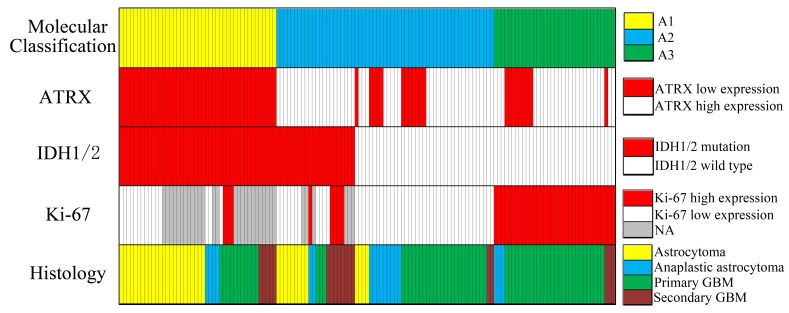
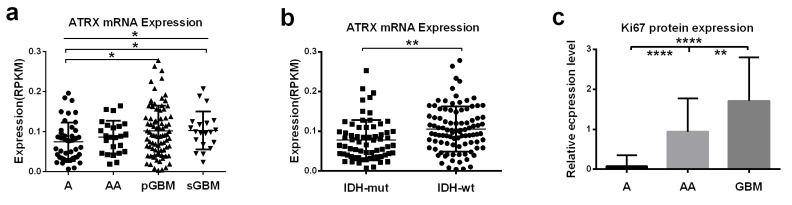
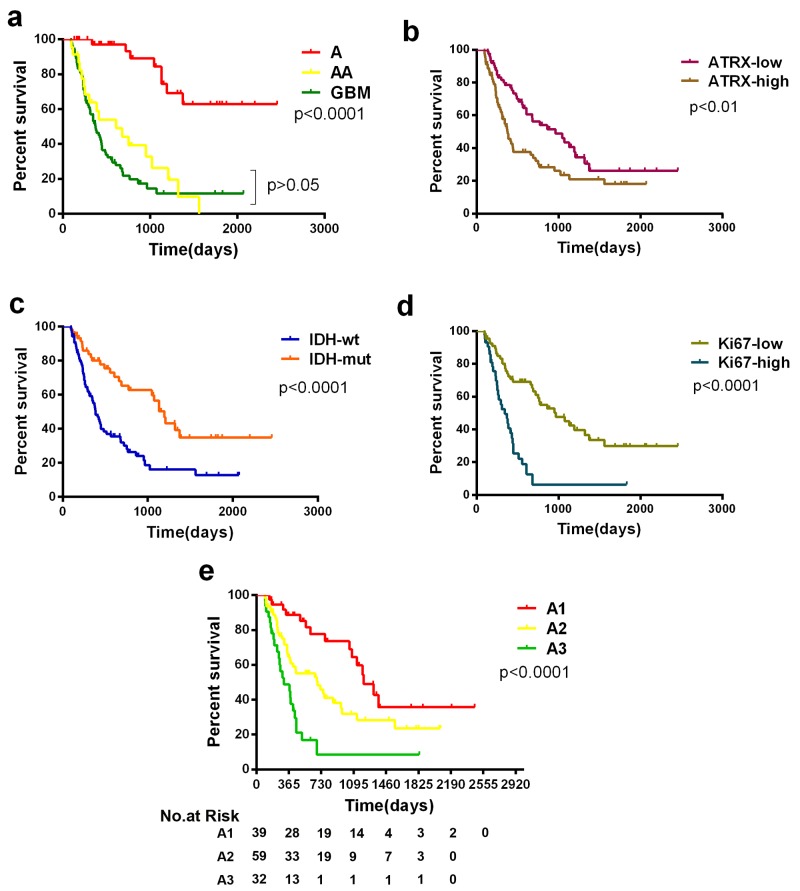
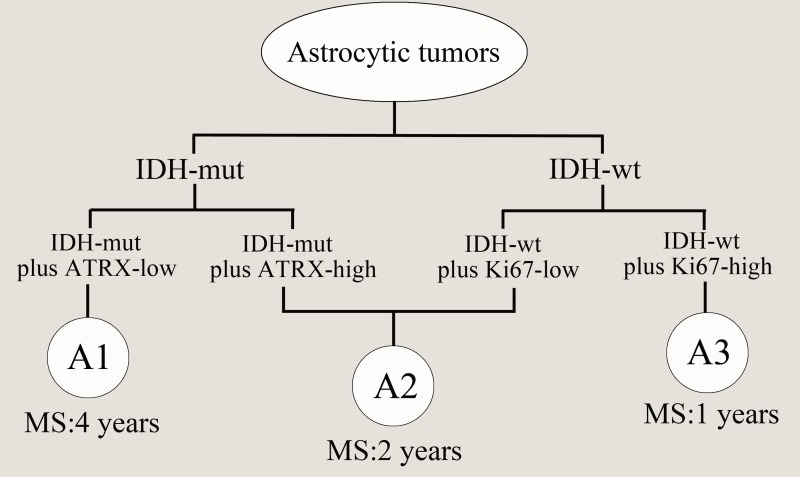
Astrocytic tumors are the most common primary brain tumors in adults. ATRX mutations have been identified in gliomas and are correlated with its loss of expression, which causes alternative lengthening of telomeres (ALT) leading to genomic instability. In this study, we aimed to explore the role of ATRX mRNA expression alteration in the progression and subclassification of astrocytic tumors and examine its impact on clinical outcome. We investigated ATRX mRNA expression and its association with IDH1 and IDH2 mutations in 169 adult astrocytic tumors using whole transcriptome sequencing. In our cohort, low ATRX mRNA expression was detected in 68% of astrocytomas, 50% of anaplastic astrocytomas and 41.6% of glioblastomas. Low ATRX expression closely overlapped with mutations in IDH1/2 (P<0.0001) in astrocytic tumors across WHO grades II-IV. Significant association between low ATRX expression and longer overall survival was identified in our cohort (P<0.01). ATRX combined with IDH1/2 and Ki-67 was used to re-classify patients with astrocytic tumors: group A1 containing IDH1/2 mutations and low ATRX expression predicted a better prognostic outcome, whereas group A3 carrying wild-type IDH1/2 and high Ki-67 expression had the shortest overall survival; IDH-mutant tumors with low ATRX expression and IDH-wild-type tumors with high Ki-67 expression were grouped into group A2. In summary, our results showed that ATRX in cooperation with IDH1/2 and Ki-67 defines three subgroups of astrocytic tumors regardless of the conventional WHO grades consensus. The molecular stratification in astrocytic tumors may aid in treatment strategy selection, therapeutic trial design, and clinical prognosis evaluation.
Figures
References
-
- Yan W, Zhang W, You G, Zhang JX, Han L, Bao ZS, Wang YZ, Liu YW, Jiang CL, Kang CS, You YP, Jiang T. Molecular classification of gliomas based on whole genome gene expression: a systematic report of 225 samples from the Chinese Glioma Cooperative Group. Neuro-Oncology. 2012;14(12):1432–1440. - PMC - PubMed
-
- Reifenberger G, Collins VP. Pathology and molecular genetics of astrocytic gliomas. Journal of molecular medicine. 2004;82(10):656–670. - PubMed
-
- Furnari FB, Fenton T, Bachoo RM, Mukasa A, Stommel JM, Stegh A, Hahn WC, Ligon KL, Louis DN, Brennan C, Chin L, DePinho RA, Cavenee WK. Malignant astrocytic glioma: genetics, biology, and paths to treatment. Genes Dev. 2007;21(21):2683–2710. - PubMed
-
- Ohgaki H, Dessen P, Jourde B, Horstmann S, Nishikawa T, Di Patre PL, Burkhard C, Schuler D, Probst-Hensch NM, Maiorka PC, Baeza N, Pisani P, Yonekawa Y, Yasargil MG, Lutolf UM, Kleihues P. Genetic pathways to glioblastoma: a population-based study. Cancer Res. 2004;64(19):6892–6899. - PubMed
Publication types
MeSH terms
Substances
LinkOut - more resources
Full Text Sources
Other Literature Sources
Miscellaneous
