


Role of the unfolded protein response in β cell compensation and failure during diabetes
- PMID: 24812634
- PMCID: PMC4000654
- DOI: 10.1155/2014/795171
Role of the unfolded protein response in β cell compensation and failure during diabetes
Abstract
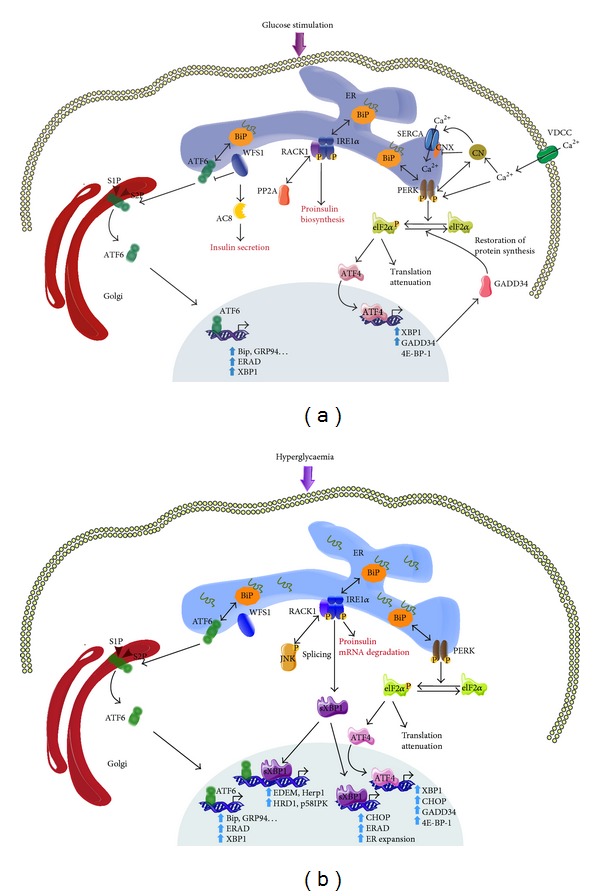
Pancreatic β cell failure leads to diabetes development. During disease progression, β cells adapt their secretory capacity to compensate the elevated glycaemia and the peripheral insulin resistance. This compensatory mechanism involves a fine-tuned regulation to modulate the endoplasmic reticulum (ER) capacity and quality control to prevent unfolded proinsulin accumulation, a major protein synthetized within the β cell. These signalling pathways are collectively termed unfolded protein response (UPR). The UPR machinery is required to preserve ER homeostasis and β cell integrity. Moreover, UPR actors play a key role by regulating ER folding capacity, increasing the degradation of misfolded proteins, and limiting the mRNA translation rate. Recent genetic and biochemical studies on mouse models and human UPR sensor mutations demonstrate a clear requirement of the UPR machinery to prevent β cell failure and increase β cell mass and adaptation throughout the progression of diabetes. In this review we will highlight the specific role of UPR actors in β cell compensation and failure during diabetes.
Figures
References
-
- Shaw JE, Sicree RA, Zimmet PZ. Global estimates of the prevalence of diabetes for 2010 and 2030. Diabetes Research and Clinical Practice. 2010;87(1):4–14. - PubMed
-
- Marchetti P, Bugliani M, Lupi R, et al. The endoplasmic reticulum in pancreatic beta cells of type 2 diabetes patients. Diabetologia. 2007;50(12):2486–2494. - PubMed
Publication types
MeSH terms
Substances
LinkOut - more resources
Full Text Sources
Other Literature Sources
Medical
