


Aurora-A mitotic kinase induces endocrine resistance through down-regulation of ERα expression in initially ERα+ breast cancer cells
- PMID: 24816249
- PMCID: PMC4016211
- DOI: 10.1371/journal.pone.0096995
Aurora-A mitotic kinase induces endocrine resistance through down-regulation of ERα expression in initially ERα+ breast cancer cells
Abstract
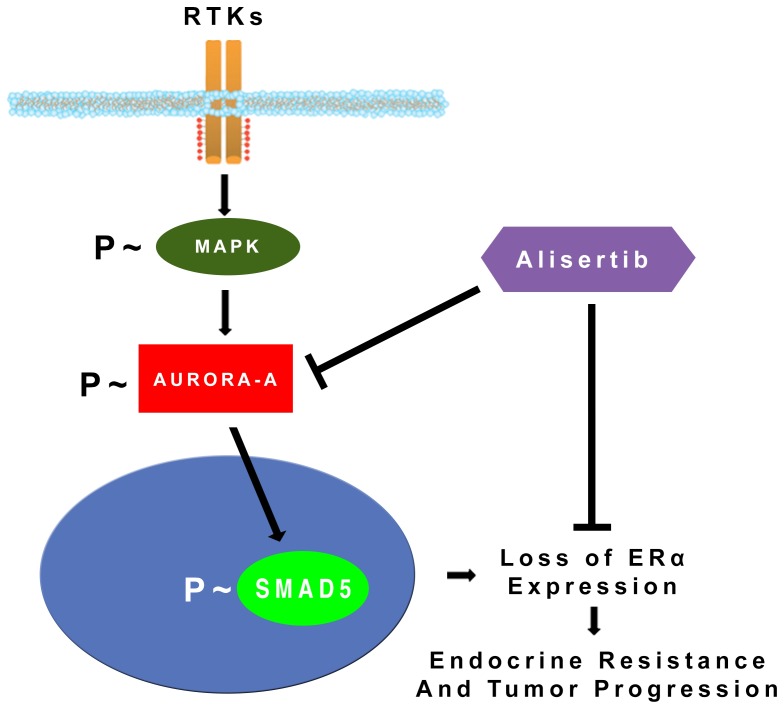
Development of endocrine resistance during tumor progression represents a major challenge in the management of estrogen receptor alpha (ERα) positive breast tumors and is an area under intense investigation. Although the underlying mechanisms are still poorly understood, many studies point towards the 'cross-talk' between ERα and MAPK signaling pathways as a key oncogenic axis responsible for the development of estrogen-independent growth of breast cancer cells that are initially ERα+ and hormone sensitive. In this study we employed a metastatic breast cancer xenograft model harboring constitutive activation of Raf-1 oncogenic signaling to investigate the mechanistic linkage between aberrant MAPK activity and development of endocrine resistance through abrogation of the ERα signaling axis. We demonstrate for the first time the causal role of the Aurora-A mitotic kinase in the development of endocrine resistance through activation of SMAD5 nuclear signaling and down-regulation of ERα expression in initially ERα+ breast cancer cells. This contribution is highly significant for the treatment of endocrine refractory breast carcinomas, because it may lead to the development of novel molecular therapies targeting the Aurora-A/SMAD5 oncogenic axis. We postulate such therapy to result in the selective eradication of endocrine resistant ERαlow/- cancer cells from the bulk tumor with consequent benefits for breast cancer patients.
Conflict of interest statement
Figures
References
-
- Li CI, Daling JR, Malone KE (2003) Incidence of invasive breast cancer by hormone receptor status from 1992 to 1998. J Clin Oncol 21(1): 28–34. - PubMed
-
- Colleoni M, Sun Z, Martinelli G, Basser RL, Coates AS, et al. (2009) The effect of endocrine responsiveness on high-risk breast cancer treated with dose-intensive chemotherapy: results of International Breast Cancer Study Group Trial 15–95 after prolonged follow-up. International Breast Cancer Study Group. Ann Oncol 20(8): 1344–51. - PMC - PubMed
-
- Ring A, Dowsett M (2004) Mechanisms of tamoxifen resistance. Endocr Relat Cancer 11(4): 643–58. - PubMed
-
- Di Leo A, Malorni L (2012) Polyendocrine treatment in estrogen receptor-positive breast cancer: a “FACT” yet to be proven. J Clin Oncol 30(16): 1897–900. - PubMed
Publication types
MeSH terms
Substances
Grants and funding
LinkOut - more resources
Full Text Sources
Other Literature Sources
Medical
Research Materials
Miscellaneous
