


Review
doi: 10.1039/c3np70097f.
Epidithiodioxopiperazines. occurrence, synthesis and biogenesis
Affiliations
- PMID: 24816491
- PMCID: PMC4162872
- DOI: 10.1039/c3np70097f
Item in Clipboard
Review
Epidithiodioxopiperazines. occurrence, synthesis and biogenesis
Nat Prod Rep.
2014 Oct.
Abstract
Epidithiodioxopiperazine alkaloids possess an astonishing array of molecular architecture and generally exhibit potent biological activity. Nearly twenty distinct families have been isolated and characterized since the seminal discovery of gliotoxin in 1936. Numerous biosynthetic investigations offer a glimpse at the relative ease with which Nature is able to assemble this class of molecules, while providing synthetic chemists inspiration for the development of more efficient syntheses. Herein, we discuss the isolation and characterization, proposed fungal biogeneses, and total syntheses of epidithiodioxopiperazines.
Figures
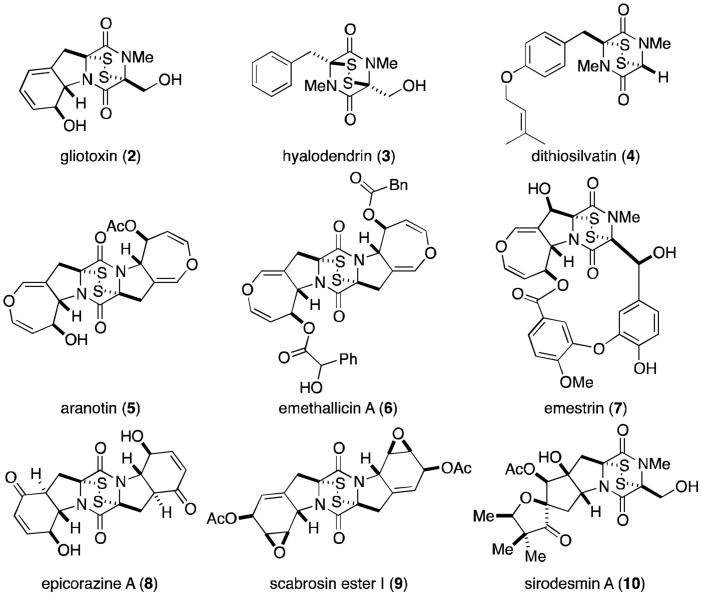
Representative epidithiodioxopiperazines derived from tyrosine and/or phenylalanine.
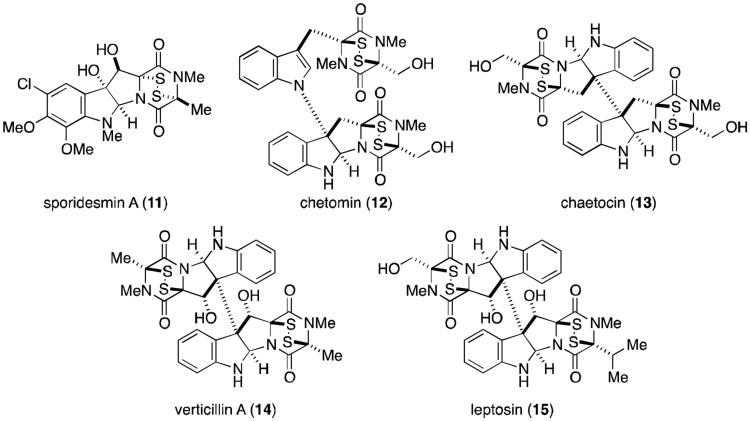
Representative tryptophan-derived epidithiodioxopiperazines.
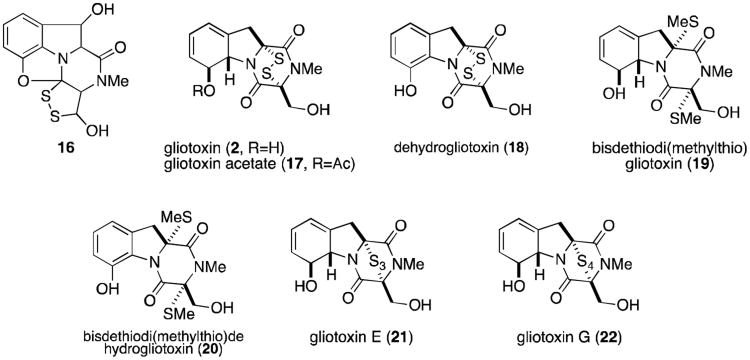
Gliotoxins.
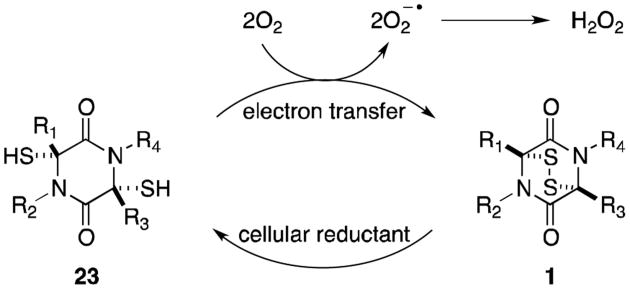
Redox cycling of epidithiodioxopiperazines.
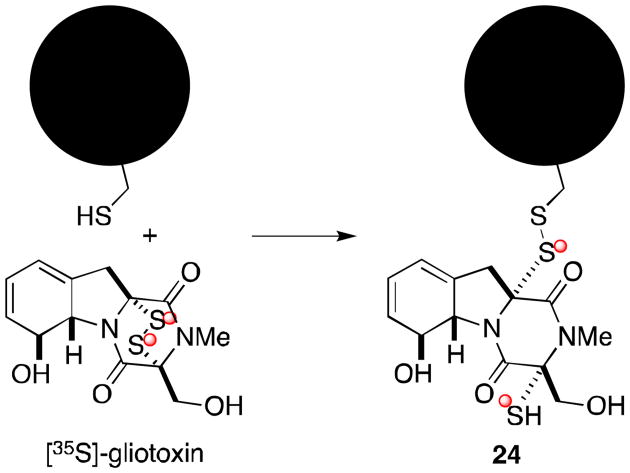
Mixed disulfide formation.
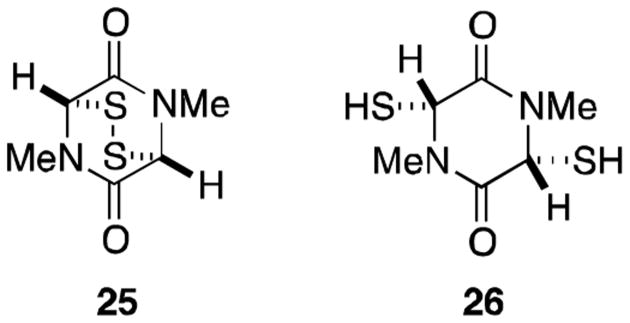
Simple biologically active epidithiodioxopiperazines.
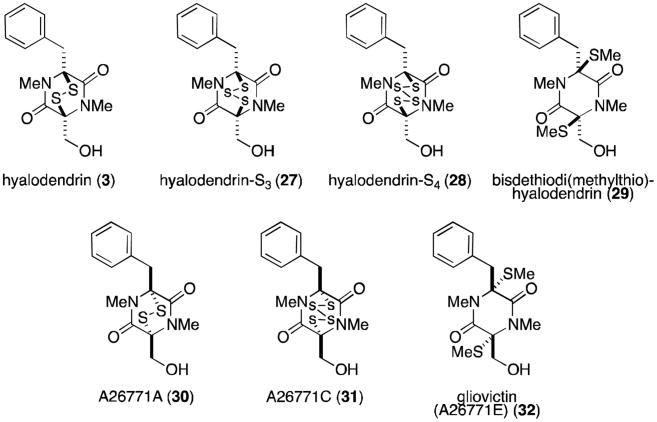
Hyalodendrins and related compounds.
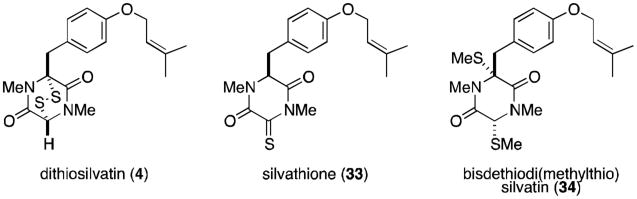
Silvatins.
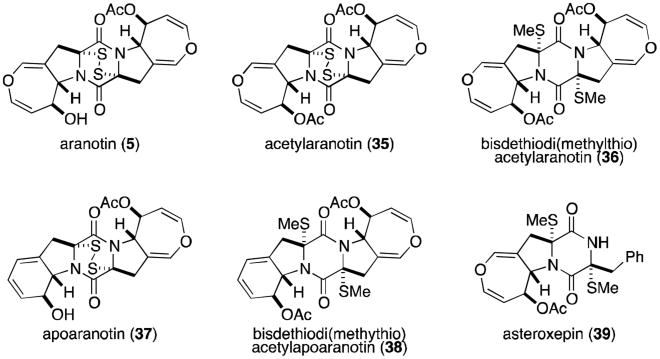
Aranotins.
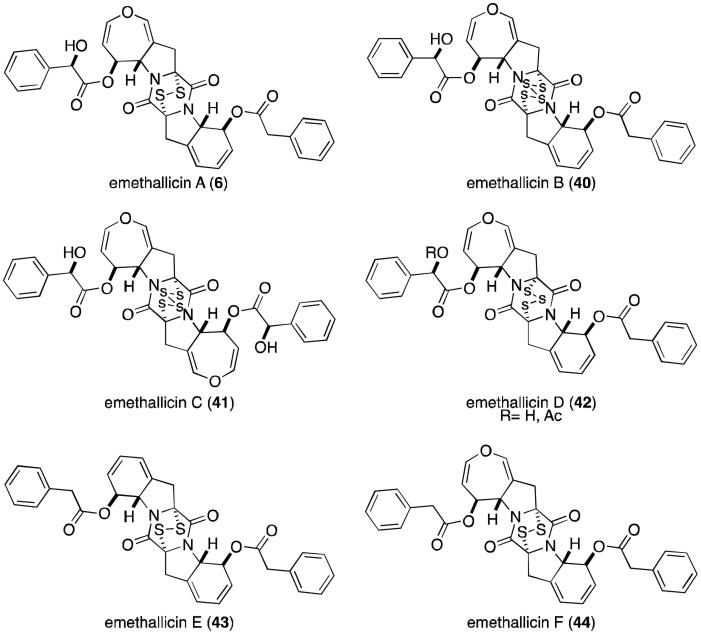
Emethallicins.
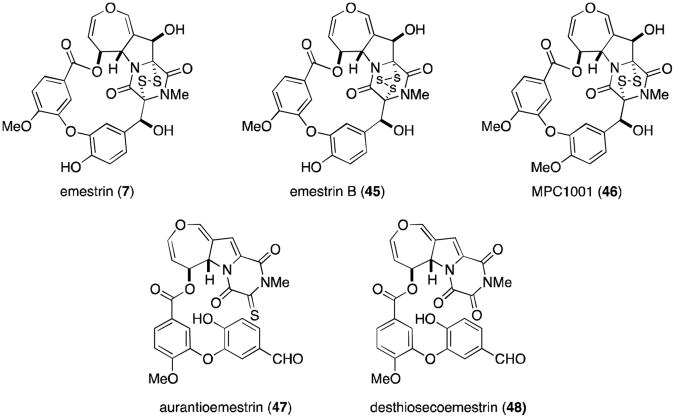
Emestrins and related metabolites.
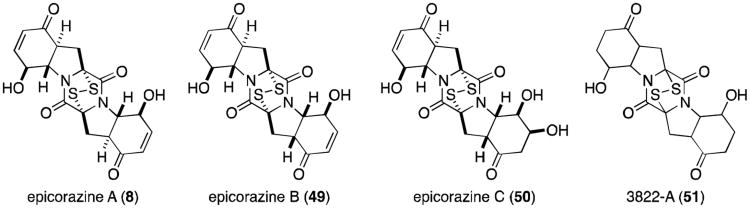
Epicorazines.
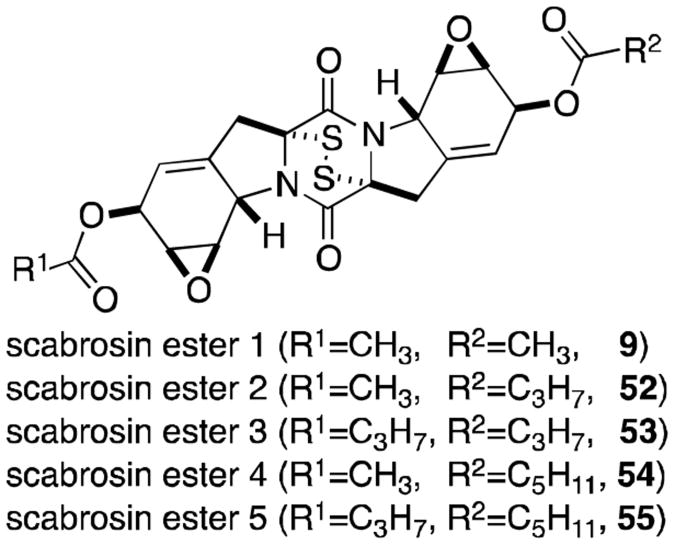
Scabrosin esters.
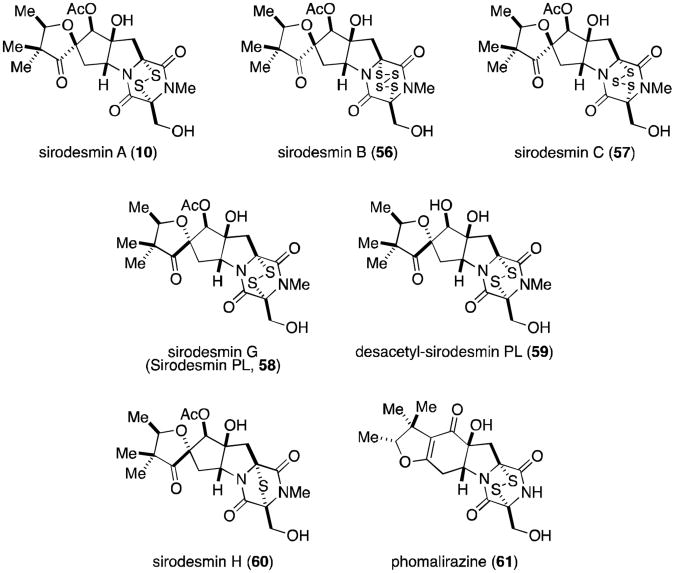
Sirodesmins.
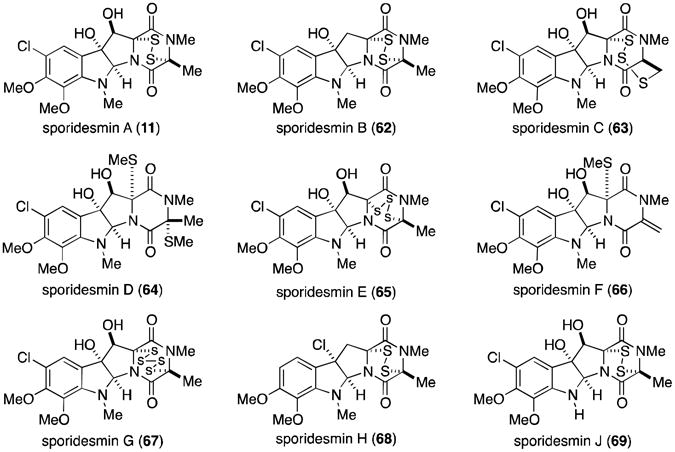
Sporidesmins.
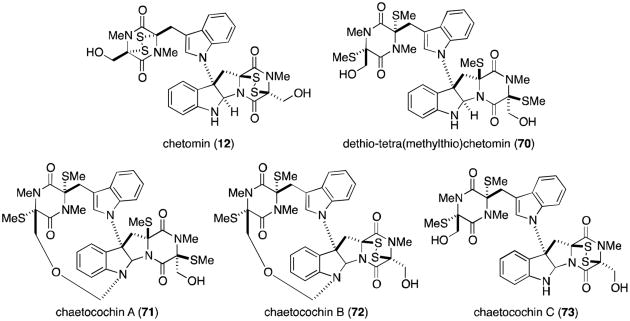
Metabolites of the fungus Chaetomium cochliodes.
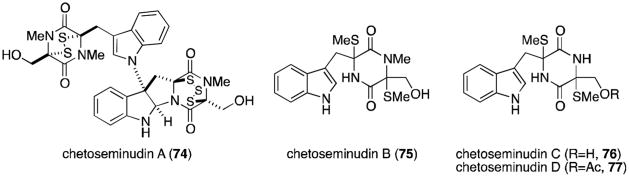
Chetoseminudins.
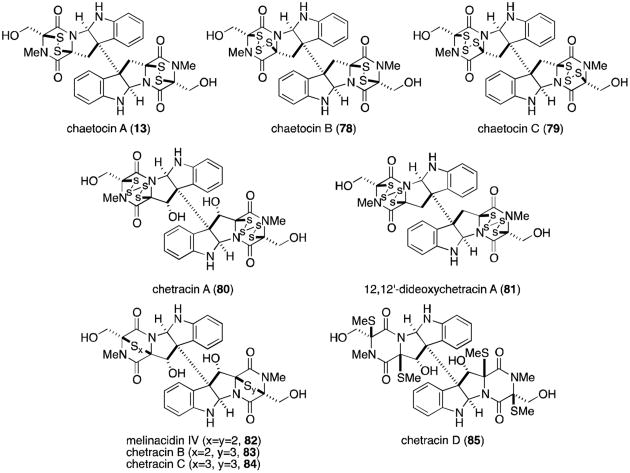
Chaetocins and related metabolites.
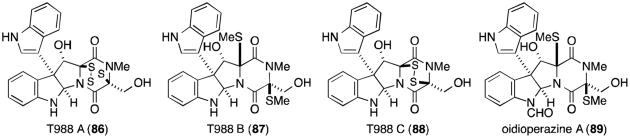
Fungal metabolites related to the chaetocins.
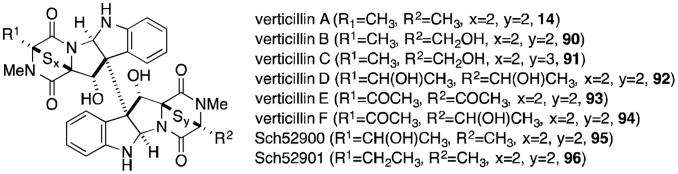
Verticillin A and related metabolites.
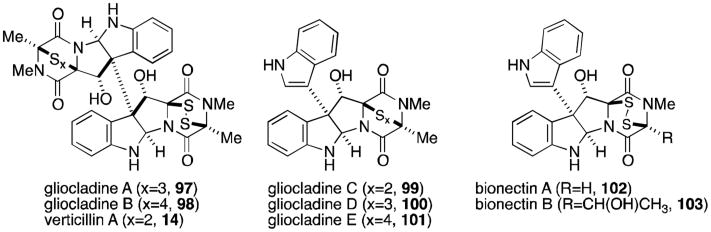
Verticillin-type epipolythiodioxopiperazines.
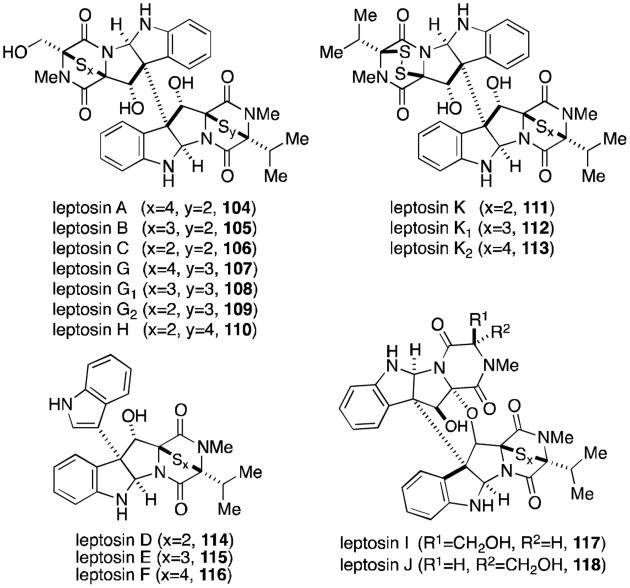
Leptosins.
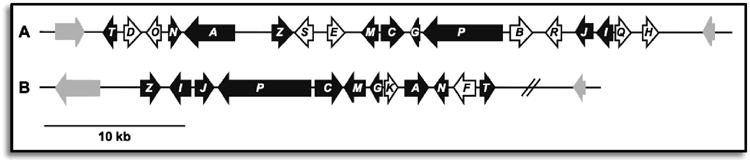
Putative epidithiodioxopiperazine gene clusters for sirodemsin PL (A) and gliotoxin (B).
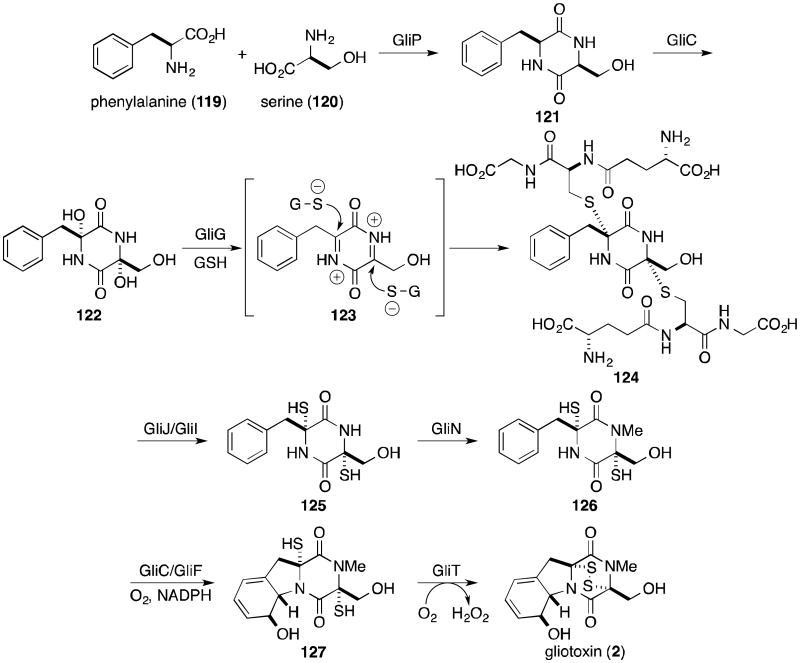
Proposed biosynthesis of gliotoxin.

Proposed oxepine ring formation.
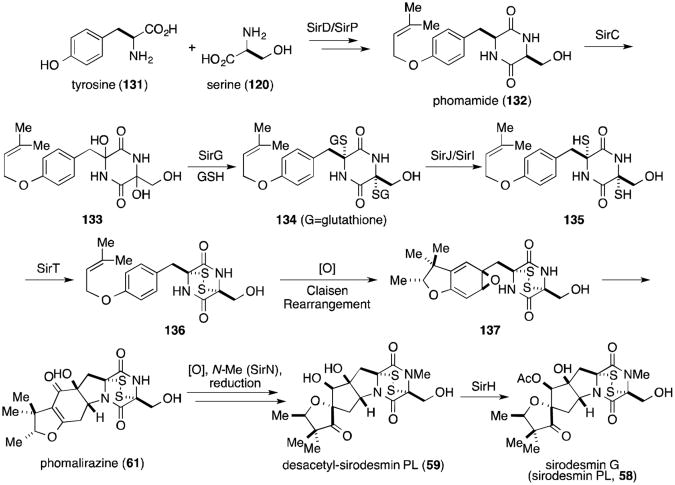
Proposed biosynthetic pathway of sirodesmin PL.
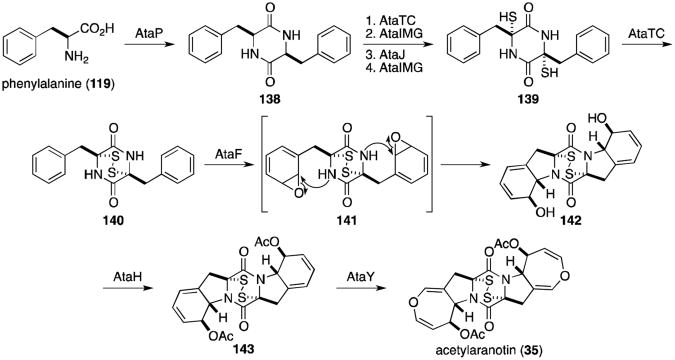
Proposed biosynthetic pathway for acetylaranotin.
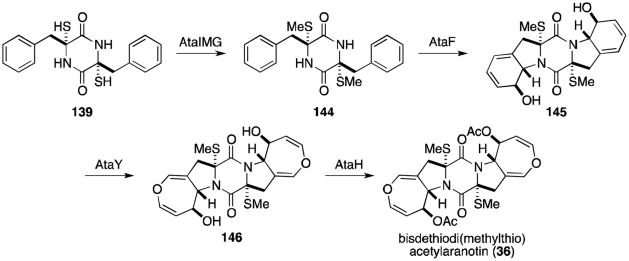
Proposed biosynthetic pathway for bisdethiodi(methylthio)acetylaranotin.
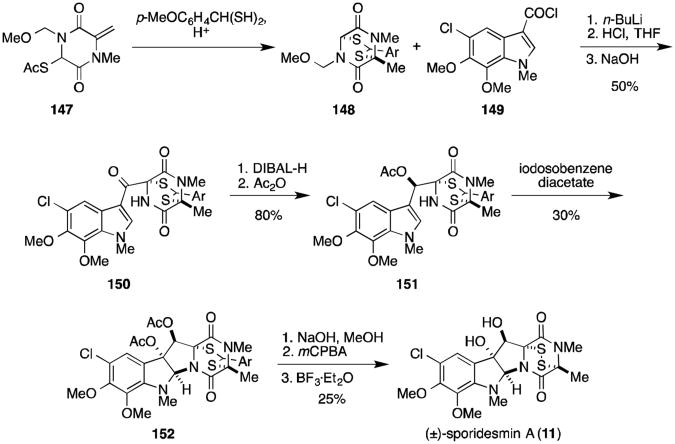
Total synthesis of (±)-sporidesmin A.
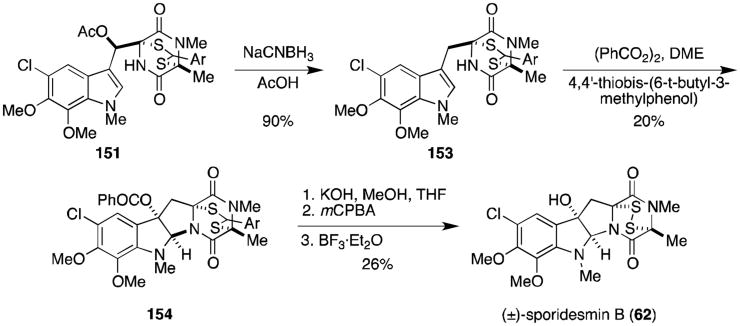
Synthesis of (±)-sporidesmin B.
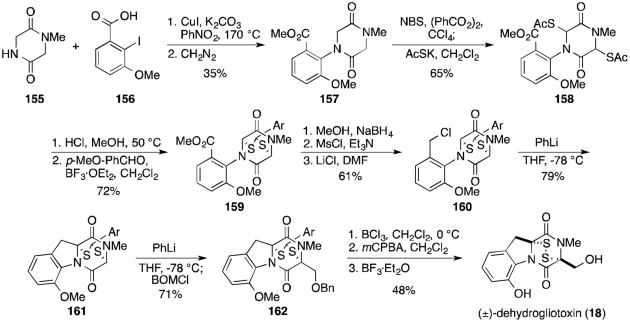
Synthesis of (±)-dehydrogliotoxin.
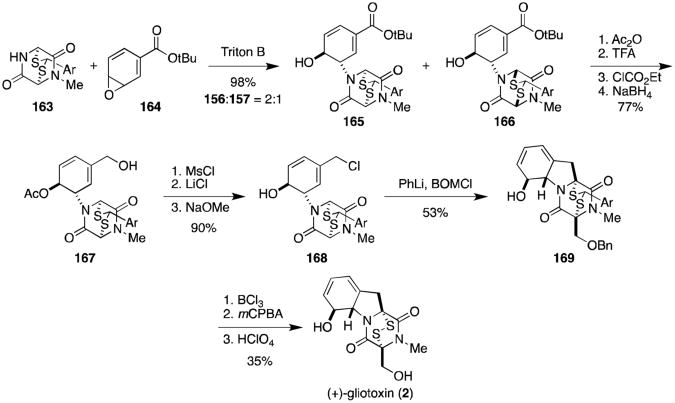
Synthesis of (+)-gliotoxin.
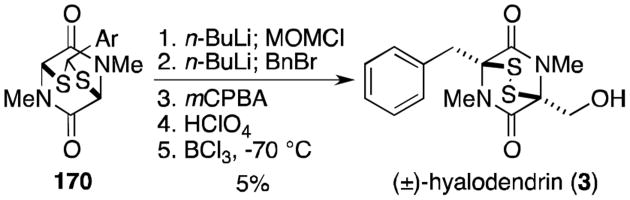
Synthesis of (±)-hyalodendrin.
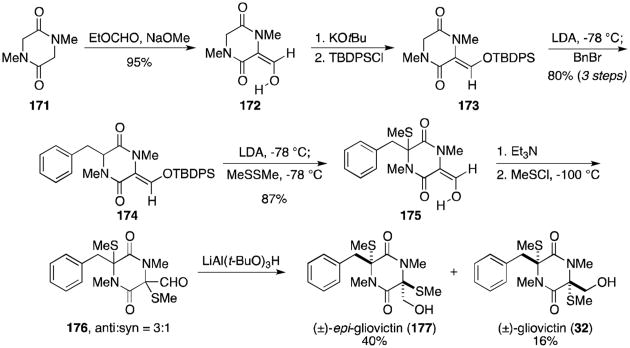
Total synthesis of (±)-gliovictin and epi-gliovictin.
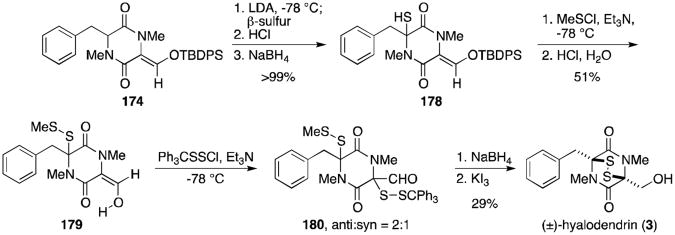
Williams and Rastetter's total synthesis of (±)-hyalodendrin.
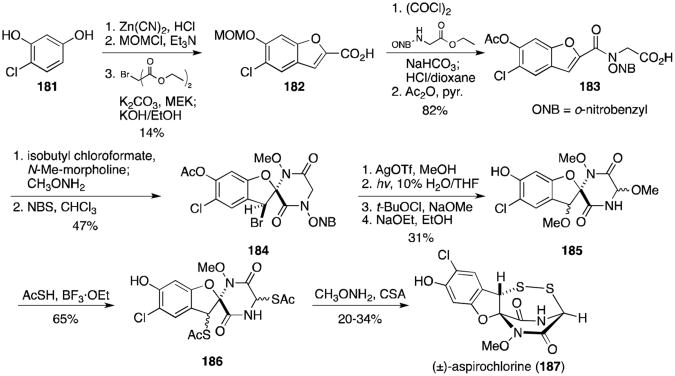
Total synthesis of (±)-aspirochlorine.
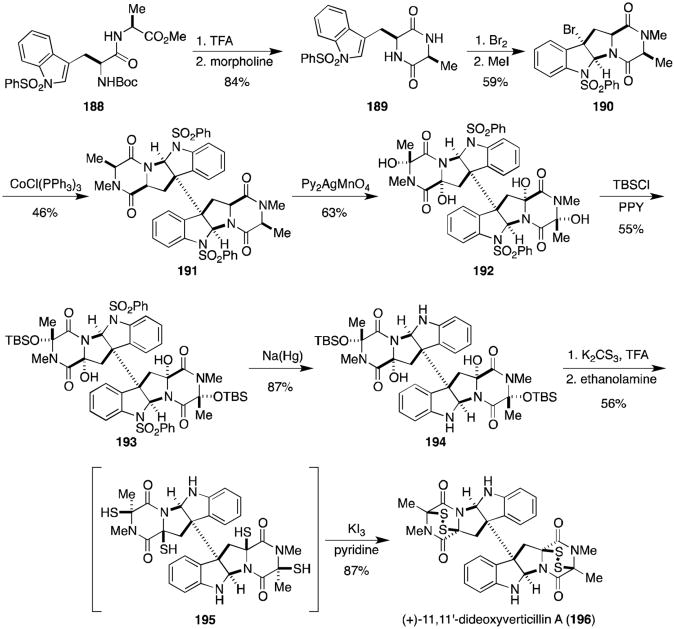
Biomimetic total synthesis of (+)-11,11′-dideoxyverticillin A.
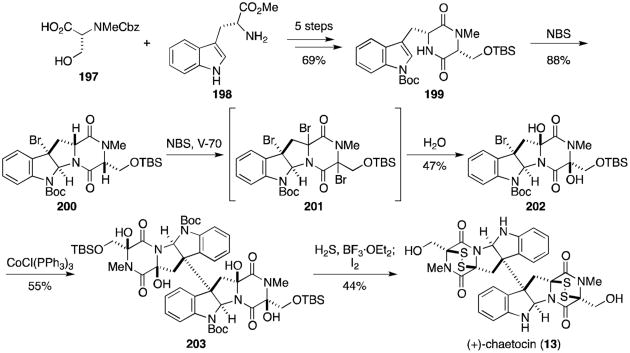
Sodeoka's total synthesis of (+)-chaetocin.
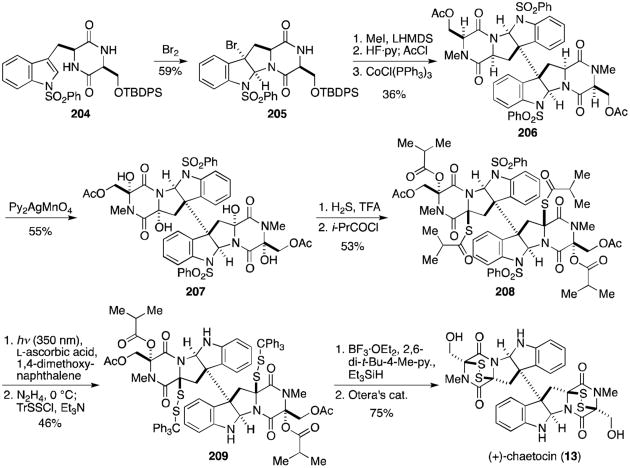
Movassaghi's total synthesis of (+)-chaetocin.
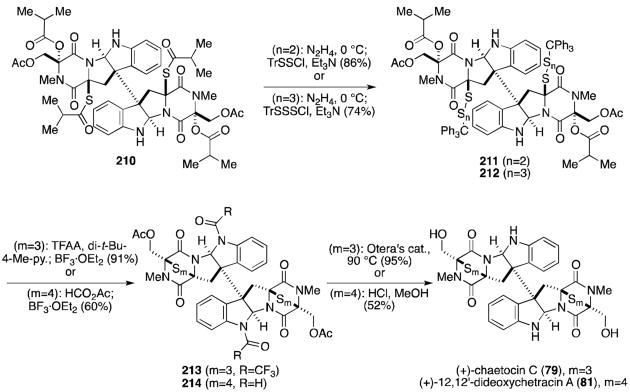
Total syntheses of chaetocin C and 12,12′-dideoxychetracin A.
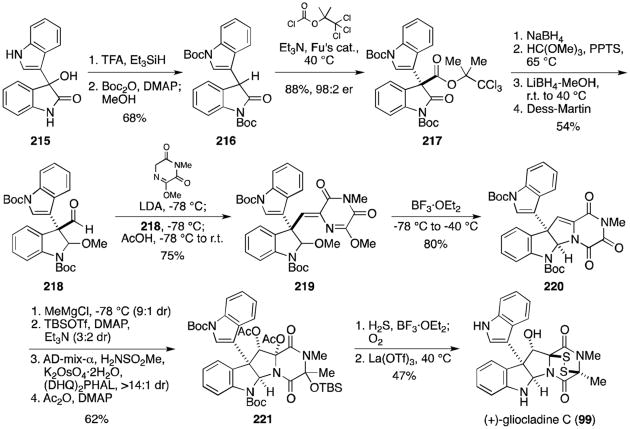
Synthesis of (+)-gliocladine C.
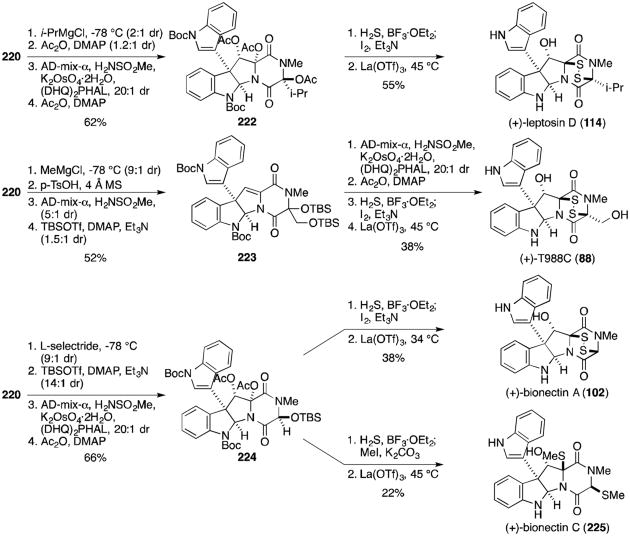
Divergent syntheses of (+)-leptosin D, (+)-T988C, (+)-bionectin A and (+)-bionectin C.
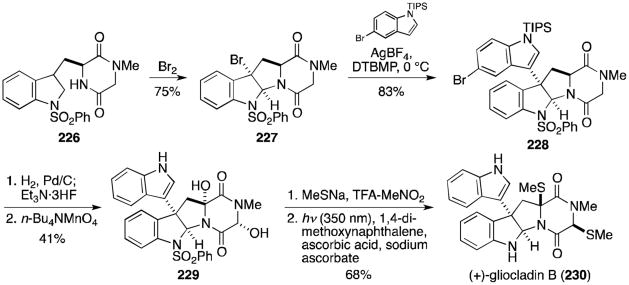
Total synthesis of (+)-gliocladin B.
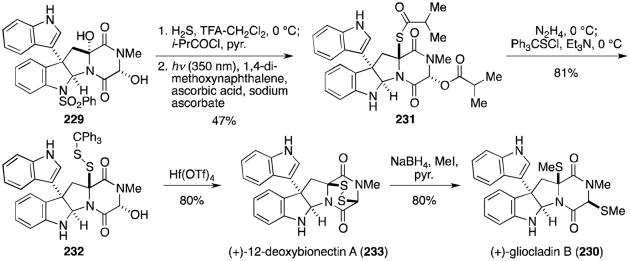
Synthesis of (+)-12-deoxybionectin A and (+)-gliocladin B.
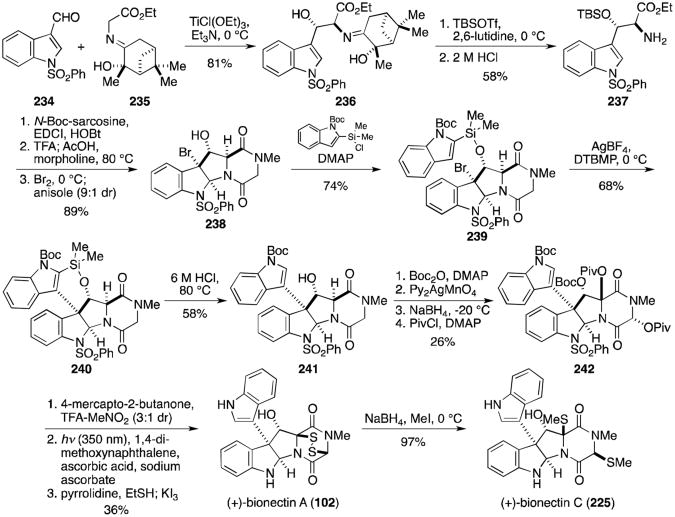
Total synthesis of (+)-bionectin A and (+)-bionectin C.
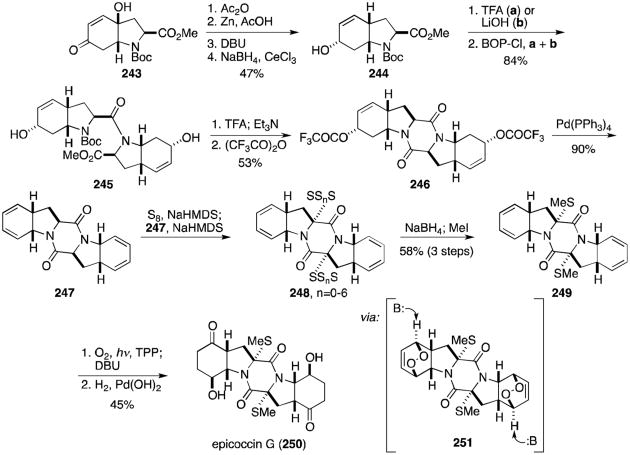
Total synthesis of epicoccin G.
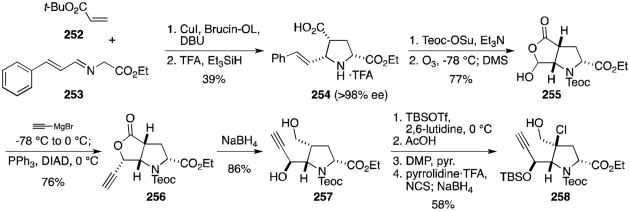
Key pyrrolidine synthesis.
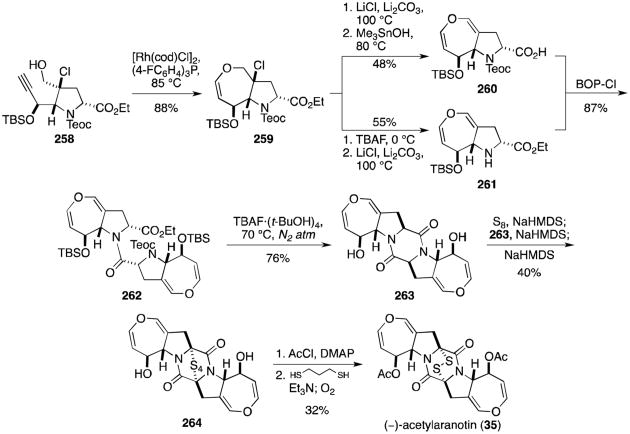
Completion of the total synthesis of (–)-acetylaranotin.
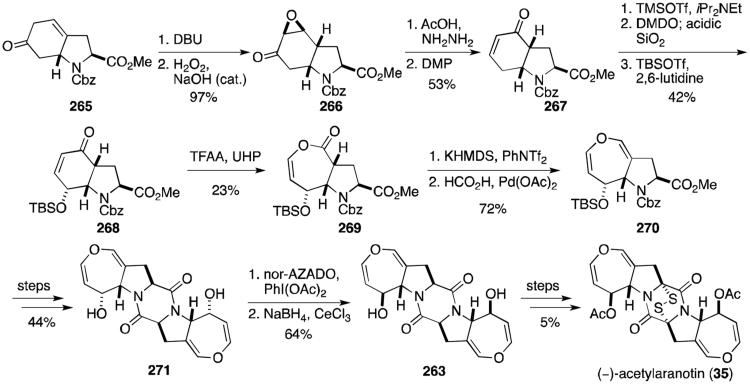
Tokuyama's formal synthesis of (–)-acetylaranotin.
References
Publication types
MeSH terms
Substances
Grants and funding
LinkOut - more resources
Full Text Sources
Other Literature Sources
Medical
