


Use (and abuse) of expert elicitation in support of decision making for public policy
- PMID: 24821779
- PMCID: PMC4034232
- DOI: 10.1073/pnas.1319946111
Use (and abuse) of expert elicitation in support of decision making for public policy
Abstract
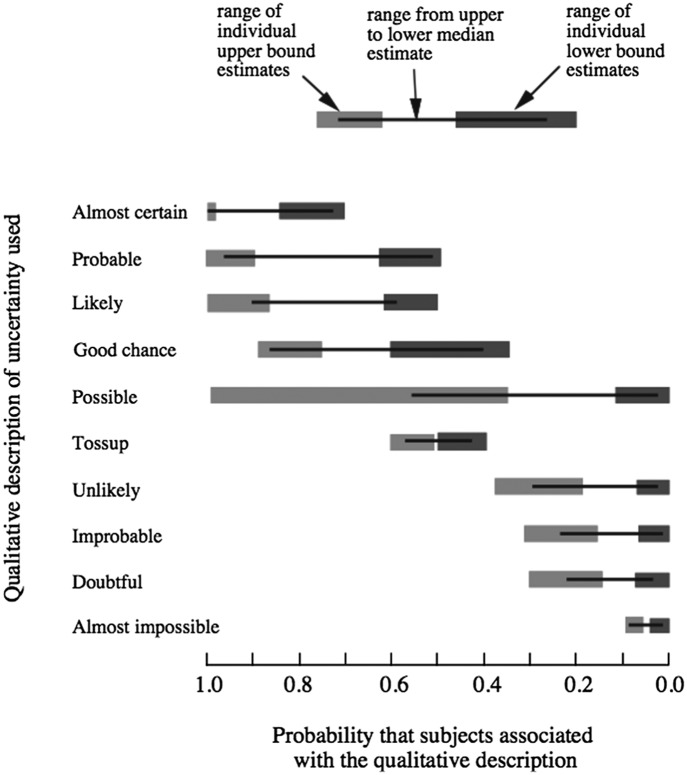
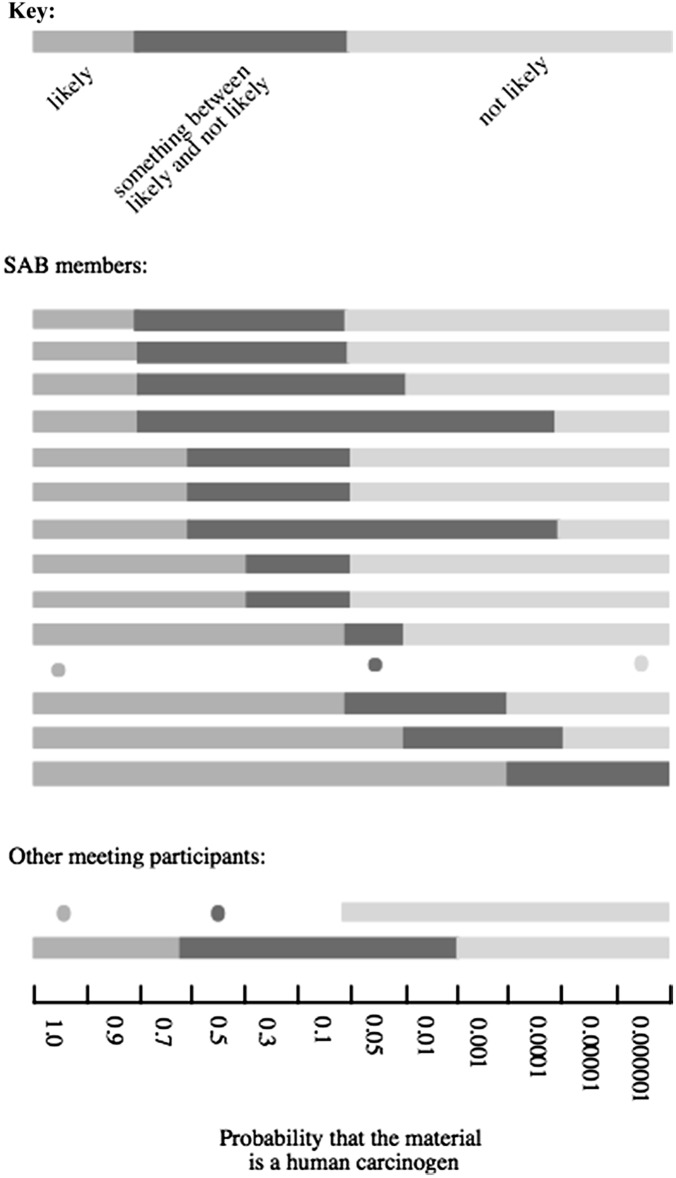
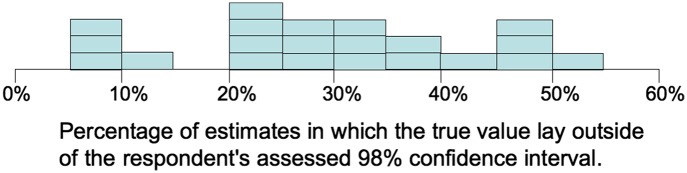
The elicitation of scientific and technical judgments from experts, in the form of subjective probability distributions, can be a valuable addition to other forms of evidence in support of public policy decision making. This paper explores when it is sensible to perform such elicitation and how that can best be done. A number of key issues are discussed, including topics on which there are, and are not, experts who have knowledge that provides a basis for making informed predictive judgments; the inadequacy of only using qualitative uncertainty language; the role of cognitive heuristics and of overconfidence; the choice of experts; the development, refinement, and iterative testing of elicitation protocols that are designed to help experts to consider systematically all relevant knowledge when they make their judgments; the treatment of uncertainty about model functional form; diversity of expert opinion; and when it does or does not make sense to combine judgments from different experts. Although it may be tempting to view expert elicitation as a low-cost, low-effort alternative to conducting serious research and analysis, it is neither. Rather, expert elicitation should build on and use the best available research and analysis and be undertaken only when, given those, the state of knowledge will remain insufficient to support timely informed assessment and decision making.
Conflict of interest statement
The author declares no conflict of interest.
Figures
Comment in
-
Delphi: Somewhere between Scylla and Charybdis?Proc Natl Acad Sci U S A. 2014 Oct 14;111(41):E4284. doi: 10.1073/pnas.1415425111. Epub 2014 Sep 19. Proc Natl Acad Sci U S A. 2014. PMID: 25239235 Free PMC article. No abstract available.
References
-
- Spetzler CS, Staël von Holstein C-AS. Probability encoding in decision analysis. Manage Sci. 1975;22(3):340–358.
-
- Garthwaite PH, Kadane JB, O’Hagan A. Statistical methods for eliciting probability distributions. J Am Stat Assoc. 2005;100(470):680–700.
-
- O’Hagan A, et al. Uncertain Judgments: Eliciting Experts’ Probabilities. Hoboken, NJ: John Wiley & Sons; 2006. 321 pp.
-
- Hora SC. In: Advances in Decision Analysis: From Foundations to Applications. Edwards W, Miles RF Jr, von Winterfeldt D, editors. New York: Cambridge Univ Press; 2007. pp. 129–153.
-
- DeGroot MH. Optimal Statistical Decisions. New York: McGraw-Hill; 1970. 489 pp.
Publication types
MeSH terms
Substances
LinkOut - more resources
Full Text Sources
Other Literature Sources
