. 2014 Jul;4(7):773-80.
doi: 10.1158/2159-8290.CD-14-0049. Epub 2014 May 13.

Autophagy inhibition improves chemosensitivity in BRAF(V600E) brain tumors

Affiliations

Autophagy inhibition improves chemosensitivity in BRAF(V600E) brain tumors

Jean M Mulcahy Levy et al. Cancer Discov. 2014 Jul.

Abstract

Autophagy inhibition is a potential therapeutic strategy in cancer, but it is unknown which tumors will benefit. The BRAF(V600E) mutation has been identified as important in pediatric central nervous system (CNS) tumors and is known to affect autophagy in other tumor types. We evaluated CNS tumor cells with BRAF(V600E) and found that mutant (but not wild-type) cells display high rates of induced autophagy, are sensitive to pharmacologic and genetic autophagy inhibition, and display synergy when the clinically used autophagy inhibitor chloroquine was combined with the RAF inhibitor vemurafenib or standard chemotherapeutics. Importantly, we also demonstrate that chloroquine can improve vemurafenib sensitivity in a resistant ex vivo primary culture and provide the first demonstration in a patient harboring the V600E mutation treated with vemurafenib that the addition of chloroquine can improve clinical outcomes. These findings suggest that CNS tumors with BRAF(V600E) are autophagy-dependent and should be targeted with autophagy inhibition in combination with other therapeutic strategies.

Significance: Autophagy inhibition may improve cancer therapy, but it is unclear which tumors will benefit. We found that BRAF mutations cause brain tumor cells to depend on autophagy and display selective chemosensitization with autophagy inhibition. We present a pediatric case in which deliberate autophagy inhibition halted tumor growth and overcame acquired BRAF-inhibition resistance.


Conflict of interest statement

Conflicts of Interest: None

Figures

Figure 1
Figure 1
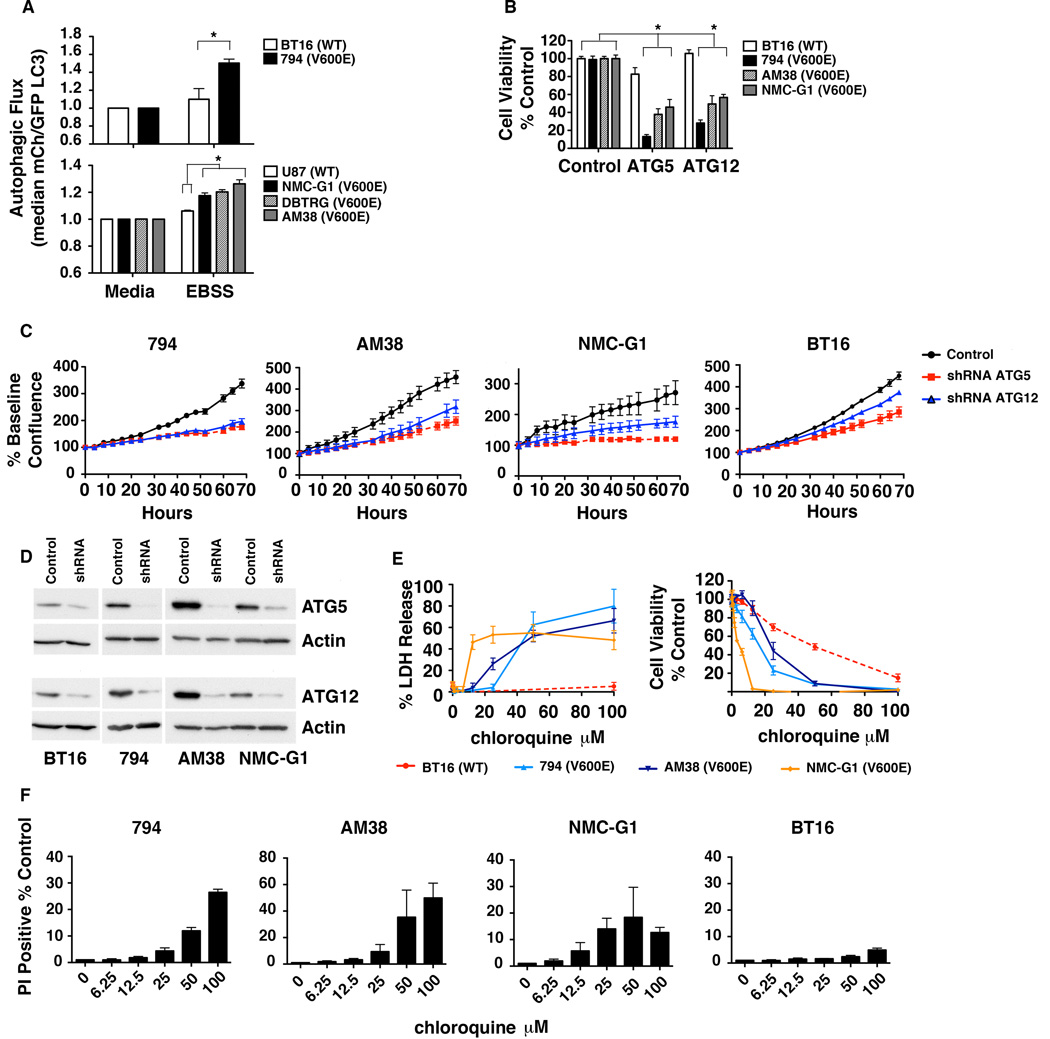
CNS tumor cells with BRAFV600E have high rates of induced autophagy and sensitivity to autophagy inhibition. (A) Cells with mCh-GFP-LC3 were exposed to either standard media or starvation EBSS media for 4 hours and analyzed for the change in ratio of mCh to GFP signal as a measure of autophagic flux. * P < 0.05. (B) Cells expressing control, ATG5, or ATG12 shRNAs were plated in standard media and allowed to grow for 72 hours before analysis by MTS assay. * P < 0.05. (C) Cells were plated as in (B) and were monitored every 4 hours by light microscopy using real time in vitro imaging. Quantitative analysis of confluence was performed using the IncuCyte system. Data shown are mean ± SEM of a representative experiment. (D) Representative immunoblot demonstrating knockdown of baseline Atg5 and Atg12 protein levels after 72 hours of RNAi for experiments shown in (B–C). (E) WT BT16 and BRAFV600E 794, AM38 and NMC-G1 mutant cells were treated with increasing doses of CQ for 48 hours and cell viability was evaluated by LDH release and MTS assay. (F) Cells were treated as in (E) and evaluated for the percentage of PI positive cells at 48 hours.
Figure 2
Figure 2
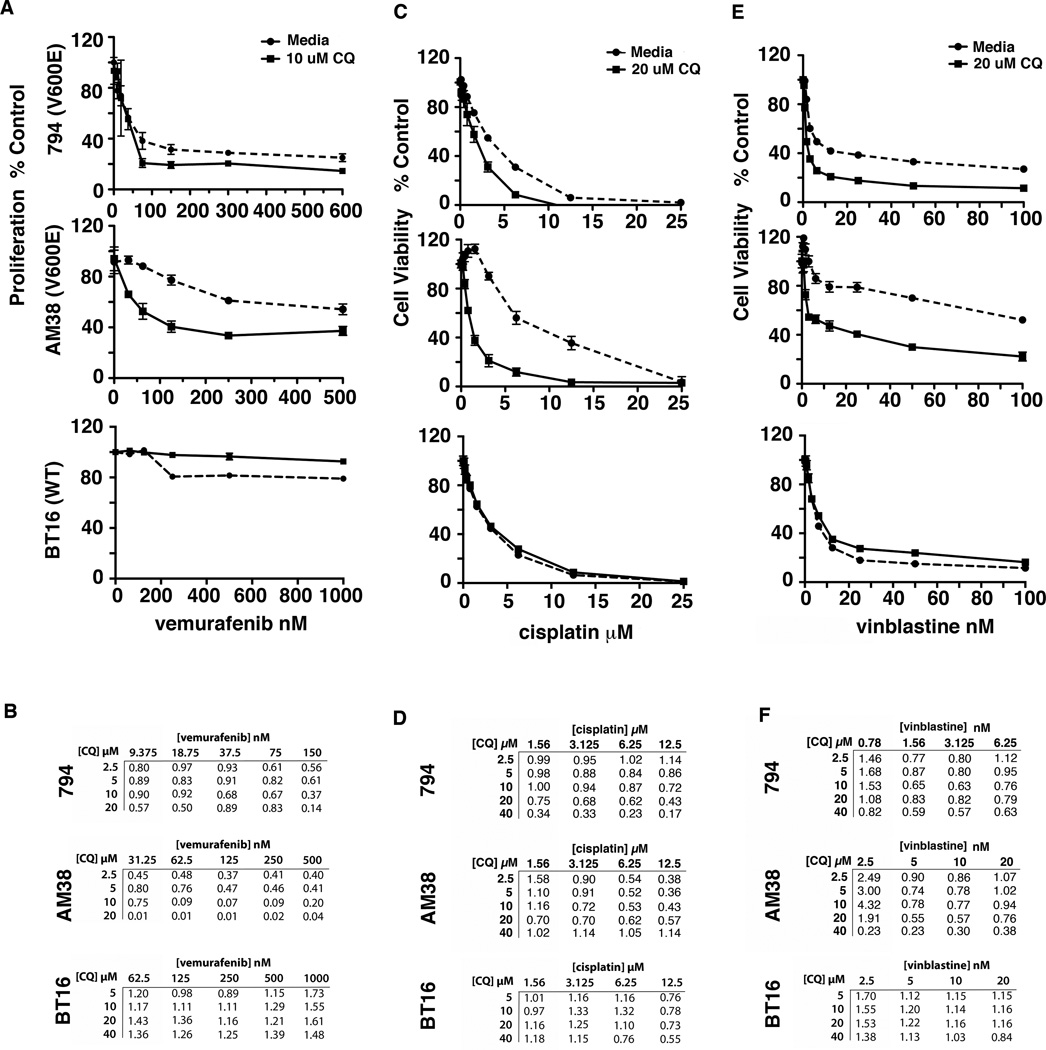
Chloroquine improves tumor cell kill when used in combination with vemurafenib and chemotherapy in BRAFV600E mutant cells. (A) 794, AM38, and BT16 cells were treated with increasing doses of vemurafenib in media with and without 10 µM CQ for 72 hours and tritiated thymidine uptake assays were performed to assess cell proliferation. (B) 794, AM38, and BT16 cells were treated with increasing doses of vemurafenib and CQ for 72 hours. Tritiated thymidine uptake assays were performed to assess cell proliferation. The Chou-Talalay equation was used to calculate combination index (CI) values. CI values less than 1, equal to 1 and more than 1 indicate synergism, additive effect, and antagonism, respectively. (C and E) 794, AM38, and BT16 cells were treated with increasing doses of cisplatin or vinblastine in media with and without 20 µM CQ for 72 hours and cell viability was evaluated by MTS assay. (D and F) 794, AM38, and BT16 cells were treated with increasing doses of cisplatin or vinblastine and CQ for 72 hours. MTS assays were performed to assess cell viability and CI values were calculated.
Figure 3
Figure 3
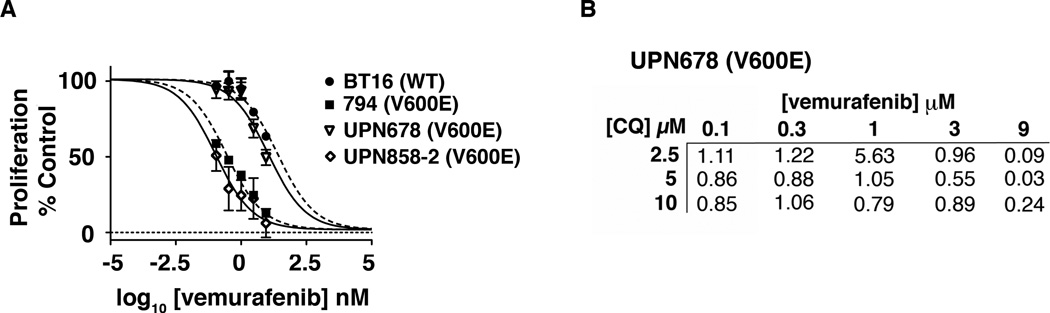
(A) Short-term primary patient cultures of PXA tumor cells with BRAFV600E mutations, UPN858-2 and UPN678, and WT BT16 and BRAFV600E positive 794 cells were treated with increasing doses of vemurafenib for 72 hours and tritiated thymidine uptake assays were performed to assess cell proliferation. (B) UPN678 cells were treated with increasing doses of vemurafenib and CQ for 72 hours. Tritiated thymidine uptake assays were performed to assess cell proliferation and CI values were calculated as above.
Figure 4
Figure 4
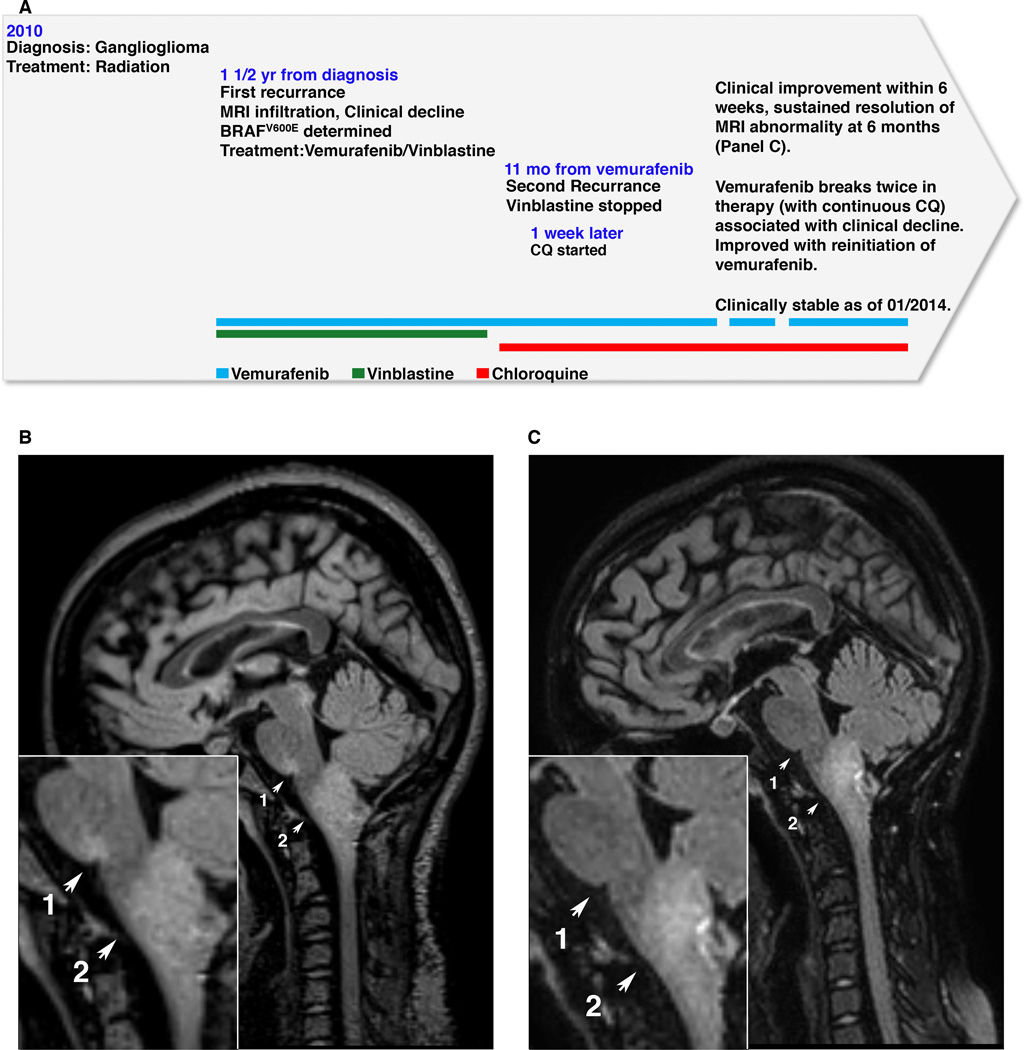
Combination therapy with vemurafenib and autophagy inhibition improved MRI appearance of BRAFV600E brainstem ganglioglioma. (A) Clinical timeline schematic. (B) Sagittal FLAIR MR image acquired at the time of relapse of clinical symptoms demonstrates increased signal at the pontomedullary junction (arrow 1) that had previously resolved with treatment. (C) MR imaging following 6 months of combination vemurafenib plus CQ therapy shows resolution of pontomedullary signal abnormality (arrow 1) and no further increase in size of the medullary tumor (arrow 2).

References

    1. Davies H, Bignell GR, Cox C, Stephens P, Edkins S, Clegg S, et al. Mutations of the BRAF gene in human cancer. Nature. 2002;417:949–954. - PubMed
    1. Nicolaides TP, Li H, Solomon DA, Hariono S, Hashizume R, Barkovich K, et al. Targeted therapy for BRAFV600E malignant astrocytoma. Clin Cancer Res. 2011;17:7595–7604. - PMC - PubMed
    1. Dias-Santagata D, Lam Q, Vernovsky K, Vena N, Lennerz JK, Borger DR, et al. BRAF V600E mutations are common in pleomorphic xanthoastrocytoma: diagnostic and therapeutic implications. PLoS One. 2011;6:e17948. - PMC - PubMed
    1. Dougherty MJ, Santi M, Brose MS, Ma C, Resnick AC, Sievert AJ, et al. Activating mutations in BRAF characterize a spectrum of pediatric low-grade gliomas. Neuro Oncol. 2010;12:621–630. - PMC - PubMed
    1. Kleinschmidt-DeMasters BK, Birks DK, Aisner DL, Hankinson TC, Rosenblum MK. Atypical teratoid/rhabdoid tumor arising in a ganglioglioma: genetic characterization. The American journal of surgical pathology. 2011;35:1894–1901. - PubMed

Publication types