


Actinomycetes from Red Sea sponges: sources for chemical and phylogenetic diversity
- PMID: 24824024
- PMCID: PMC4052315
- DOI: 10.3390/md12052771
Actinomycetes from Red Sea sponges: sources for chemical and phylogenetic diversity
Abstract
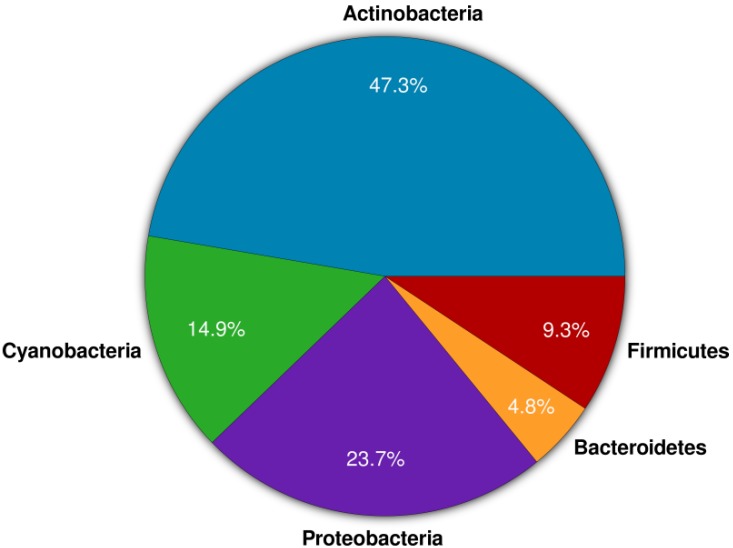
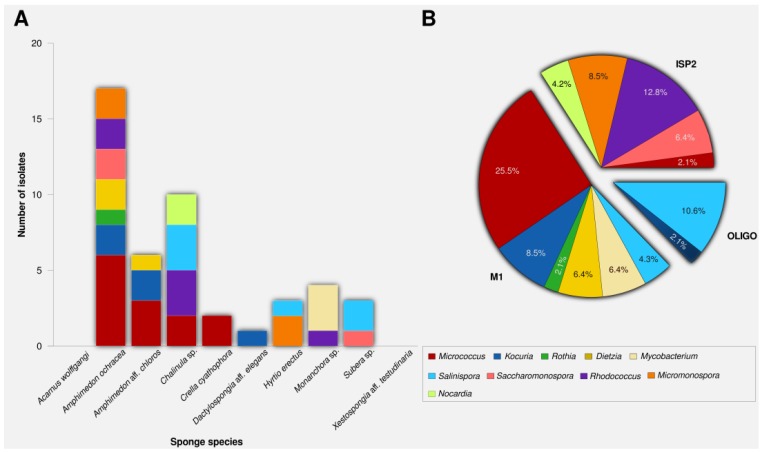
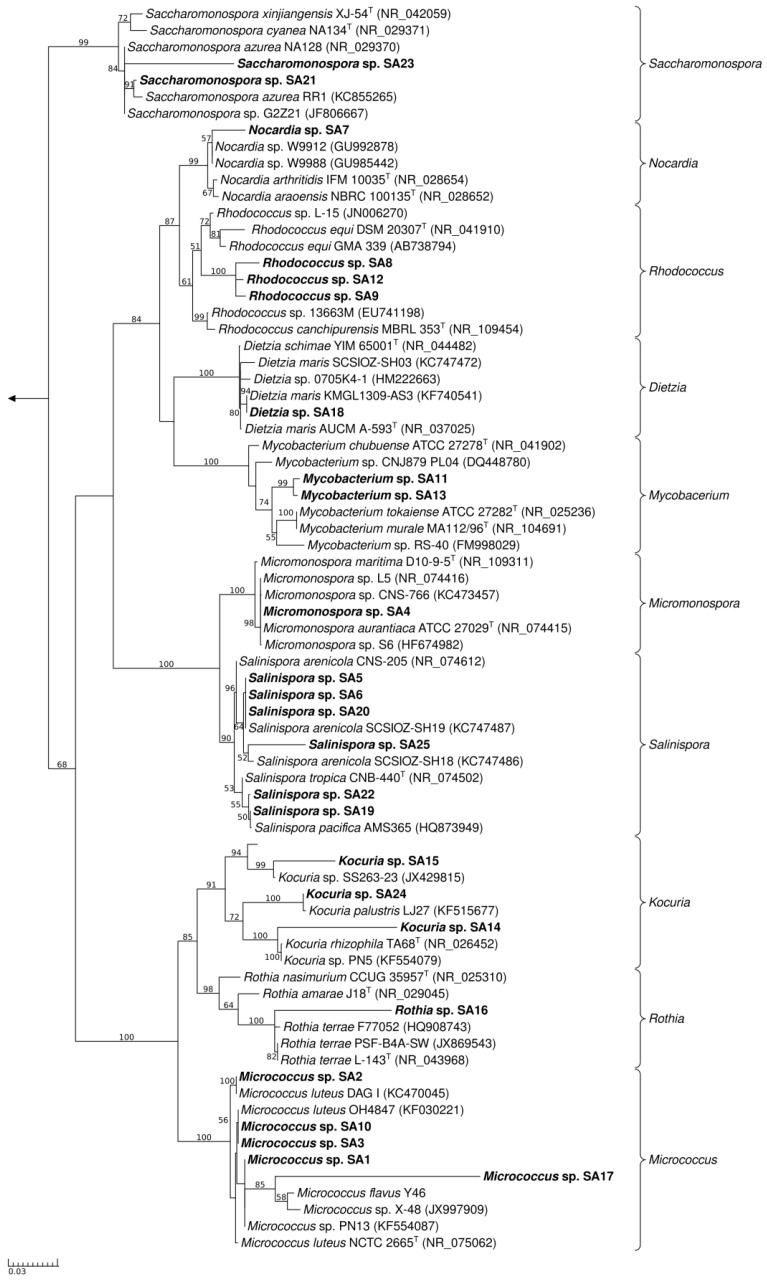
The diversity of actinomycetes associated with marine sponges collected off Fsar Reef (Saudi Arabia) was investigated in the present study. Forty-seven actinomycetes were cultivated and phylogenetically identified based on 16S rRNA gene sequencing and were assigned to 10 different actinomycete genera. Eight putatively novel species belonging to genera Kocuria, Mycobacterium, Nocardia, and Rhodococcus were identified based on sequence similarity values below 98.2% to other 16S rRNA gene sequences available in the NCBI database. PCR-based screening for biosynthetic genes including type I and type II polyketide synthases (PKS-I, PKS-II) as well as nonribosomal peptide synthetases (NRPS) showed that 20 actinomycete isolates encoded each at least one type of biosynthetic gene. The organic extracts of nine isolates displayed bioactivity against at least one of the test pathogens, which were Gram-positive and Gram-negative bacteria, fungi, human parasites, as well as in a West Nile Virus protease enzymatic assay. These results emphasize that marine sponges are a prolific resource for novel bioactive actinomycetes with potential for drug discovery.
Figures
References
-
- Hentschel U., Piel J., Degnan S.M., Taylor M.W. Genomic insights into the marine sponge microbiome. Nature. 2012;10:641–654. - PubMed
-
- Schmitt S., Tsai P., Bell J., Fromont J., Ilan M., Lindquist N., Perez T., Rodrigo A., Schupp P.J., Vacelet J., et al. Assessing the complex sponge microbiota: Core, variable and species-specific bacterial communities in marine sponges. ISME J. 2012;6:564–576. doi: 10.1038/ismej.2011.116. - DOI - PMC - PubMed
Publication types
MeSH terms
Substances
LinkOut - more resources
Full Text Sources
Other Literature Sources
Molecular Biology Databases
Miscellaneous
