


Mechanical unloading promotes myocardial energy recovery in human heart failure
- PMID: 24825877
- PMCID: PMC4394989
- DOI: 10.1161/CIRCGENETICS.113.000404
Mechanical unloading promotes myocardial energy recovery in human heart failure
Abstract
Background: Impaired bioenergetics is a prominent feature of the failing heart, but the underlying metabolic perturbations are poorly understood.
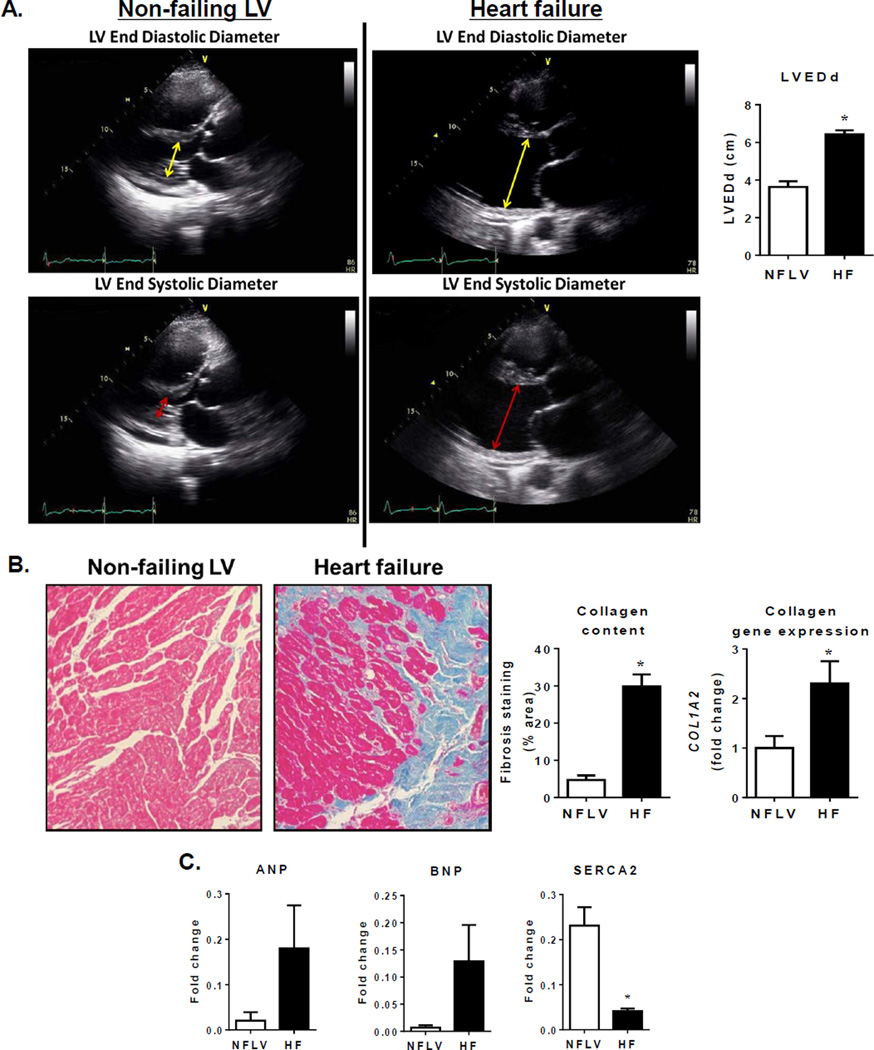
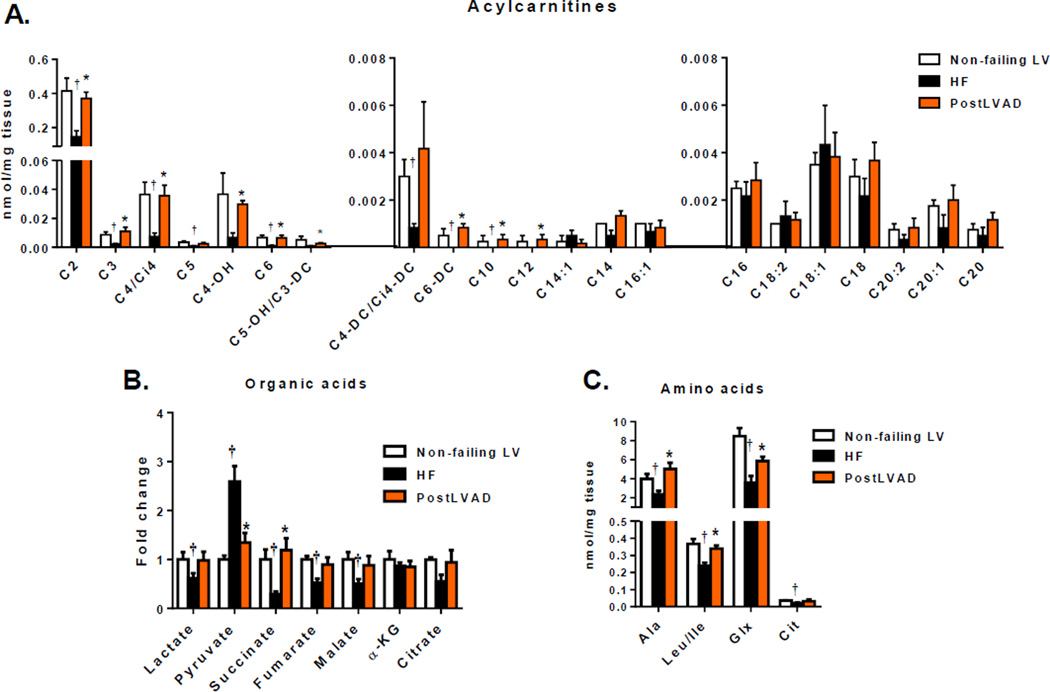
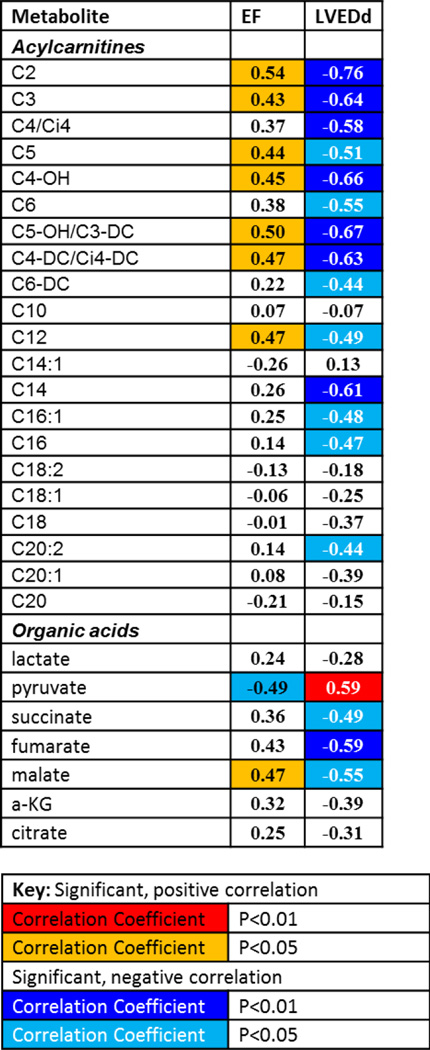
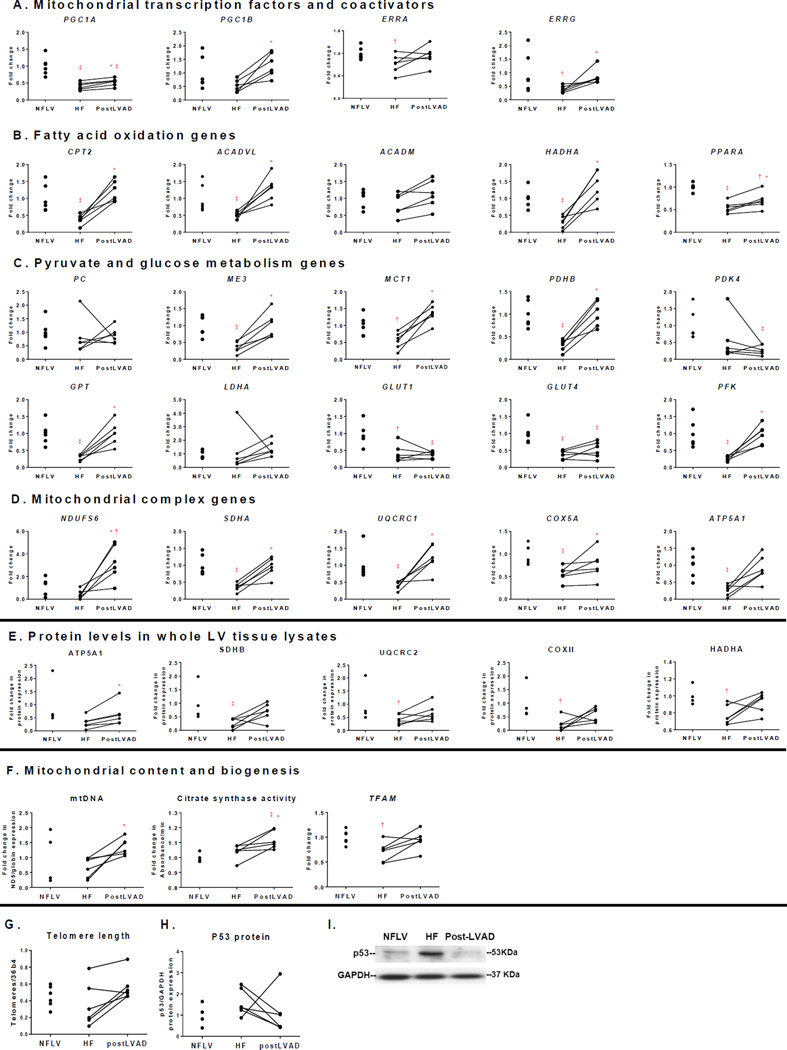
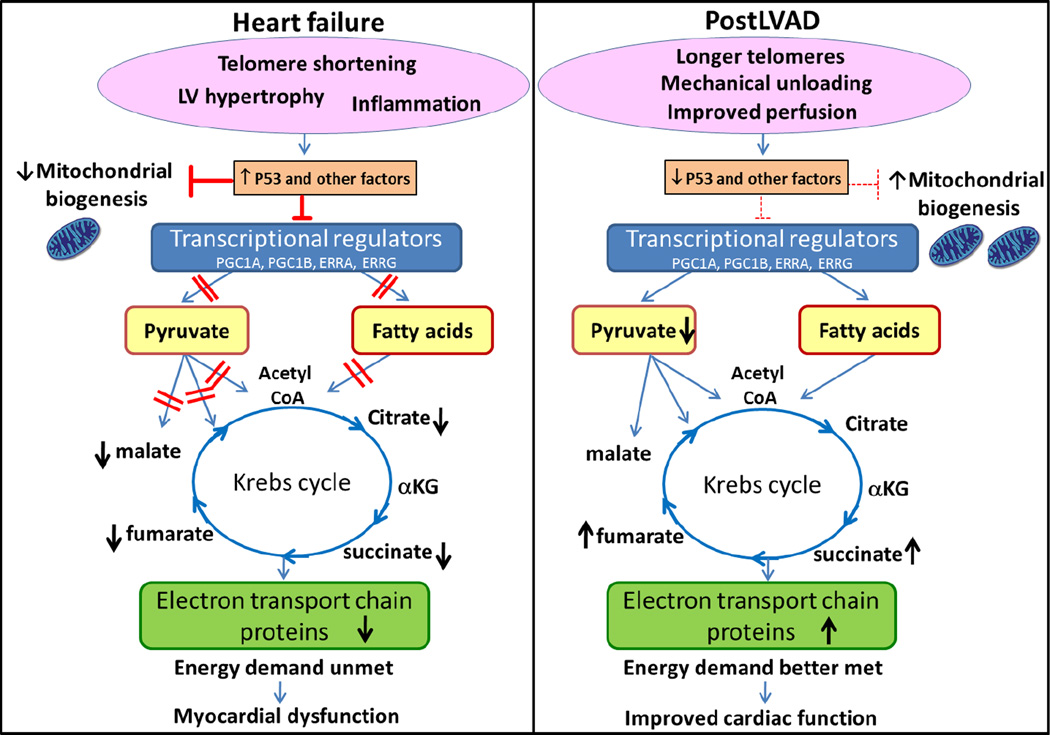
Methods and results: We compared metabolomic, gene transcript, and protein data from 6 paired samples of failing human left ventricular tissue obtained during left ventricular assist device insertion (heart failure samples) and at heart transplant (post-left ventricular assist device samples). Nonfailing left ventricular wall samples procured from explanted hearts of patients with right heart failure served as novel comparison samples. Metabolomic analyses uncovered a distinct pattern in heart failure tissue: 2.6-fold increased pyruvate concentrations coupled with reduced Krebs cycle intermediates and short-chain acylcarnitines, suggesting a global reduction in substrate oxidation. These findings were associated with decreased transcript levels for enzymes that catalyze fatty acid oxidation and pyruvate metabolism and for key transcriptional regulators of mitochondrial metabolism and biogenesis, peroxisome proliferator-activated receptor γ coactivator 1α (PGC1A, 1.3-fold) and estrogen-related receptor α (ERRA, 1.2-fold) and γ (ERRG, 2.2-fold). Thus, parallel decreases in key transcription factors and their target metabolic enzyme genes can explain the decreases in associated metabolic intermediates. Mechanical support with left ventricular assist device improved all of these metabolic and transcriptional defects.
Conclusions: These observations underscore an important pathophysiologic role for severely defective metabolism in heart failure, while the reversibility of these defects by left ventricular assist device suggests metabolic resilience of the human heart.
Keywords: heart failure; metabolism; mitochondria.
© 2014 American Heart Association, Inc.
Conflict of interest statement
Figures
References
-
- Jhund PS, Macintyre K, Simpson CR, Lewsey JD, Stewart S, Redpath A, et al. Long-term trends in first hospitalization for heart failure and subsequent survival between 1986 and 2003: a population study of 5.1 million people. Circulation. 2009;119:515–523. - PubMed
-
- Zannad F, McMurray JJ, Krum H, van Veldhuisen DJ, Swedberg K, Shi H, et al. Eplerenone in patients with systolic heart failure and mild symptoms. N Engl J Med. 2011;364:11–21. - PubMed
-
- Stewart S, Ekman I, Ekman T, Oden A, Rosengren A. Population impact of heart failure and the most common forms of cancer: a study of 1 162 309 hospital cases in Sweden (1988 to 2004) Circ Cardiovasc Qual Outcomes. 2010;3:573–580. - PubMed
-
- Estep JD, Chang SM, Bhimaraj A, Torre-Amione G, Zoghbi WA, Nagueh SF. Imaging for ventricular function and myocardial recovery on nonpulsatile ventricular assist devices. Circulation. 2012;125:2265–2277. - PubMed
Publication types
MeSH terms
Substances
Grants and funding
LinkOut - more resources
Full Text Sources
Other Literature Sources
Medical
