. 2014 May 14;9(5):e97268.
doi: 10.1371/journal.pone.0097268. eCollection 2014.

Analyzing mosquito (Diptera: culicidae) diversity in Pakistan by DNA barcoding

Affiliations

Analyzing mosquito (Diptera: culicidae) diversity in Pakistan by DNA barcoding

Muhammad Ashfaq et al. PLoS One. .

Abstract

Background: Although they are important disease vectors mosquito biodiversity in Pakistan is poorly known. Recent epidemics of dengue fever have revealed the need for more detailed understanding of the diversity and distributions of mosquito species in this region. DNA barcoding improves the accuracy of mosquito inventories because morphological differences between many species are subtle, leading to misidentifications.

Methodology/principal findings: Sequence variation in the barcode region of the mitochondrial COI gene was used to identify mosquito species, reveal genetic diversity, and map the distribution of the dengue-vector species in Pakistan. Analysis of 1684 mosquitoes from 491 sites in Punjab and Khyber Pakhtunkhwa during 2010-2013 revealed 32 species with the assemblage dominated by Culex quinquefasciatus (61% of the collection). The genus Aedes (Stegomyia) comprised 15% of the specimens, and was represented by six taxa with the two dengue vector species, Ae. albopictus and Ae. aegypti, dominant and broadly distributed. Anopheles made up another 6% of the catch with An. subpictus dominating. Barcode sequence divergence in conspecific specimens ranged from 0-2.4%, while congeneric species showed from 2.3-17.8% divergence. A global haplotype analysis of disease-vectors showed the presence of multiple haplotypes, although a single haplotype of each dengue-vector species was dominant in most countries. Geographic distribution of Ae. aegypti and Ae. albopictus showed the later species was dominant and found in both rural and urban environments.

Conclusions: As the first DNA-based analysis of mosquitoes in Pakistan, this study has begun the construction of a barcode reference library for the mosquitoes of this region. Levels of genetic diversity varied among species. Because of its capacity to differentiate species, even those with subtle morphological differences, DNA barcoding aids accurate tracking of vector populations.


Conflict of interest statement

Competing Interests: The authors have declared that no competing interests exist.

Figures

Figure 1
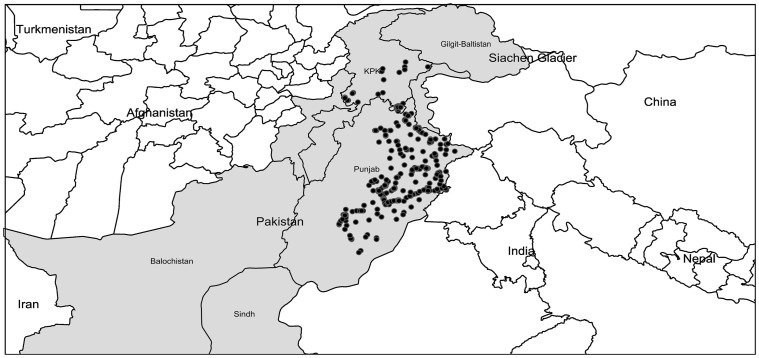
Figure 1. Map of collection localities (solid black dots) for mosquitoes in the dengue-affected areas of Punjab and the adjoining Khyber Pakhtunkhwa province.
Figure 2
Figure 2. Mosquito species identified from the dengue-affected areas of Pakistan.
The number of specimens of each species in the collection are indicated on the bars.
Figure 3
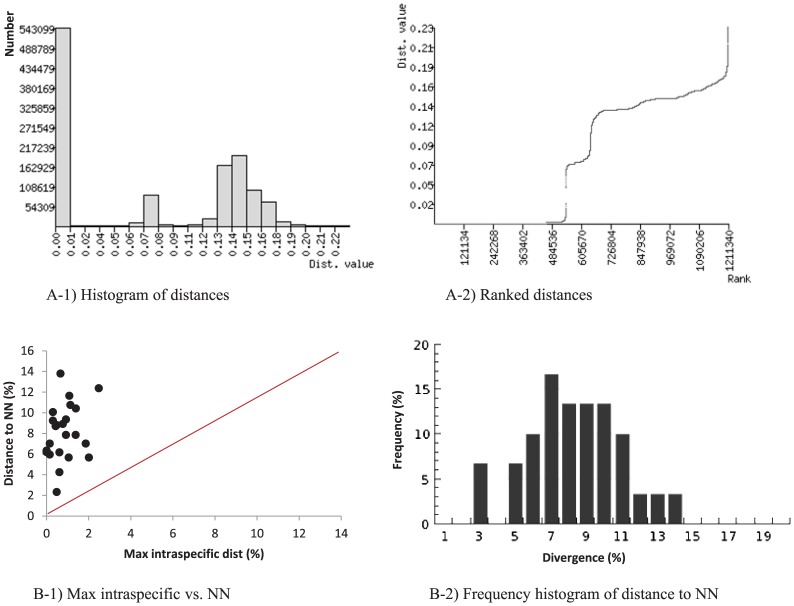
Figure 3. Pairwise distance divergence (%) (A) and barcode gap analysis (B) for mosquitoes from Punjab and Khyber Pakhtunkhwa as generated by ABGD and by BOLD , respectively.
NN  =  nearest neighbor.
Figure 4
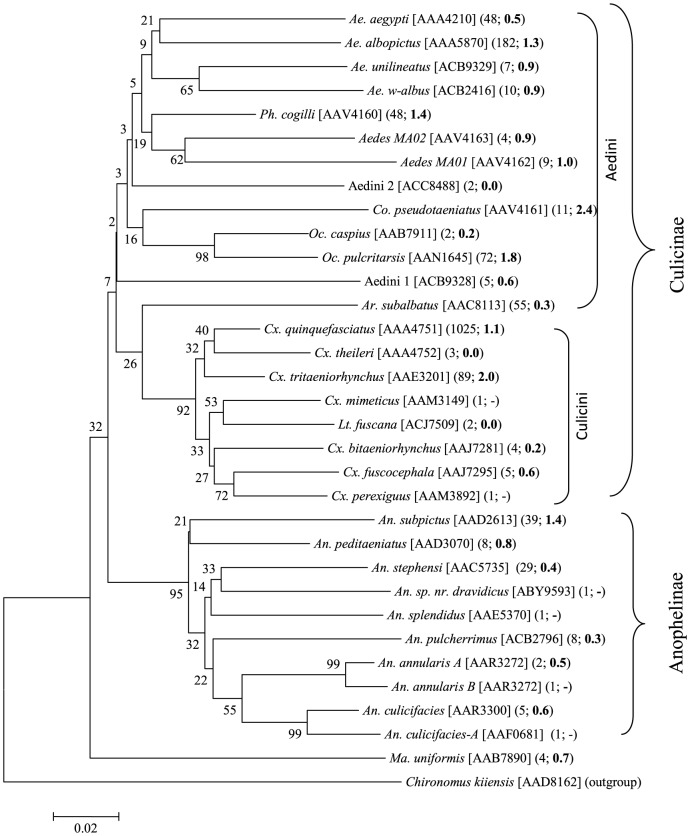
Figure 4. NJ analysis of mosquitoes collected from Punjab and Khyber Pakhtunkhwa.
Bootstrap values (500 replicates) are shown above the branches. The scale bar shows K2P distances. Barcode Index Numbers (BINs) follow the species name in square brackets and the number of sequences analyzed and the intraspecific K2P distances (in bold) are included in parenthesis. Analyses were conducted in MEGA5.
Figure 5
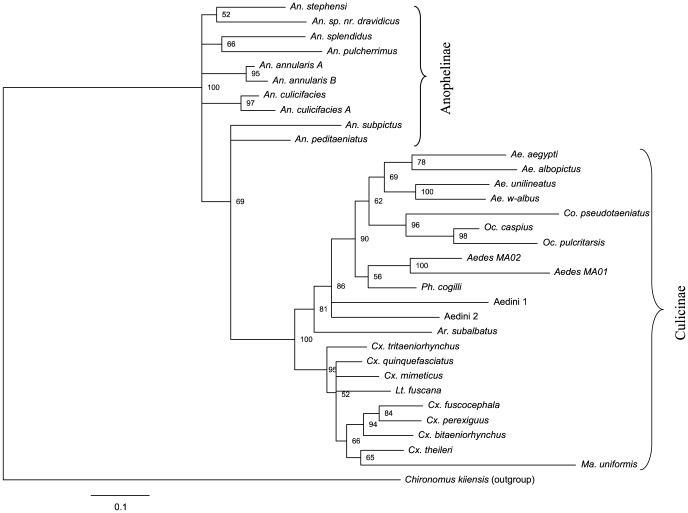
Figure 5. Phylogenetic tree of mosquito species estimated using Bayesian inference and the codon partitioned analysis.
Posterior probability shown at nodes.
Figure 6
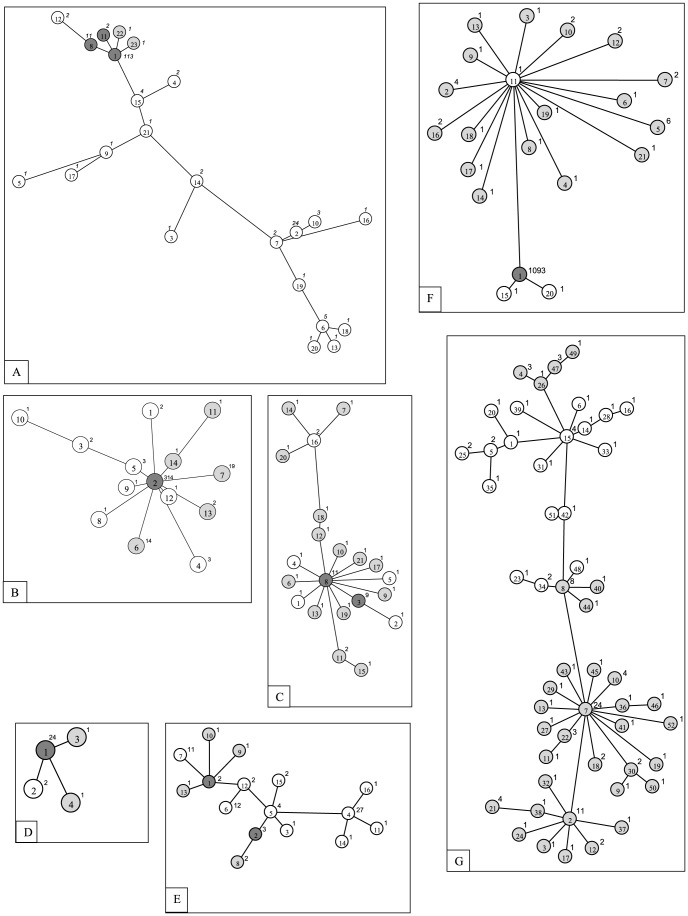
Figure 6. Barcode haplotype networks of vector mosquitoes from Pakistan.
Haplotype number and frequency is indicated inside and besides the corresponding circle, respectively. Haplotypes shared between Pakistan and other countries, found solely in Pakistan, and not found in Pakistan are indicated by dark grey, light grey, and blank circles, respectively. Haplotypes (in brackets) and their origin countries follow the species below (except for haplotypes exclusively from Pakistan indicated in light grey). A) Aedes aegypti: (1) Argentina, Australia, Bolivia, Brazil, Cambodia, Canada, Chile, France, French Polynesia, Gabon, Guinea, India, Laos, Pakistan, Russia, Thailand, Uganda, USA, Venezuela, Vietnam; (2) Brazil, Cambodia, Canada, Laos, Martinique, Thailand, USA; (3) South Africa; (4) Canada, USA; (5) (21) Cote d'Ivoire; (6) Australia, Bolivia, Martinique; (7) Martinique, Mexico; (8) Australia, Cambodia, Pakistan, Thailand; (9) Mexico; (10) UK, USA; (11) Bolivia, Pakistan; (12) India, Vietnam; (13) (18) (20) Bolivia; (14) Vietnam; (15) Cameroon, Cote d'Ivoire, Guinea; (16) Tanzania; (17) Australia; (19) Europa Island. B) Aedes albopictus: (1) Thailand; (2) Brazil, France, Germany, Greece, Italy, Japan, Lebanon, Madagascar, Pakistan, Re Union: La possession, Russia, Thailand, Turkey, USA, Hawaii (USA), Vietnam; (3)Romania; (4) Australia, Taiwan; (5) Germany; (8) Cambodia; (9) Madagascar; (10) India; (12) Vietnam. C) Anopheles subpictus: (1) (2) (4) (5) (16) India; (3) (8) India, Pakistan. D) Anopheles stephensi: (1) Pakistan, South Africa; (2) Thailand. E) Anopheles peditaeniatus: (1) (2) India, Pakistan; (3) India; (4) (5) (6) (7) (11) (12) (14) (15) (16) Thailand. F) Culex quinquefasciatus: (1) Brazil, China, India, Iran, Japan, Malaysia, Mexico, Pakistan, Thailand, Uganda, USA; (11) (20) Brazil; (15) Mexico. G) Culex tritaeniorhynchus: (1) (14) (23) (34) (25) (28) (33) (35) (42) (48) (51) Japan; (6) (16) (31) (39) China; (5) (15) China, Japan; (20) Thailand.
Figure 7
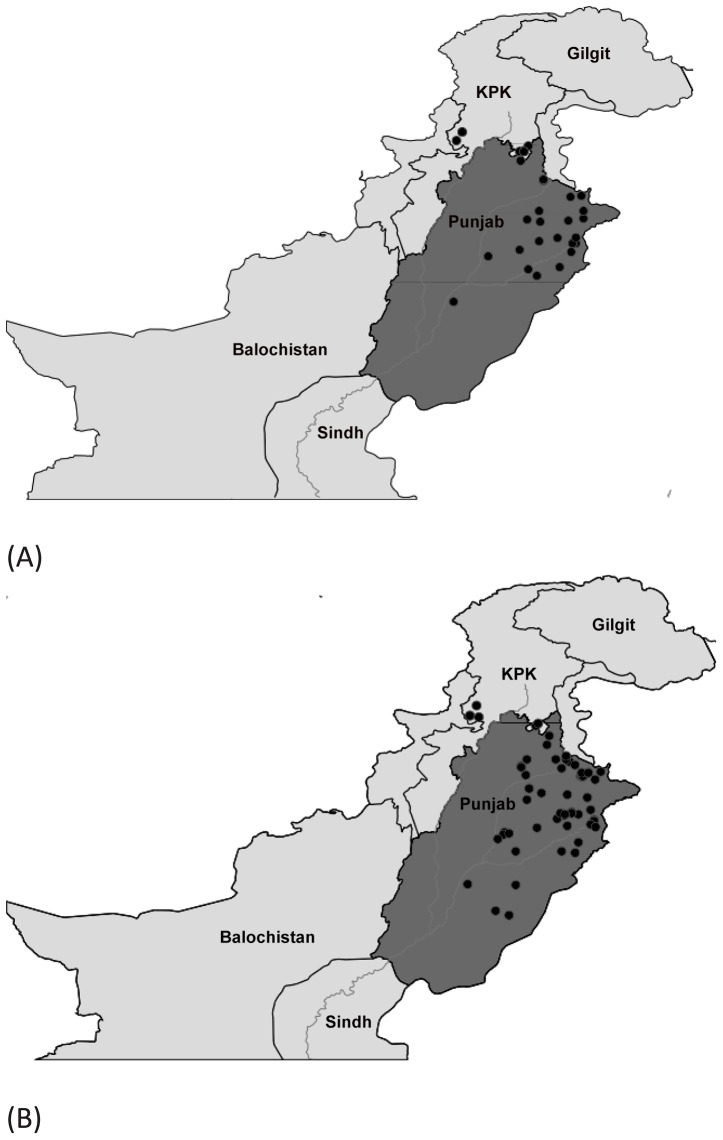
Figure 7. Map showing the distribution of Aedes (Stegomyia) aegypti (A) and Aedes (Stegomyia) albopictus (B) in the dengue-affected areas of Punjab, Pakistan.

References

    1. Pant C (1987) Vector borne diseases of man and their socio-economic impact. Insect Sci Applic 8: 655–664.
    1. Chan YC, Salahuddin NI, Khan J, Tan HC, Seah CL, et al. (1995) Dengue haemorrhagic fever outbreak in Karachi, Pakistan, 1994. Trans R Soc Trop Med Hyg 89: 619–620. - PubMed
    1. Stark K, Schoneberg I (2012) Increase in malaria cases imported from Pakistan to Germany in 2012. Euro Surveill 17 : pii = 20320. - PubMed
    1. Khan MA (1971) The mosquitoes of Pakistan. I. A checklist. Mosq Syst Newsletter 3: 147–159.
    1. Shakoor MT, Ayub S, Ayub Z (2012) Dengue fever: Pakistan's worst nightmare. WHO South-East Asia J Public Health 1: 229–231. - PubMed

Publication types

Substances