Rational combinations of immunotherapeutics that target discrete pathways
- PMID: 24829752
- PMCID: PMC4019905
- DOI: 10.1186/2051-1426-1-16
Rational combinations of immunotherapeutics that target discrete pathways
Abstract
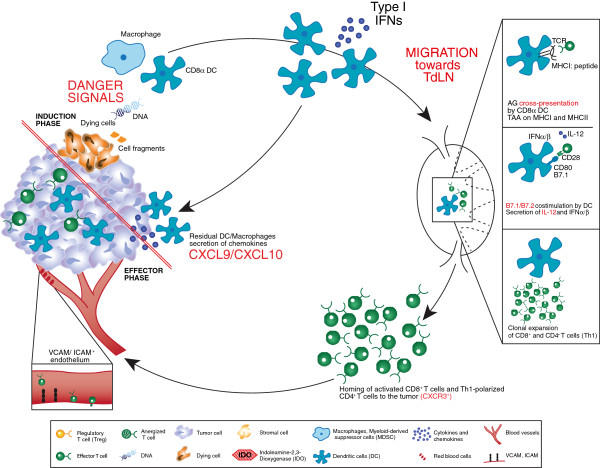
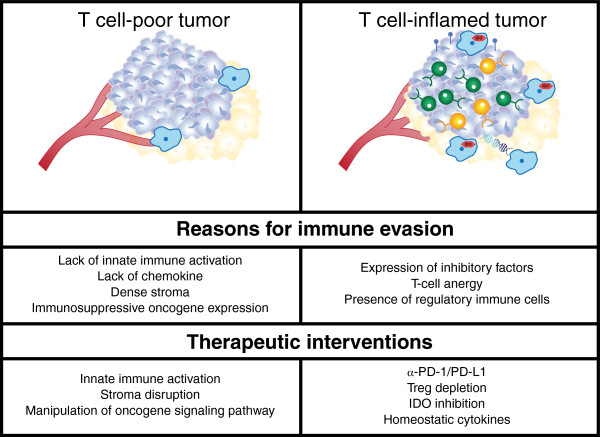
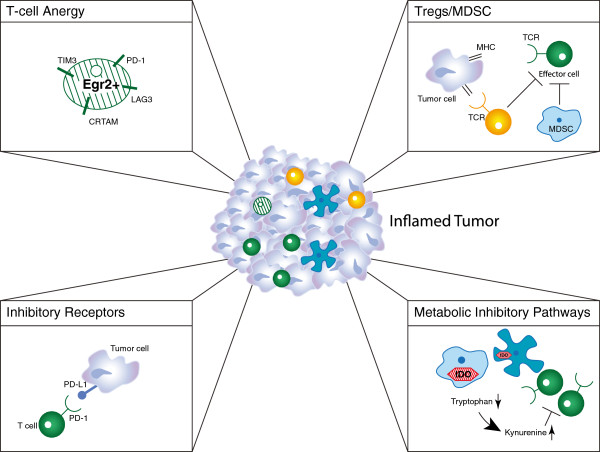
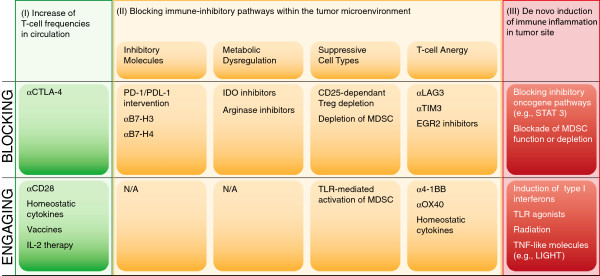
An effective anti-tumor immune response requires the coordinated action of the innate and adaptive phases of the immune system. Critical processes include the activation of dendritic cells to present antigens, produce cytokines including type I interferons, and express multiple costimulatory ligands; induction of a productive T cell response within lymph nodes; migration of activated T cells to the tumor microenvironment in response to chemokines and homing receptor expression; and having effector T cells gain access to antigen-expressing tumor cells and maintain sufficient functionality to destroy them. However, tumors can become adept at escaping the immune response, developing multiple mechanisms to disrupt key processes. In general, tumors can be assigned into two different, major groups depending on whether the tumor there is an 'inflamed' or 'non-inflamed' tumor microenvironment. Improvements in our understanding of the interactions between the immune system and cancer have resulted in the development of various strategies to improve the immune-mediated control of tumors in both sub-groups. Categories of major immunotherapeutic intervention include methods to increase the frequency of tumor antigen-specific effector T cells in the circulation, strategies to block or uncouple a range of immune suppressive mechanisms within the tumor microenvironment, and tactics to induce de novo immune inflammation within the tumor microenvironment. The latter may be particularly important for eliciting immune recognition of non-inflamed tumor phenotypes. The premise put forth in this review is that synergistic therapeutic effects in vivo may be derived from combination therapies taken from distinct "bins" based on these mechanisms of action. Early data in both preclinical and some clinical studies provide support for this model. We also suggest that optimal application of these combinations may be aided by appropriate patient selection based on predictive biomarkers.
Keywords: CTLA-4; Cancer; Denileukin diftitox; Immunotherapy; Indoleamine-2,3,-dioxygenase; Interferon; PD-1; PD-L1; Regulatory T cell; Tumor-associated antigen.
Figures
References
-
- Penn I. Recent Results in Cancer, Volume 35. Heidelberg: Springer-Verlag; 1970. Malignant Tumors in Organ Transplant Recipients; pp. 1–55.
Publication types
LinkOut - more resources
Full Text Sources
Other Literature Sources
Research Materials