


Structural brain alterations in children an average of 5 years after surgery and chemotherapy for brain tumors
- PMID: 24830985
- PMCID: PMC4146685
- DOI: 10.1007/s11060-014-1480-8
Structural brain alterations in children an average of 5 years after surgery and chemotherapy for brain tumors
Abstract
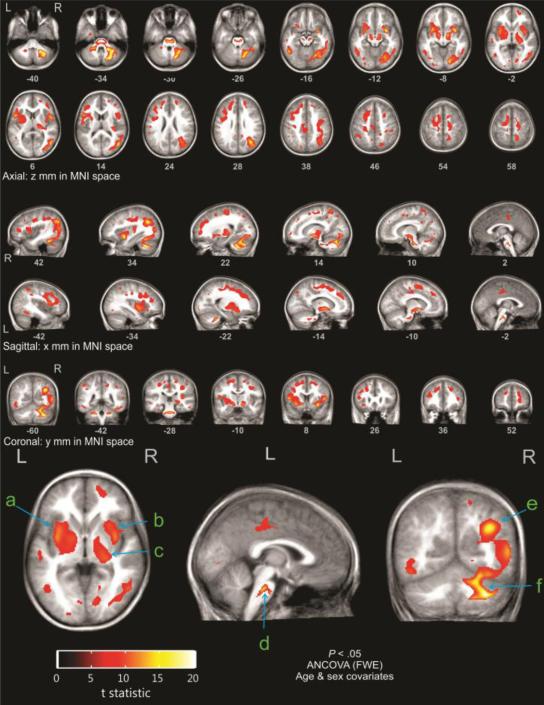
Young children with brain tumors are often treated with high-dose chemotherapy after surgery to avoid brain tissue injury associated with irradiation. The effects of systemic chemotherapy on healthy brain tissue in this population, however, are unclear. Our objective was to compare gray and white matter integrity using MRI procedures in children with brain tumors (n = 7, mean age 8.3 years), treated with surgery and high-dose chemotherapy followed by autologous hematopoietic cell rescue (AuHCR) an average of 5.4 years earlier, to age- and gender-matched healthy controls (n = 9, mean age 9.3 years). Diffusion tensor imaging data were collected to evaluate tissue integrity throughout the brain, as measured by mean diffusivity (MD), a marker of glial, neuronal, and axonal status, and fractional anisotropy (FA), an index of axonal health. Individual MD and FA maps were calculated, normalized, smoothed, and compared between groups using analysis of covariance, with age and sex as covariates. Higher MD values, indicative of injury, emerged in patients compared with controls (p < .05, corrected for multiple comparisons), and were especially apparent in the central thalamus, external capsule, putamen, globus pallidus and pons. Reduced FA values in some regions did not reach significance after correction for multiple comparisons. Children treated with surgery and high-dose chemotherapy with AuHCR for brain tumors an average of 5.4 years earlier show alterations in white and gray matter in multiple brain areas distant from the tumor site, raising the possibility for long-term consequences of the tumor or treatment.
Figures
References
-
- CBTRUS . Central Brain Tumor Registry of the United States Statistical Report: primary brain and central nervous system tumors diagnosed in the United States in 2004-2008. CBTRUS; 2012. www.cbtrus.org. Accessed June 23 2012.
-
- Anderson NE. Late complications in childhood central nervous system tumour survivors. Curr Opin Neurol. 2003;16:677–683. doi:10.1097/01.wco.0000102623.38669.e5 00019052-200312000-00006 [pii] - PubMed
-
- Kim JH, Brown SL, Jenrow KA, Ryu S. Mechanisms of radiation-induced brain toxicity and implications for future clinical trials. J Neurooncol. 2008;87:279–286. - PubMed
-
- Moore BD, 3rd, Copeland DR, Ried H, Levy B. Neurophysiological basis of cognitive deficits in long-term survivors of childhood cancer. Arch Neurol. 1992;49:809–817. - PubMed
-
- Waber DP, Tarbell NJ, Kahn CM, Gelber RD, Sallan SE. The relationship of sex and treatment modality to neuropsychological outcome in childhood acute lymphoblastic leukemia. Journal of Clinical Oncology. 1992;10:810–817. - PubMed
Publication types
MeSH terms
Grants and funding
LinkOut - more resources
Full Text Sources
Other Literature Sources
Medical
