. 2014 May 15;9(5):e97839.
doi: 10.1371/journal.pone.0097839. eCollection 2014.

The analysis of the inflorescence miRNome of the orchid Orchis italica reveals a DEF-like MADS-box gene as a new miRNA target

Affiliations

The analysis of the inflorescence miRNome of the orchid Orchis italica reveals a DEF-like MADS-box gene as a new miRNA target

Serena Aceto et al. PLoS One. .

Abstract

Plant microRNAs (miRNAs) are small, regulatory non-coding RNAs involved in a wide range of biological processes, from organ development to response to stimuli. In recent years, an increasing number of studies on model plant species have highlighted the evolutionary conservation of a high number of miRNA families and the existence of taxon-specific ones. However, few studies have examined miRNAs in non-model species such as orchids, which are characterized by highly diversified floral structures and pollination strategies. Therefore, we analysed a small RNA library of inflorescence tissue of the Mediterranean orchid Orchis italica to increase the knowledge on miRNAs in a non-model plant species. The high-throughput sequencing and analysis of a small RNA library of inflorescence of O. italica revealed 23 conserved and 161 putative novel miRNA families. Among the putative miRNA targets, experimental validation demonstrated that a DEF-like MADS-box transcript is cleaved by the homolog of miR5179 of O. italica. The presence of conserved miRNA families in the inflorescence of O. italica indicates that the basic developmental flower regulatory mechanisms mediated by miRNAs are maintained through evolution. Because, according to the "orchid code" theory, DEF-like genes exert a key function in the diversification of tepals and lip, the cleavage-mediated inhibitory activity of miR5179 on a OitaDEF-like transcript suggests that, in orchids, miRNAs play an important role in the diversification of the perianth organs.


Conflict of interest statement

Competing Interests: The authors have declared that no competing interests exist.

Figures

Figure 1
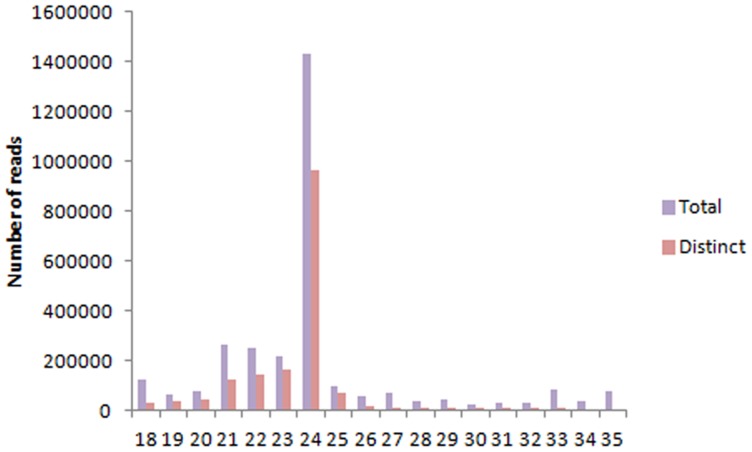
Figure 1. Length distribution of total and distinct short reads in the inflorescence of O. italica.
Figure 2
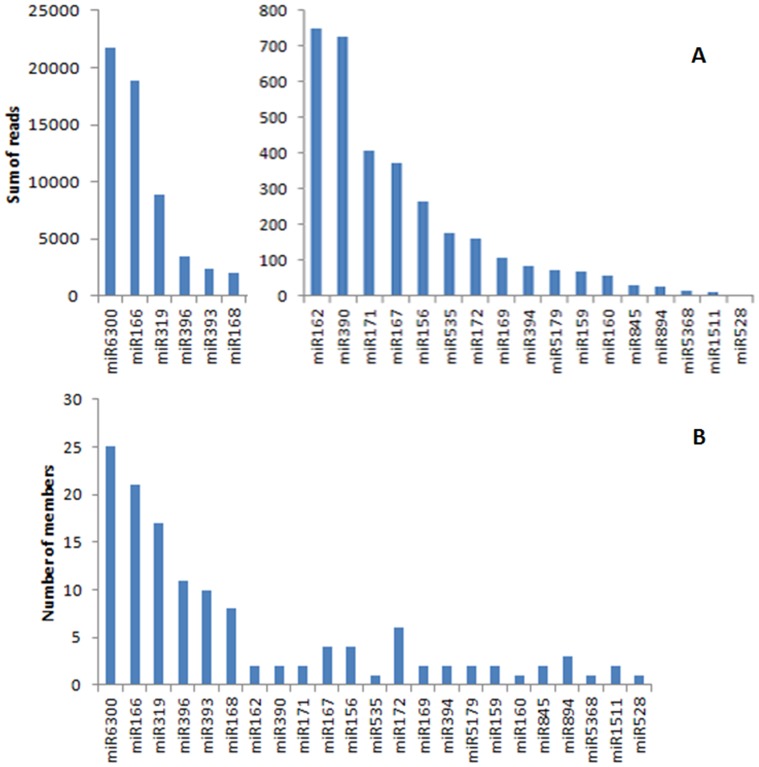
Figure 2. Abundance of conserved miRNAs in the inflorescence of O. italica.
A) Sum of reads; B) number of members.
Figure 3
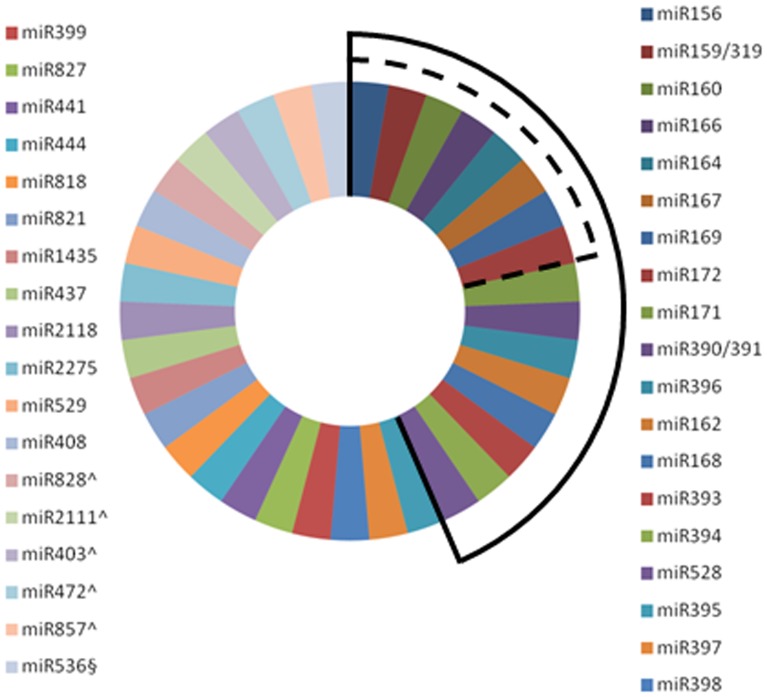
Figure 3. Evolutionary conserved miRNAs detected in the inflorescence of O. italica.
The list of the evolutionary conserved miRNAs is from Cuperus et al. 2011 . Dotted lines group together the evolutionary conserved miRNAs involved in flower development as described in Luo et al. 2013 . Continuous lines group together the evolutionary conserved miRNAs detected in the inflorescence of O. italica. ∧ indicates miRNA specific of dicots; § indicates miRNA specific of Bryophyta and Lycopodiophyta.
Figure 4
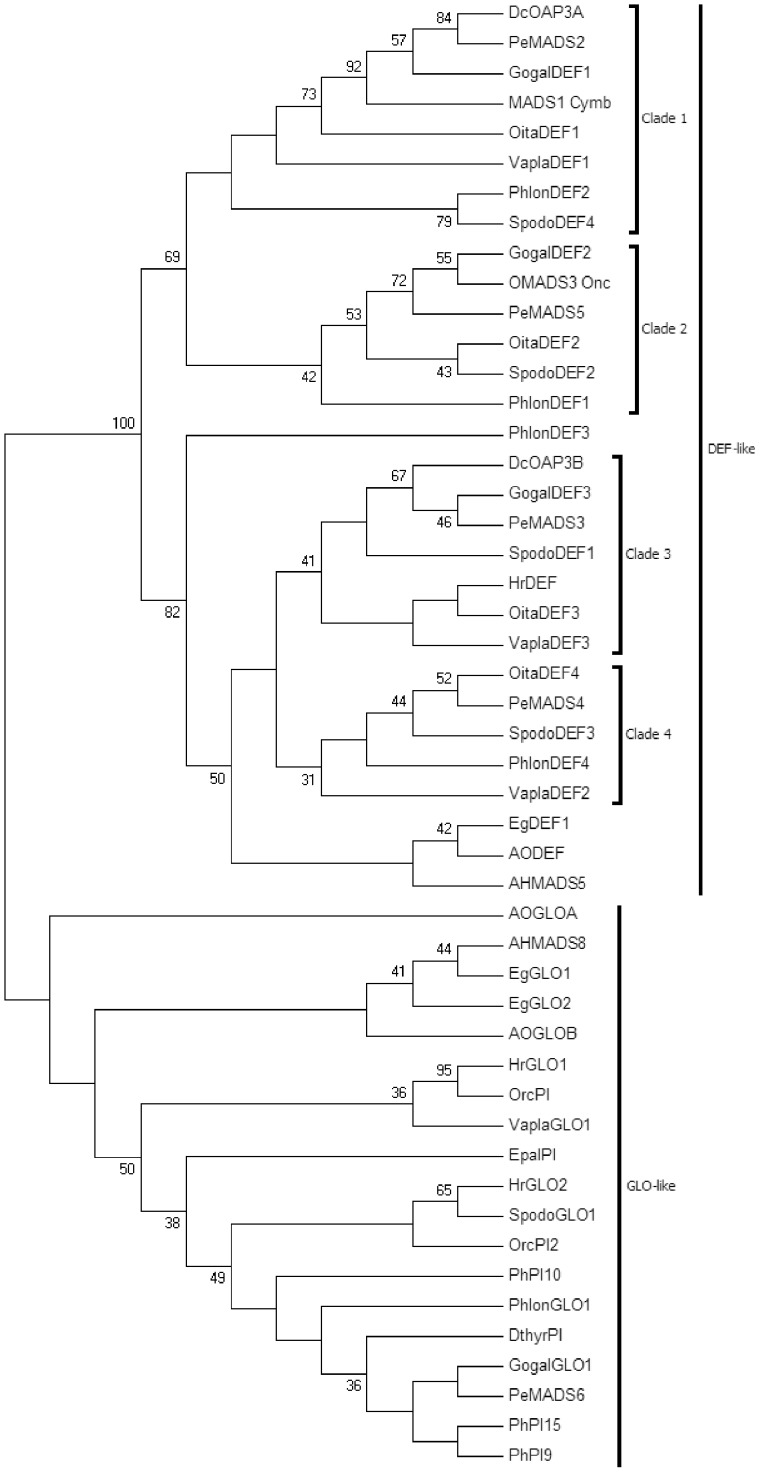
Figure 4. NJ bootstrap consensus tree of the examined amino acid sequences of the DEF-like and GLO-like genes.
Numbers represent the bootstrap percentages. Taxon labels reflect the GenBank annotation and do not always correspond to the clade name of the orchid DEF-like lineage. Alpinia hainanensis AHMADS8 [AAT99429], AHMADS5 [AAT99427];Asparagus officinalis AODEF [BAC75969], AOGLOA [BAD13495], AOGLOB [BAD13496]; Cymbidium hybrid cultivar MADS1 Cymb [ABG78568]; Dendrobium crumenatum DcOAP3A [AAZ95248], DcOAP3B [AAZ95249]; Dendrobium thyrsiflorum DthyrPI [AAY86363]; Elaeis guineensis EgGLO1 [AAQ13915], EgGLO2 [AAQ03229], EgDEF1 [AAW66883]; Epipactis palustris EpalPI [AAY56590]; Gongora galeata GogalDEF1 [ACR16036], GogalDEF2 [ACR16037], GogalDEF3 [ACR16038], GogalGLO1 [ACR16039]; Habenaria radiata HrDEF [BAH03320], HrGLO1 [BAH03322], HrGLO2 [BAH03321]; Oncidium hybrid cultivar OMADS3 Onc [AAO45824]; Orchis italica OitaDEF1 [BAO00916], OitaDEF2 [BAO00917http://getentry.ddbj.nig.ac.jp/getentry/dad/BAO00916.1/?filetype=html], OitaDEF3 [BAO00918], OitaDEF4 [BAO00919], OrcPI [BAC22579], OrcPI2 [BAI78360]; Phalaenopsis equestris PeMADS2 [AAR26628], PeMADS3 [AAR26629], PeMADS4 [AAR26626], PeMADS5 [AAR26627], PeMADS6 [AAV28175]; Phalaenopsis hybrid cultivar PhPI9 [AAV28175], PhPI10 [AAV28490], PhPI15 [AAV28491]; Phragmipedium longifolium PhlonDEF1 [ACR16044], PhlonDEF2 [ACR16045], PhlonDEF3 [ACR16046], PhlonDEF4 [ACR16047], PhlonGLO1 [ACR16048]; Spiranthes odorata SpodoDEF1 [ACR16049], SpodoDEF2 [ACR16050], SpodoDEF3 [ACR16051], SpodoDEF4 [ACR16052], SpodoGLO1 [ACR16053]; Vanilla planifolia VaplaDEF1 [ACR16054], VaplaDEF2 [ACR16055], VaplaDEF3 [ACR16056], VaplaGLO1 [ACR16057].
Figure 5
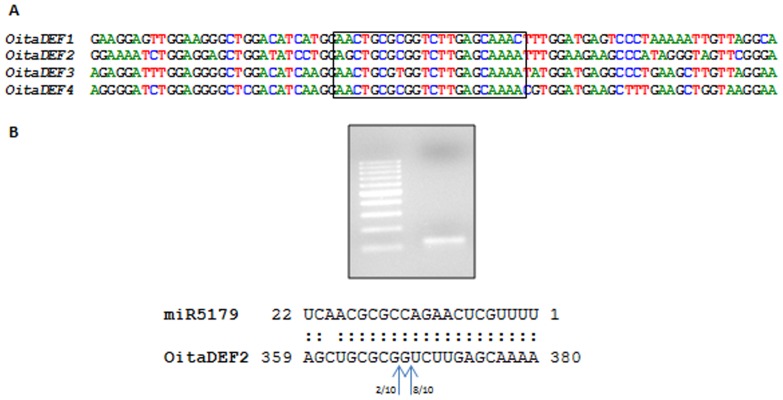
Figure 5. Cleavage of the homolog of miR5179 on OitaDEF2 in O. italica.
A) Nucleotide alignment of the putative target site of miR5179 on OitaDEF2 and its surrounding region with the corresponding region on OitaDEF1, OitaDEF3 and OitaDEF4. The nucleotide sequences span from the position 330 to 410, considering the first nucleotide of the ATG start codon as position 1. B) Agarose gel electrophoresis of the modified 5′ RACE experiment on OitaDEF2 run together with the 100 bp ladder (Fermentas). The alignment of the miR5179 and its target site on OitaDEF4 is reported and the arrows indicate the position of the cleavage and the number of clones corresponding to each site as deduced by the cloning and sequencing of the obtained fragment (see Methods).
Figure 6
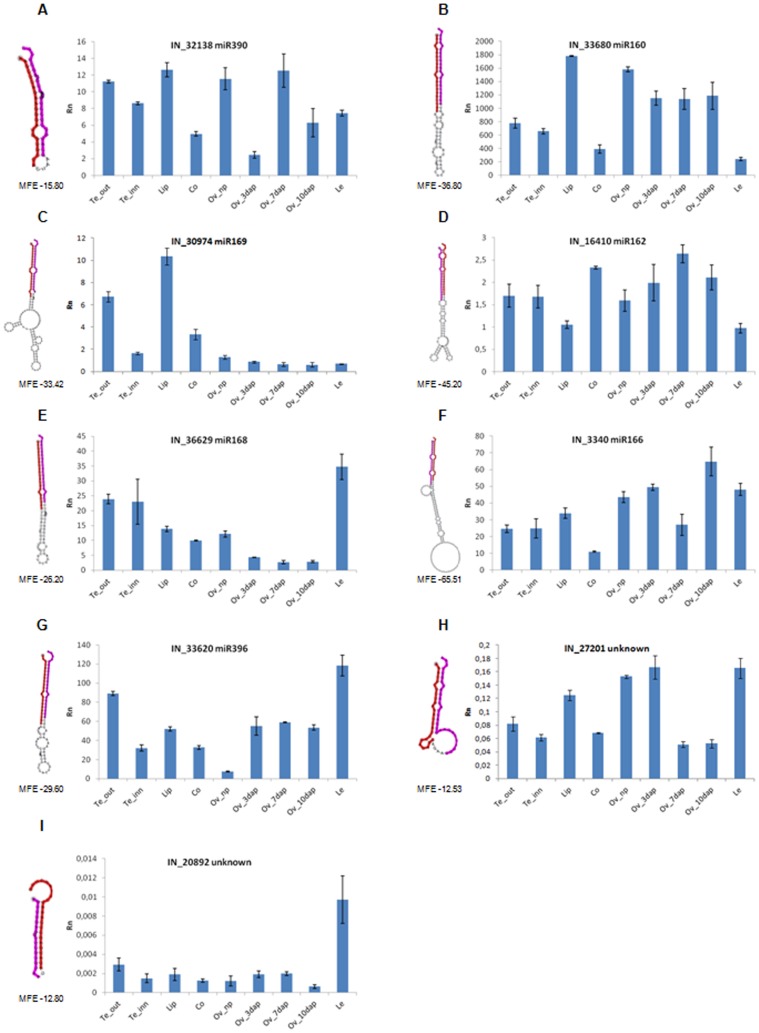
Figure 6. Relative expression pattern of selected conserved and putative novel miRNAs in different tissues of O. italica.
The predicted structure of the pre-miRNA is reported on the left of each graph, where the miRNA and miRNA* sequences are shown in red and pink, respectively. MFE, minimum free energy; Rn, relative expression ratio; Te_out, outer tepal; Te_inn, inner tepal; Co, column; Ov_np, not pollinated ovary; Ov_3dap, Ov_7dap, Ov_10dap, ovary 3, 7 and 10 days after pollination, respectively; Le, leaf. Bars indicate the standard deviation.
Figure 7
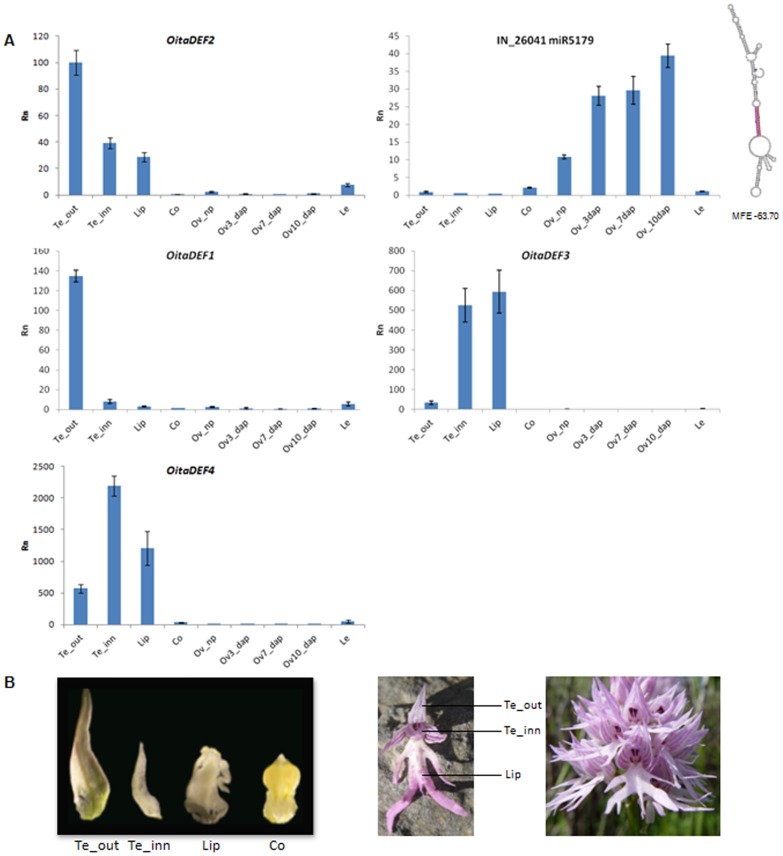
Figure 7. Relative expression pattern of miR5179 and of the OitaDEF-like genes of O. italica.
A) Expression profile of the OitaDEF1-4 genes and of the homolog of miR5179 in different tissues of O. italica. The predicted structure of the miR5179 pre-miRNA of O. italica is reported at the rigth side of the expression graph, where the miRNA and miRNA* sequences are shown in red and pink, respectively. MFE, minimum free energy; Rn, relative expression ratio; Te_out, outer tepal; Te_inn, inner tepal; Co, column; Ov_np, not pollinated ovary; Ov_3dap, Ov_7dap, Ov_10dap, ovary 3, 7 and 10 days after pollination, respectively; Le, leaf. Bars indicate the standard deviation. B) From left to right: floral tissues of O. italica used in the expression analysis; single floret and inflorescence of O. italica after anthesis.

References

    1. Axtell MJ (2013) Classification and comparison of small RNAs from plants. Annu Rev Plant Biol 64: 137–159. - PubMed
    1. Wu G (2013) Plant microRNAs and development. J Genet Genomics 40: 217–230. - PubMed
    1. Chuck G, Candela H, Hake S (2009) Big impacts by small RNAs in plant development. Curr Opin Plant Biol 12: 81–86. - PubMed
    1. Chen X (2005) MicroRNA biogenesis and function in plants. FEBS Lett 579: 5923–5931. - PMC - PubMed
    1. Nag A, Jack T (2010) Sculpting the flower; the role of microRNAs in flower development. Curr Top Dev Biol 91: 349–378. - PubMed

Publication types

MeSH terms

LinkOut - more resources