


Collagen scaffold: a treatment for large mesh exposure following vaginal prolapse repair
- PMID: 24832859
- PMCID: PMC5450628
- DOI: 10.1007/s00192-014-2427-5
Collagen scaffold: a treatment for large mesh exposure following vaginal prolapse repair
Abstract
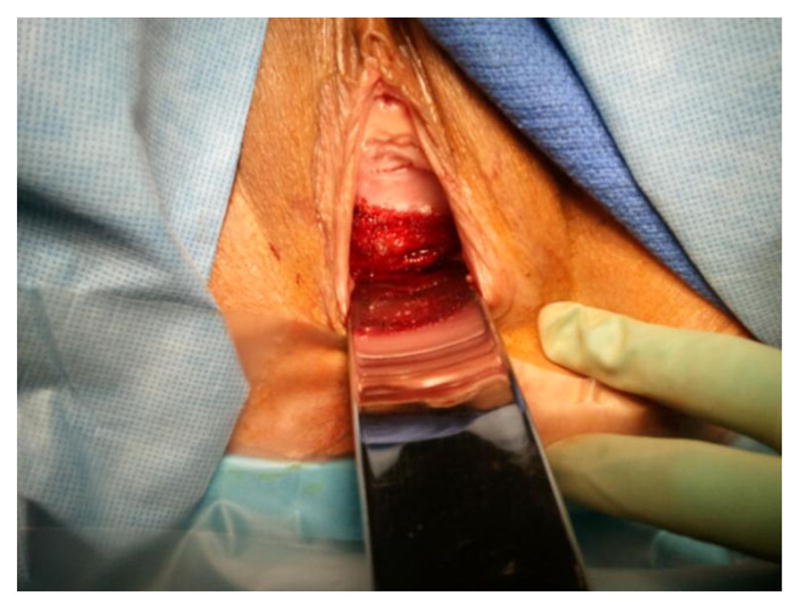
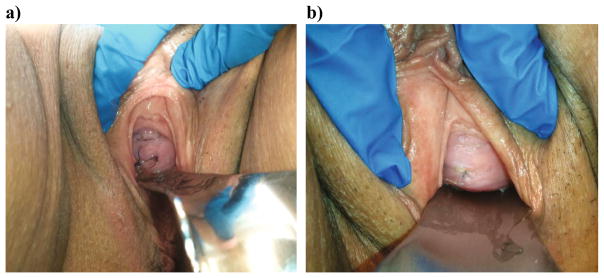
Transvaginal repair with mesh of pelvic organ prolapse (POP) provides women with the durability of a synthetic graft using the less-invasive route of vaginal surgery. However, morbidities such as mesh exposures are common and challenging to manage. Small intestinal submucosa (SIS) is a naturally occurring collagen matrix derived from porcine intestine. It contains growth factors and cytokines that promote healing of damaged tissue. This case report describes a large vaginal mesh exposure due to necrosis of the full thickness of the anterior vaginal wall. A remarkable and rapid regeneration of vaginal tissue over the exposed mesh was achieved with SIS placement after failure of treatment with vaginal estrogen for >6 months. Collagen scaffold is an effective, rapid, and minimally invasive treatment for large vaginal mesh exposures.
Conflict of interest statement
Figures
References
-
- Clemons JL, Weinstein M, Guess MK, Alperin M, Moalli P, Gregory WT, et al. Impact of the 2011 FDA transvaginal mesh safety update on AUGS members’ use of synthetic mesh and biologic grafts in pelvic reconstructive surgery. Female Pelvic Med Reconstr Surg. 2013;19(4):191–198. - PubMed
-
- Abed H, Rahn DD, Lowenstein L, Balk EM, Clemons JL, Rogers RG. Incidence and management of graft erosion, wound granulation, and dyspareunia following vaginal prolapse repair with graft materials: a systematic review. Int Urogynecol J. 2011;22(7):789–798. - PubMed
-
- Khong SY, Lam A. Use of Surgisis mesh in the management of polypropylene mesh erosion into the vagina. Int Urogynecol J. 2011;22(1):41–46. - PubMed
Publication types
MeSH terms
Substances
Grants and funding
LinkOut - more resources
Full Text Sources
Other Literature Sources
Medical
