


Genotyping of Cryptosporidium spp. in clinical samples: PCR-RFLP analysis of the TRAP-C2 gene
- PMID: 24834152
- PMCID: PMC4017402
Genotyping of Cryptosporidium spp. in clinical samples: PCR-RFLP analysis of the TRAP-C2 gene
Abstract
Aim: The aim of the present study was to determine the species and genotypes of Cryptosporidium spp. among children with diarrhea by PCR-RFLP using the TRAP-C2 gene.
Background: Cryptosporidium is a globally distributed protozoan parasite and one of the most common causes of infection and diarrhea in humans.
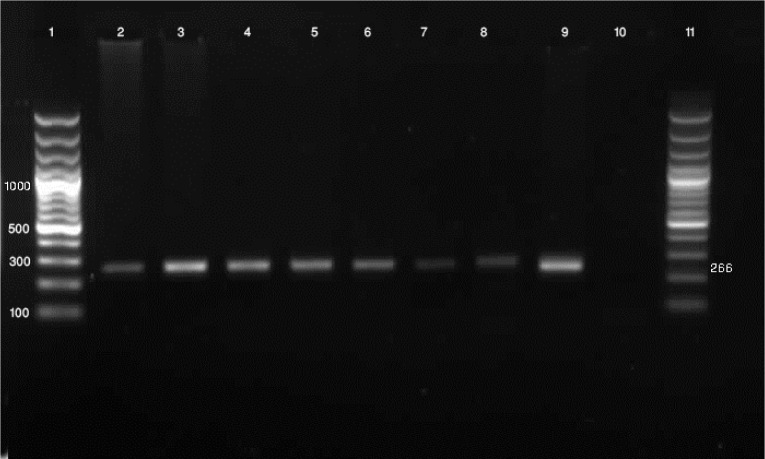
Patients and methods: Four hundred and sixty nine stool samples were collected from children less than 12 years with diarrhea who had been referred to Pediatrics Medical Centers in Gazvin provinces. The presence of Cryptosporidium oocysts was determined by Ziehl-Neelsen acid fast staining, then, genomic DNA was extracted from positive samples and nested PCR-RFLP was performed to amplify the TRAP-C2 gene.
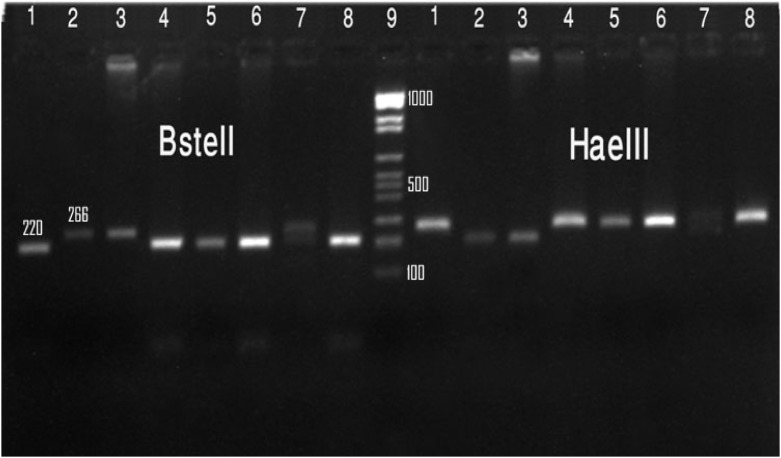
Results: The overall prevalence of Cryptosporidium infection in children was 2.5 %. Results of nested PCR amplification showed that of 12 positive children samples, 10 (83.3%) were belonged to C. parvum, followed by C. hominis in 1 (8.3%) and mixed infection in 1 isolate (8.3%).
Conclusion: This study showed that Cryptosporidium parvum (the zoonotic genotypes) is more prevalent than other Cryptosporidium species in children from this area. This suggests that zoonotic transmission is the main mode of transmission of Cryptosporidium infection in Iran.
Keywords: Cryptosporidium; Genotypes; TRAP-C2 gene.
Figures
References
-
- Keshavarz A, Athari A, Haghighi A, Kazami B, Abadi A, Nazemalhosseini Mojarad E, et al. Genetic characterization of Cryptosporidium spp. among children with diarrhea in Tehran and Qazvin provinces, Iran. Iranian J Parasitol. 2008;3:30–36.
-
- Sulaiman IM, Lal AA, Xiao L. Molecular phylogeny and evolutionary relationships of Cryptosporidium parasites at the actin locus. J Parasitol. 2002;88:388–94. - PubMed
-
- Kato S, Lindergard G, Mohammed HO. Utility of the Cryptosporidium oocysts wall protein (COWP) gene in a nested PCR approach for detection infection in cattle. Vet Parasitol. 2003;111:153–59. - PubMed
-
- Xiao L, Ryan UM. Cryptosporidiosis: an update in molecular epidemiology. Curr Opin Infect. 2004;17:483–90. - PubMed
LinkOut - more resources
Full Text Sources
Miscellaneous